

硫(S,Z = 16):从古代炼金术到现代生物化学
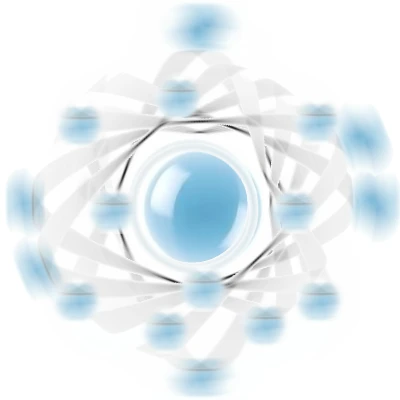
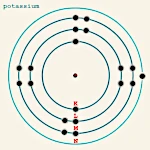
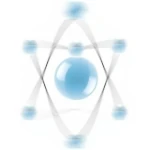
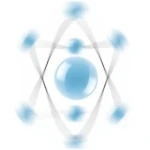
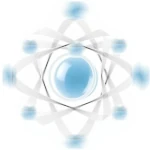
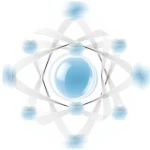
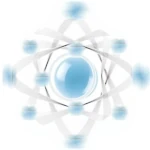
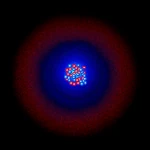
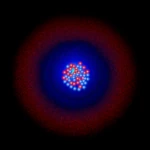
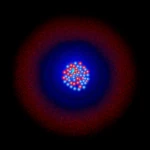
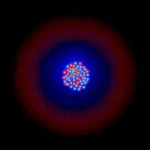
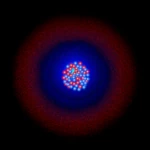
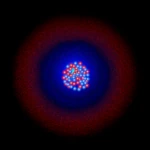
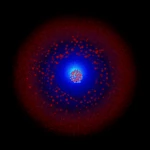
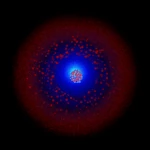
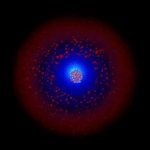
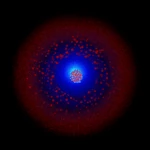
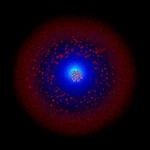
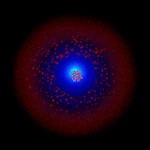
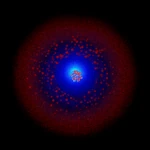
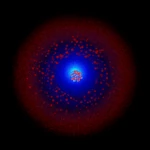
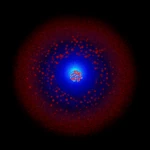
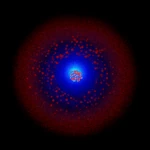
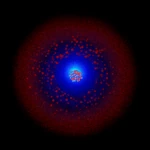
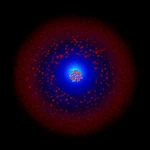
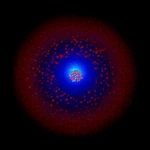
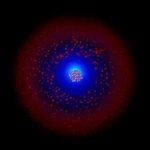
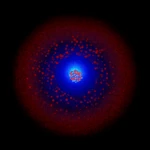
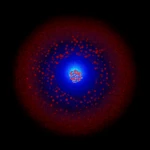
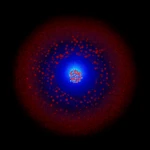
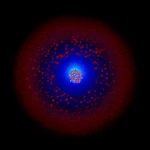
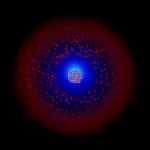
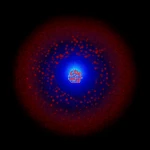
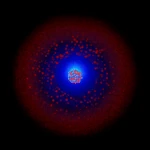
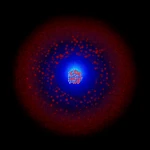
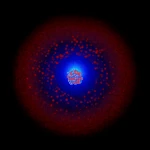
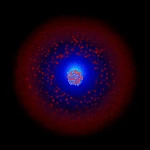
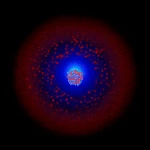
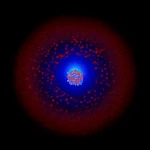
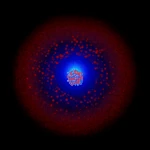
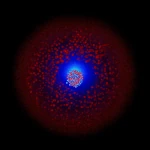
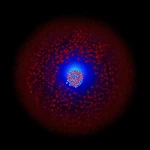
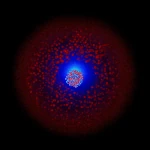
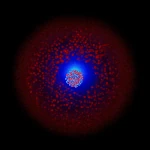
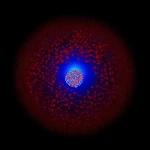
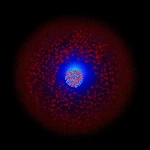
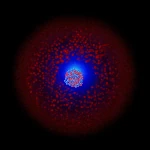
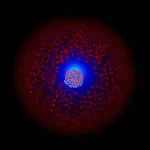
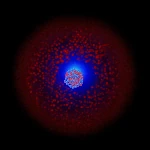
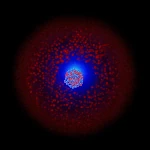
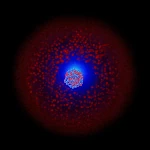
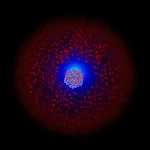
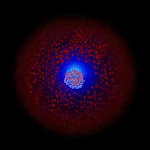
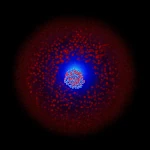
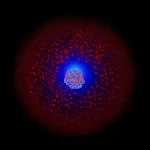
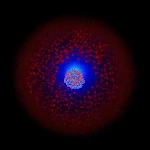
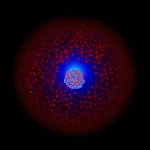
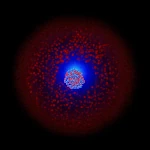
Simplified atomic model of the sulfur atom.
The most abundant isotope is \(\,^{32}\mathrm{S}\,\) with its 16 protons and 16 neutrons.
Image source: astronoo.com (新窗口)
硫磺发现史
Sulfur is one of the elements known since ancient times, used long before the concept of a chemical element existed. Ancient civilizations (Egyptians, Greeks, Romans, Chinese) used native sulfur found near volcanoes for religious, medicinal, and industrial purposes. The ancient Greeks used sulfur to bleach fabrics and as a fumigant, while the Romans used it in their metallurgical processes. In medieval alchemy, sulfur was considered one of the three fundamental principles, along with mercury and salt. In 1777, 安托万·拉瓦锡 (1743-1794) definitively demonstrated that sulfur is a chemical element and not a compound, including it in his list of elements in his 《化学基础论》 (1789). The name 硫磺 comes from the Latin 硫磺, probably of Sanskrit origin.
结构与基本性质
Sulfur (symbol S, atomic number 16) is a non-metal of group 16 (formerly group VIA, the chalcogen family) of the periodic table.
Its atom has 16 protons, 16 electrons, and usually 16 neutrons in its most abundant isotope (\(\,^{32}\mathrm{S}\)).
Four stable isotopes exist: sulfur-32 (\(\,^{32}\mathrm{S}\)), sulfur-33 (\(\,^{33}\mathrm{S}\)), sulfur-34 (\(\,^{34}\mathrm{S}\)), and sulfur-36 (\(\,^{36}\mathrm{S}\)).
At room temperature, sulfur is a lemon-yellow crystalline solid, brittle, and odorless in its elemental form (the characteristic odor comes from its compounds like H₂S).
Density ≈ 2.07 g/cm³.
Sulfur exhibits remarkable polymorphism with many allotropic forms.
The main forms are 正交硫α (S₈, stable at room temperature, cyclic octahedra), melting point: 388.36 K (115.21 °C), and 单斜硫β (stable above 95.3 °C).
Boiling point of sulfur: 717.8 K (444.6 °C).
Molten sulfur has extraordinary viscous properties that vary with temperature.
硫同位素表
| 同位素 / 符号 | 质子(Z) | 中子(N) | 原子质量(u) | 天然丰度 | 半衰期/稳定性 | 衰变 / 备注 |
|---|---|---|---|---|---|---|
| 硫-32 — \(\,^{32}\mathrm{S}\,\) | 16 | 16 | 31.972071 u | ≈ 94.99% | 稳定的 | 天然硫中含量最丰富的同位素。 |
| 硫-33 — \(\,^{33}\mathrm{S}\) | 16 | 17 | 32.971459 u | ≈ 0.75% | 稳定 | 用于同位素地球化学中,追踪古生物过程。 |
| 硫-34 — \(\,^{34}\mathrm{S}\) | 16 | 18 | 33.967867 u | ≈ 4.25% | 稳定 | 在地球化学中,对研究生物地球化学循环具有重要意义。 |
| 硫-36 — \(\,^{36}\mathrm{S}\) | 16 | 20 | 35.967081 u | ≈ 0.01% | 稳定 | 稀有同位素;用作环境研究中的示踪剂。 |
| 硫-35 — \(\,^{35}\mathrm{S}\) | 16 | 19 | 34.969032 u | 非自然的 | 87.37天 | 放射性β⁻衰变为氯-35。在生物学和医学中用作示踪剂。 |
| 其他同位素——\(\,^{26}\mathrm{S}\) 到 \(\,^{49}\mathrm{S}\) | 16 | 10 — 33 | — (变量) | 非自然的 | 毫秒到秒 | 人工产生的不稳定同位素;实验核物理。 |
硫的电子排布与电子层
注意::
Electron shells: 电子如何围绕原子核组织 (新窗口).
硫有16个电子,分布在三个电子层中。其完整电子排布为:1s² 2s² 2p⁶ 3s² 3p⁴, 或简写为:[Ne] 3s² 3p⁴。该排布也可写作:K(2) L(8) M(6)。
壳层的详细结构
K壳层(n=1): contains 2 electrons in the 1s subshell. This inner shell is complete and highly stable.
L壳层(n=2): contains 8 electrons distributed as 2s² 2p⁶. This shell is also complete, forming a noble gas configuration (neon).
M壳层(n=3): contains 6 electrons distributed as 3s² 3p⁴. The 3s orbitals are complete, while the 3p orbitals contain only 4 out of 6 possible electrons. Thus, 2 electrons are missing to saturate this outer shell.
价电子与氧化态
The 6 electrons in the outer shell (3s² 3p⁴) are the 价电子 of sulfur. This configuration explains its chemical properties:
By gaining 2 electrons, sulfur forms the S²⁻ ion (oxidation state -2), a common state in metallic sulfides, thus adopting the configuration of argon [Ar].
By losing or sharing electrons, sulfur can exhibit various positive oxidation states: +2, +4, and +6, the latter being observed in sulfuric acid H₂SO₄ and sulfates.
The oxidation state 0 corresponds to elemental sulfur, which exists in various allotropic forms, the most stable being orthorhombic sulfur S₈ (a ring of 8 atoms).
硫的电子构型在其价层有6个电子,这将其归类为氧族元素(第16族元素)。这种结构赋予其特性:具有多种氧化态(-2、0、+2、+4、+6)带来的高度化学多样性,通过硫-硫键形成链状和环状结构的能力,以及形成离子键和共价键的能力。硫可接受2个电子达到稀有气体的稳定状态,形成存在于许多矿物中的硫离子S²⁻。它也能通过共价键共享电子,形成种类繁多的化合物。这种化学多样性使硫成为工业化学中的关键元素,尤其在硫酸生产(全球产量最高的化合物)、橡胶硫化以及生物学中许多重要有机硫化合物领域。
化学反应活性
硫在室温下反应性适中,但在高温下反应性极强。它能与除稀有气体和氮气外的几乎所有化学元素结合。硫在空气中燃烧时呈现特征性蓝色火焰,产生具有刺激性和窒息性的二氧化硫(SO₂)。它形成多种氧化态的化合物:-II价(硫化物和硫醇)、+IV价(SO₂、亚硫酸盐)和+VI价(SO₃、硫酸盐、硫酸H₂SO₄)。硫与金属反应生成硫化物,与氢反应生成硫化氢(H₂S,一种具有臭鸡蛋气味的有毒气体),与氧反应生成多种氧化物。硫的化学性质极为丰富,包括多硫链、有机硫化合物以及生物化学中至关重要的二硫键。
硫磺的工业与技术应用
- 生产硫酸(H₂SO₄),这是世界上产量最大的工业化学品;
- 在橡胶硫化过程中,一种将乳胶转化为耐用弹性材料的工艺;
- 制造农业必需的磷酸盐和硫酸盐肥料;
- 在纸浆生产(硫酸盐法)中;
- 作为有机农业中的杀菌剂和杀虫剂(可湿性硫磺);
- 精炼石油并去除硫杂质。
- 在洗涤剂、染料和颜料的生产中;
- 生产火柴和火药;
- 作为纺织工业中的漂白剂;
- 在铅酸电池(基于硫酸的电解液)中;
- 制造医药产品和药品;
- 在化妆品和皮肤病学中(用于治疗痤疮、头皮屑);
- 在聚合物和塑料的生产中;
- 作为食品防腐剂(E220-E228,二氧化硫和亚硫酸盐);
- 处理废水并去除重金属;
- 在锂硫电池(新兴技术)的制造过程中;
- 作为混凝土工业中的硫化剂;
- 在葡萄酒酿造学中,用于防止葡萄酒氧化(二氧化硫)。
关键的生物学作用
硫是生命的第六大必需元素(C、H、N、O、P、S)。 它存在于两种必需氨基酸——半胱氨酸和甲硫氨酸中,这两种氨基酸构成了所有生物的蛋白质。 半胱氨酸残基之间的二硫键(S-S键)对蛋白质的三维结构和稳定性至关重要。 硫还存在于多种关键辅酶中,如辅酶A、生物素(维生素B₇)和硫辛酸。 它通过谷胱甘肽(一种强效抗氧化剂)在细胞解毒过程中发挥重要作用。 某些细菌在能量代谢中利用硫(硫酸盐还原菌和硫氧化菌),在生物地球化学硫循环中扮演重要角色。 富含硫的火山温泉孕育着独特的极端微生物生态系统。
地球化学循环与丰度
硫是宇宙中第十丰富的元素,自然界中以多种形态存在。 在地壳中,它约占质量的0.035%。 天然硫(单质)存在于火山地区及温泉附近。 它也存在于多种矿物中:金属硫化物(黄铁矿FeS₂、方铅矿PbS、闪锌矿ZnS)、硫酸盐(石膏CaSO₄·2H₂O、重晶石BaSO₄),以及化石燃料(石油、煤炭、天然气)中。 硫循环涉及复杂的生物、地质和大气过程。 火山喷发、有机物分解以及工业活动(化石燃料燃烧)会向大气释放二氧化硫,当其转化为硫酸时,会导致酸雨的形成。
在天体物理学和宇宙化学中的作用
硫是宇宙中相对丰富的元素,由大质量恒星内部氧与硅的核聚变反应生成。超新星爆发将大量硫扩散至星际介质中。硫已在众多天体中被探测到:恒星大气、星云、彗星、陨石及行星大气层。木星卫星伊奥(Io)存在以硫为主的活跃火山活动,其表面呈现特有的黄橙色。伊奥上的硫间歇泉可将二氧化硫喷射至数百公里高空。金星大气层中含有硫酸云团。在系外行星大气中探测到硫化氢(H₂S)等硫化物,可能构成间接生物特征信号。
注::
Molten sulfur exhibits extraordinary and counterintuitive viscous behavior.
When solid sulfur is heated, it melts around 115 °C into a light yellow, fluid liquid.
But when heated further above 160 °C, the liquid suddenly becomes extremely viscous, almost solid, changing from a water-like consistency to that of thick honey, then molasses.
This phenomenon results from the breaking of S₈ rings, which form entangled polymeric chains.
Upon further heating above 200 °C, the viscosity gradually decreases again.
This unique behavior makes molten sulfur a fascinating system for studying phase transitions and polymerization.
 核聚变所需的能量以及为什么铀是一个极限
 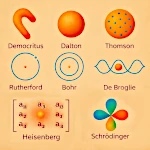 原子的各种形态:从古代直觉到量子力学