

硒(Se,Z = 34):必需的光电元素
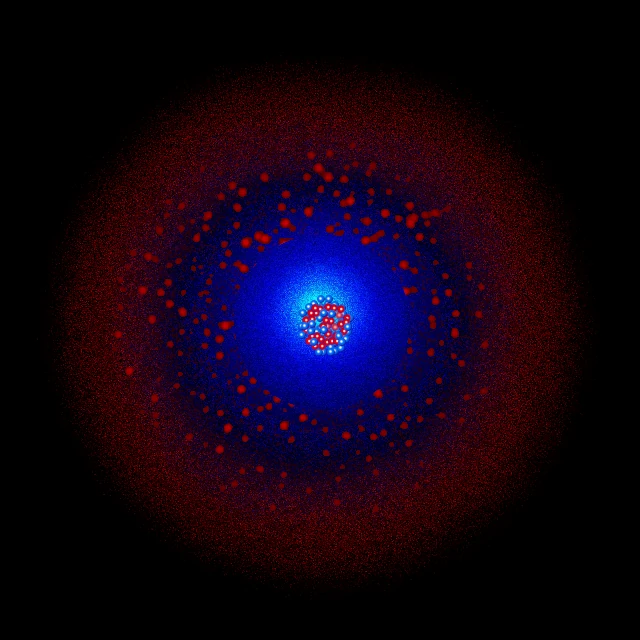
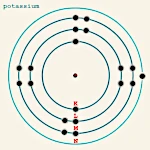
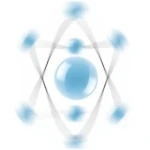
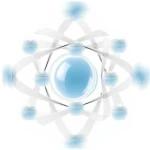
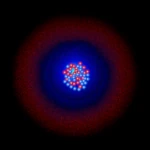
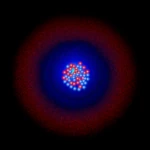
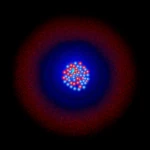
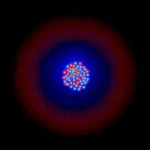
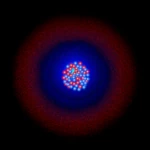
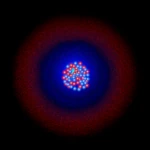
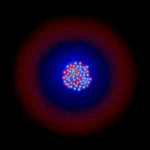
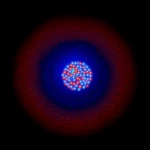
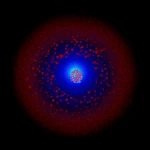
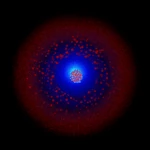
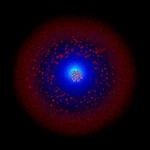
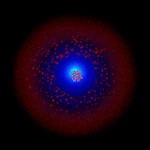
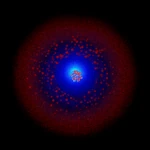
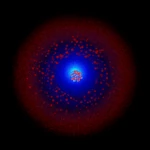
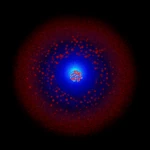
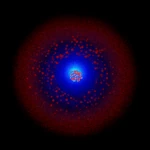
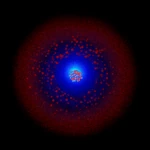
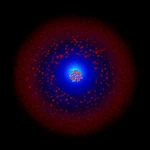
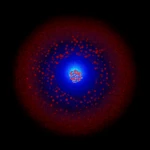
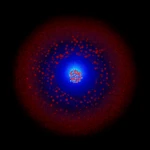
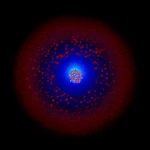
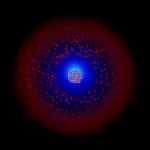
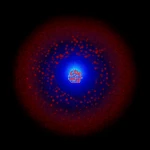
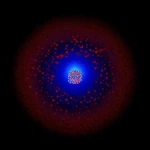
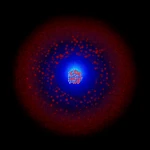
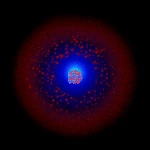
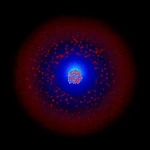
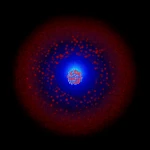
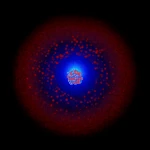
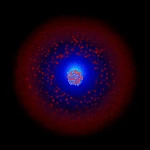
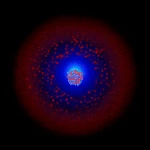
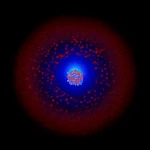
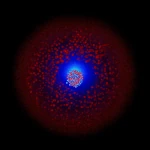
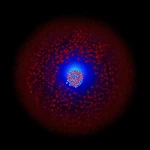
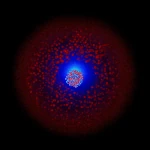
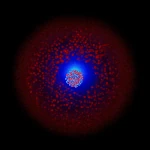
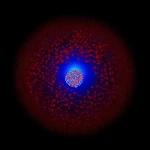
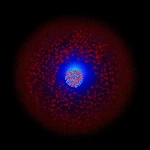
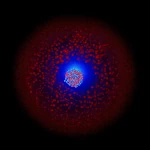
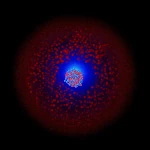
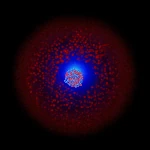
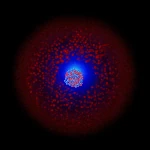
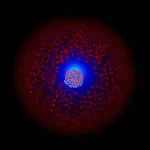
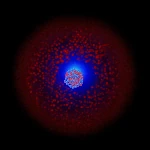
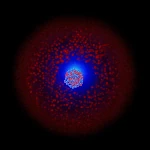
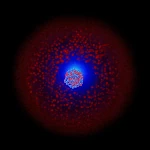
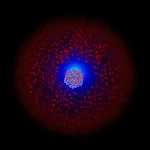
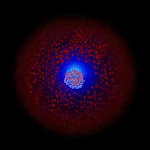
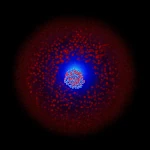
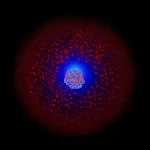
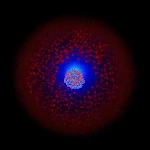
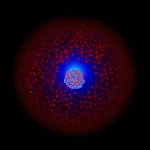
Image description: Simplified atomic model of the selenium atom. The most abundant isotope is \(\,^{80}\mathrm{Se}\,\)
with its 34 protons, 34 electrons, and 46 neutrons.
Image source:
astronoo.com (新窗口)
硒的发现历史
Selenium was discovered in 1817 by the Swedish chemist 永斯·雅各布·贝采利乌斯 (1779-1848) and his assistant Johan Gottlieb Gahn. Berzelius was working in a sulfuric acid factory in Gripsholm, Sweden, where he was studying a reddish deposit that accumulated at the bottom of the lead chambers used for acid production. This residue was initially thought to be tellurium, an element discovered a few years earlier.
Upon carefully analyzing this deposit, Berzelius noticed significant differences from tellurium. After a series of chemical experiments, he succeeded in isolating a new element, which he named 硒, from the Greek 塞勒涅, meaning moon, in analogy with tellurium, whose name derives from tellus (Earth). This naming reflected the relationship between these two chemically similar elements.
贝采利乌斯发现硒是对19世纪化学的重大贡献。他此前已因发现铈、钍、硅等多种元素,以及创立使用字母符号的现代化学命名法而闻名。
In 1873, the British electrician 威洛比·史密斯 discovered that the electrical conductivity of selenium increased significantly under the effect of light. This revolutionary photoelectric property paved the way for many technological applications and made selenium one of the first materials used in photocells, photographic exposure meters, and early mechanical television systems.
结构与基本性质
硒(符号Se,原子序数34)是元素周期表第16族的非金属元素,与氧、硫、碲、钋同属氧族元素。其原子含34个质子,通常有46个中子(对应最丰同位素\(\,^{80}\mathrm{Se}\)),以及34个电子,电子构型为[Ar] 3d¹⁰ 4s² 4p⁴。
Selenium exhibits several allotropic forms with very different physical properties. The most stable form is 灰色硒 (metallic selenium or hexagonal selenium), a shiny gray metallic solid with a hexagonal crystalline structure. This form has a density of 4.81 g/cm³ and remarkable semiconductor properties, with conductivity increasing by a factor of 1000 under the effect of light.
红硒 exists in two distinct allotropic forms: red selenium α (monoclinic) and red selenium β (monoclinic), both composed of cyclic Se₈ molecules. These red forms are obtained by rapid cooling of molten selenium or by precipitation from solutions. They are unstable and slowly transform into gray selenium at room temperature.
非晶硒 (or black vitreous selenium) is obtained by very rapid cooling of liquid selenium. This black vitreous form has a disordered structure and also transforms into gray selenium when heated above 180 °C. This form was historically used in rectifiers and photocells.
Selenium melts at 221 °C (494 K) and boils at 685 °C (958 K). The liquid obtained during melting is initially reddish-brown and gradually turns black due to polymerization. The viscosity of liquid selenium also increases dramatically with temperature due to the formation of long molecular chains.
Melting point of selenium: 494 K (221 °C).
Boiling point of selenium: 958 K (685 °C).
硒同位素表
| 同位素 / 符号 | 质子(Z) | 中子(N) | 原子质量(u) | 天然丰度 | 半衰期/稳定性 | 衰变/备注 |
|---|---|---|---|---|---|---|
| 硒-74 — \(\,^{74}\mathrm{Se}\,\) | 34 | 40 | 73.922476 u | ≈ 0.89% | 稳定的 | 天然硒中最稳定的轻同位素。 |
| 硒-76 — \(\,^{76}\mathrm{Se}\,\) | 34 | 42 | 75.919214 u | ≈ 9.37% | 稳定的 | 稳定同位素在生物学中用作示踪剂。 |
| 硒-77 — \(\,^{77}\mathrm{Se}\,\) | 34 | 43 | 76.919914 u | ≈ 7.63% | 稳定的 | 具有核磁共振波谱学中使用的核自旋。 |
| 硒-78 — \(\,^{78}\mathrm{Se}\,\) | 34 | 44 | 77.917309 u | ≈ 23.77% | 稳定 | 天然硒中第二丰富的同位素。 |
| 硒-80 — \(\,^{80}\mathrm{Se}\,\) | 34 | 46 | 79.916521 u | ≈ 49.61% | 稳定 | 硒的最丰富同位素,占天然硒的近一半。 |
| 硒-82 — \(\,^{82}\mathrm{Se}\,\) | 34 | 48 | 81.916699 u | ≈ 8.73% | ≈ 1.08 × 10²⁰ 年 | 放射性(β⁻β⁻)。极慢的双β衰变,被视为准稳定。 |
| 硒-75 — \(\,^{75}\mathrm{Se}\,\) | 34 | 41 | 74.922523 u | 合成 | ≈ 119.8 天 | 放射性(电子俘获)。用于工业射线照相和医学的伽马发射体。 |
硒的电子排布与电子壳层
N.B.:
Electron shells:
电子如何围绕原子核组织 (新窗口).
硒有34个电子,分布在四个电子层中。其完整电子排布为: 1s² 2s² 2p⁶ 3s² 3p⁶ 3d¹⁰ 4s² 4p⁴,或简写为:[Ar] 3d¹⁰ 4s² 4p⁴。该排布也可写作:K(2) L(8) M(18) N(6)。
壳层的详细结构
K壳层(n=1): contains 2 electrons in the 1s subshell. This inner shell is complete and very stable.
L壳层(n=2): contains 8 electrons distributed as 2s² 2p⁶. This shell is also complete, forming a noble gas configuration (neon).
M壳层(n=3): contains 18 electrons distributed as 3s² 3p⁶ 3d¹⁰. The presence of the complete 3d subshell is characteristic of post-transition elements and significantly influences the properties of selenium.
N壳层(n=4): contains 6 electrons distributed as 4s² 4p⁴. These six electrons are the valence electrons of selenium.
价电子与氧化态
The 6 electrons in the outer shell (4s² 4p⁴) are the 价电子 of selenium. This configuration explains its great chemical diversity:
The most common oxidation state of selenium is -2, where it gains two electrons to complete its valence shell, forming the selenide ion Se²⁻ with the configuration [Ar] 3d¹⁰ 4s² 4p⁶, isoelectronic with krypton. Metallic selenides such as Na₂Se or ZnSe are important in chemistry and technology.
The oxidation state +4 is also very important, particularly in selenium dioxide (SeO₂), an amphoteric compound widely used in organic synthesis. In this state, selenium uses four of its valence electrons to form bonds.
The oxidation state +6 appears in the most oxidized compounds such as selenic acid (H₂SeO₄) and selenium trioxide (SeO₃). These compounds are powerful oxidants, where selenium uses all its available valence electrons.
Intermediate oxidation states also exist: +2 in selenium dichloride (SeCl₂) and -1 in organic diselenides (R-Se-Se-R). The state 0 corresponds to elemental selenium in its various allotropic forms.
硒的化学性质与其同族较轻元素硫有许多相似之处,但硒通常电负性较低,形成的键更长且更弱。这种差异表现为更高的极化性以及与过渡金属形成化合物的能力更强。
化学反应活性
灰色硒在室温下空气中相对稳定,仅缓慢氧化。然而,在空气中加热时,它会燃烧并产生特征性的蓝色火焰,生成二氧化硒(SeO₂),以带有腐烂萝卜刺激性气味的白烟形式释放:Se + O₂ → SeO₂。这种独特气味源于挥发性硒化合物。
硒在高温下与氢气反应生成硒化氢(H₂Se),这是一种剧毒且气味恶臭的气体,毒性比硫化氢(H₂S)更强。H₂Se不稳定,易分解为氢气和单质硒。
与氧化性酸反应时,硒根据条件生成亚硒酸(H₂SeO₃)或硒酸(H₂SeO₄)。热的浓硝酸氧化硒:3Se + 4HNO₃ + H₂O → 3H₂SeO₃ + 4NO。硒对稀的非氧化性酸具有抗性。
硒溶解于碱性溶液中,根据条件形成亚硒酸盐(SeO₃²⁻)和硒化物(Se²⁻):3Se + 6OH⁻ → 2Se²⁻ + SeO₃²⁻ + 3H₂O。这种歧化反应是硫族元素在碱性介质中的特征反应。
硒与所有卤素直接反应生成多种卤化物:Se + X₂ → SeX₂ 或 SeX₄(其中X = F、Cl、Br、I)。四氟化硒(SeF₄)和六氟化硒(SeF₆)尤为稳定。二氯化硒(SeCl₂)和四氯化硒(SeCl₄)是液态试剂。
硒容易形成有机硒化合物,类似于硫化合物但通常更具反应性。有机硒化物、硒醇(R-SeH)、硒醚(R-Se-R')以及有机硒酸在有机化学和生物化学中发挥着重要作用。某些必需氨基酸含有硒,特别是硒代半胱氨酸和硒代甲硫氨酸。
硒的工业与技术应用
- 在薄膜光伏电池(CIGS:铜铟镓硒)中用于太阳能;
- 用于制造复印机和激光打印机(硒感光鼓);
- 在电力整流器和早期光电管中;
- 作为玻璃工业中的脱色剂,用于中和铁元素产生的绿色。
- 用于生产红色和橙色玻璃(硒镉玻璃),用于信号装置;
- 在冶金学中,用于改善不锈钢和铜的切削加工性能;
- 作为橡胶工业中的硫化添加剂,以提高耐磨性;
- 作为人类和动物健康必需的膳食补充剂(微量元素);
- 在去屑洗发水(硫化硒)中用于治疗脂溢性皮炎;
- 用于工业和医疗射线照相(硒-75作为伽马源);
- 在陶瓷、油漆和塑料用红色颜料的制造中;
- 作为某些有机化学合成和精细化学中的催化剂;
- 用于医学成像中的直接转换X射线探测器;
- 在光度计和照度计中用于测量光强度;
- 在电子学中用于热敏电阻和温度敏感器件;
- 在用于光电子学的化合物半导体(CdSe、ZnSe)生产中;
- 作为某些药物和化妆品配方中的抗氧化剂。
生物学与营养作用
硒是人类和动物健康所必需的微量元素。它在多种抗氧化酶的功能中发挥着关键作用,特别是谷胱甘肽过氧化物酶(GPx)和硫氧还蛋白还原酶(TrxR),这些酶能保护细胞免受自由基引起的氧化损伤。
硒以硒代半胱氨酸的形式被整合到蛋白质中,这种氨基酸有时被称为第21种氨基酸。这一整合过程需要专门的细胞机制来识别特定的密码子(UGA),该密码子通常被用作翻译的终止信号。人类中已鉴定出约25种硒蛋白。
成年人每日硒需求量约为55微克。硒缺乏可能导致心脏疾病(克山病)、甲状腺功能紊乱及免疫力下降。克山病于20世纪30年代在中国被发现,是由特定地区土壤中严重缺硒所引发的心肌病。
然而,硒在有益剂量与毒性剂量之间的治疗窗口较窄。过量摄入硒(每日超过400微克)可能导致硒中毒,其症状包括脱发、指甲脱落、胃肠道紊乱、神经系统问题,以及因甲基化硒化合物代谢排出而出现的典型大蒜味口臭。
硒的主要膳食来源包括巴西坚果(硒含量极为丰富)、海鲜、动物内脏、肉类、全谷物和鸡蛋。植物性食物的硒含量很大程度上取决于其生长土壤中的硒浓度。
在天体物理学和宇宙学中的作用
Selenium is synthesized in stars through several stellar nucleosynthesis processes. Selenium isotopes are mainly produced by the s-过程 (slow neutron capture) in asymptotic giant branch (AGB) stars, as well as by the r-process (rapid neutron capture) during cataclysmic events such as type II supernovae or neutron star mergers.
六种稳定硒同位素(\(\,^{74}\mathrm{Se}\)、\(\,^{76}\mathrm{Se}\)、\(\,^{77}\mathrm{Se}\)、\(\,^{78}\mathrm{Se}\)、\(\,^{80}\mathrm{Se}\)、\(\,^{82}\mathrm{Se}\))的分布反映了慢速中子俘获过程(s过程)和快速中子俘获过程(r过程)对核合成的不同贡献。研究原始陨石中硒同位素比值,可为太阳系形成条件及不同核合成过程的相对贡献提供重要信息。
硒在宇宙中的丰度相对较低,其原子数量约为氢的3×10⁻⁹倍。这种稀有性源于该原子质量区域(A≈75-82)的核合成困难,以及硒处于中等核稳定性区域这一事实。
在部分热星及特殊恒星天体的光谱中,已检测到电离硒(Se II、Se III)的光谱线。观测这些谱线有助于研究恒星的化学增丰过程以及星系在宇宙时间尺度上的化学演化。
硒在陨石同位素异常研究中也扮演着有趣的角。某些富钙铝包裹体(CAIs)显示硒-82过剩,表明在太阳系形成之前,特定恒星环境中形成的太阳前颗粒对此有所贡献。
注意::
Selenium is present in the Earth's crust at an average concentration of about 0.00005% by mass (0.5 ppm), making it a relatively rare element, comparable to mercury. It generally does not form its own minerals but is found associated with other elements, mainly in metal sulfides of copper, lead, nickel, and silver. The main selenium-bearing minerals are clausthalite (PbSe), tiemannite (HgSe), and naumannite (Ag₂Se).
硒主要作为铜电解精炼的副产品提取,在此过程中富集于阳极泥中。另一个重要来源是铅锌矿的加工。全球硒年产量约为2500吨,主要产自日本(约占40%)、比利时、德国、加拿大和俄罗斯。
硒在陆地土壤中的分布极不均匀。一些地区,如美国大平原,土壤富含硒;而另一些地区,如中国某些省份,则严重缺硒。这种地理差异对公共卫生和农业具有重要影响。
随着电子和光伏能源的发展,硒的回收利用正变得越来越重要。硒可以从废旧复印机、报废太阳能电池板以及工业过程中回收。目前,硒的回收率估计约占其总产量的30%,远高于许多其他稀有元素。
全球对硒的需求稳步增长,主要受光伏太阳能产业、冶金和膳食补充剂领域的推动。由于硒在绿色技术中的重要性及其生产的地理集中性,多个国家将其视为战略元素。
 核聚变所需的能量以及为什么铀是一个极限
 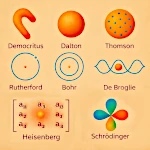 原子的各种形态:从古代直觉到量子力学