

磷(P,Z = 15):从点金石到DNA
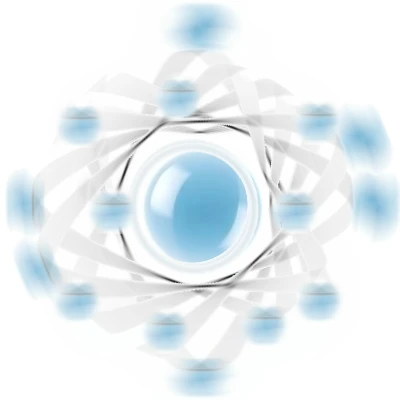
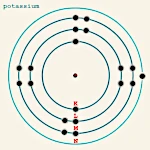
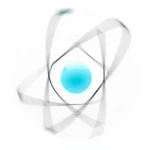
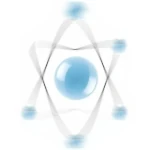
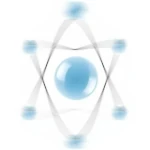
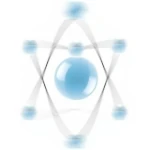
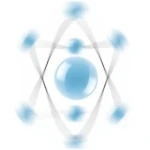
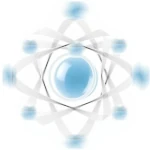
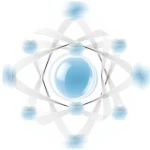
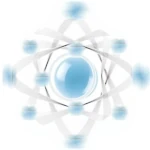
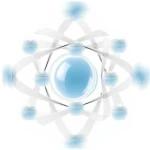
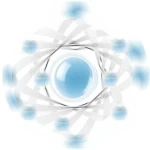
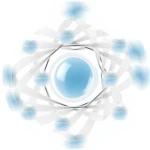
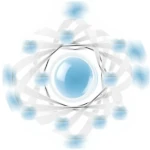
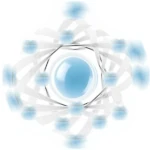
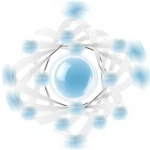
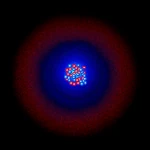
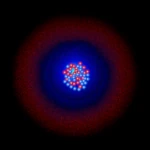
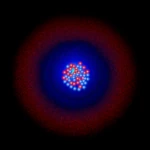
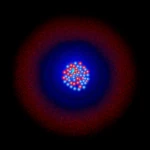
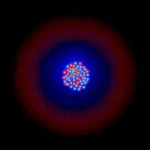
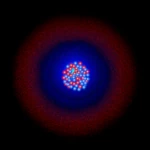
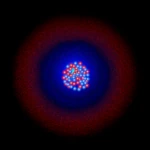
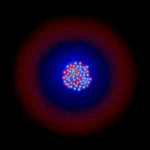
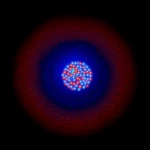
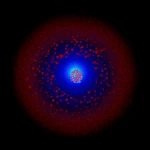
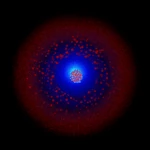
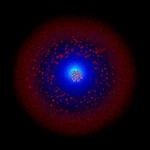
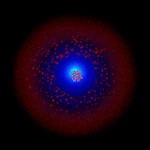
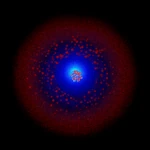
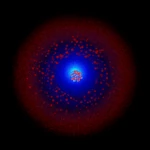
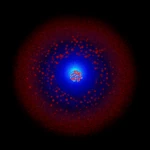
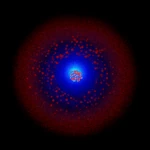
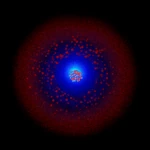
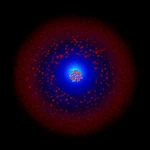
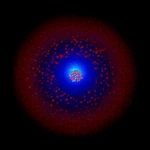
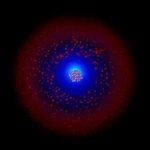
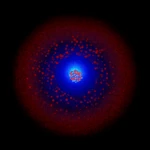
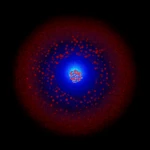
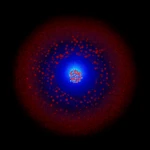
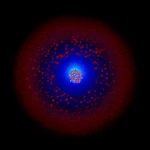
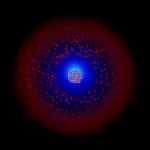
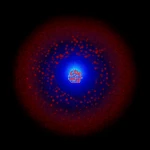
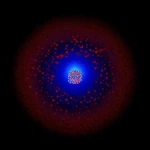
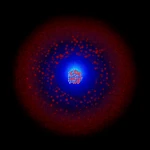
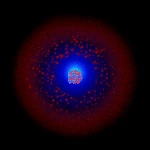
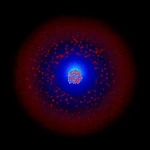
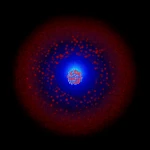
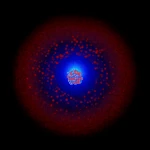
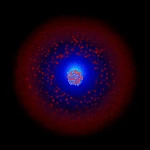
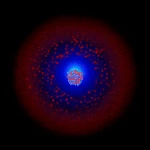
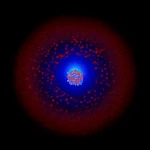
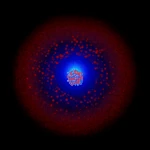
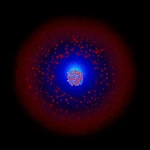
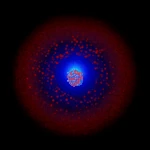
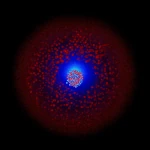
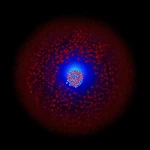
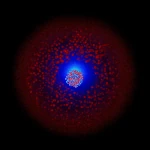
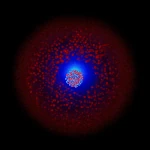
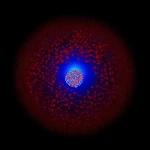
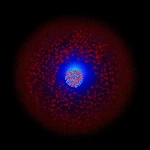
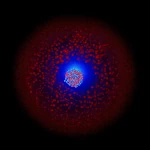
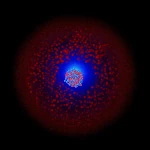
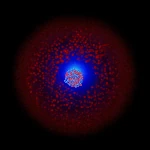
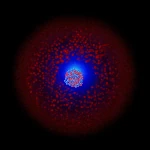
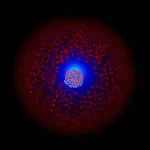
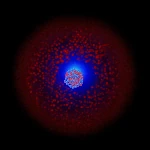
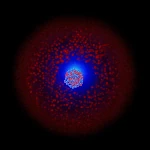
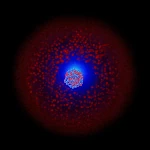
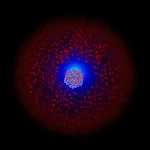
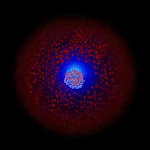
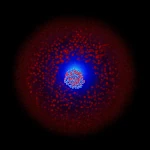
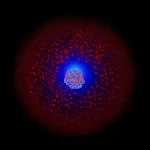
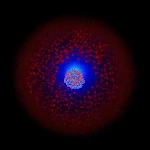
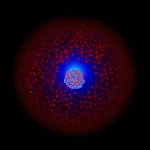
Simplified atomic model of the phosphorus atom.
The most abundant isotope is \(\,^{31}\mathrm{P}\,\) with its 15 protons and 16 neutrons.
Image source: astronoo.com (新窗口)
磷的发现史
Phosphorus has one of the most fascinating discovery stories in chemistry. In 1669, the German alchemist 亨尼格·布兰德 (c. 1630–c. 1710) sought to transform base metals into gold. By heating and distilling large quantities of human urine, he obtained a white substance that glowed in the dark and spontaneously ignited upon contact with air. He named this discovery 磷 (from the Greek 磷 = light-bearer). This was the first chemical element whose discoverer and date of discovery are precisely known. In 1769, 卡尔·威廉·舍勒 (1742–1786) and 约翰·戈特利布·甘恩 (1745–1818) discovered that phosphorus could be extracted from bones. In 1777, 安托万·拉瓦锡 (1743–1794) established that phosphorus is a chemical element, not a compound.
结构与基本性质
Phosphorus (symbol P, atomic number 15) is a non-metal in group 15 (formerly group VA) of the periodic table.
Its atom has 15 protons, 15 electrons, and usually 16 neutrons in its only stable isotope (\(\,^{31}\mathrm{P}\)).
Phosphorus exists in several allotropic forms with very different properties.
白磷 (P₄) is a waxy, white-yellowish solid, highly toxic, and pyrophoric (spontaneously ignites in air at around 30 °C). Density ≈ 1.82 g/cm³, melting point: 317.3 K (44.15 °C).
红磷 is an amorphous polymeric form, stable, non-toxic, and non-flammable at room temperature. Density ≈ 2.16 g/cm³.
黑磷 is the thermodynamically stable form, with a layered structure similar to graphite. Density ≈ 2.69 g/cm³.
紫磷 (or Hittorf's phosphorus) is another, less common allotropic form.
磷同位素表
| 同位素 / 符号 | 质子(Z) | 中子(N) | 原子质量(u) | 天然丰度 | 半衰期/稳定性 | 衰减 / 备注 |
|---|---|---|---|---|---|---|
| 磷-31 — \(\,^{31}\mathrm{P}\,\) | 15 | 16 | 30.973762 u | 100% | 稳定的 | 磷的唯一稳定同位素;对地球上所有生命至关重要。 |
| 磷-32 — \(\,^{32}\mathrm{P}\) | 15 | 17 | 31.973907 u | 非自然的 | 14.268天 | 放射性β⁻衰变为硫-32。在分子生物学中广泛用作放射性示踪剂。 |
| 磷-33 — \(\,^{33}\mathrm{P}\) | 15 | 18 | 32.971725 u | 非自然的 | 25.34天 | 放射性β⁻衰变为硫-33。用于生物医学研究。 |
| 磷-30 — \(\,^{30}\mathrm{P}\) | 15 | 15 | 29.978314 u | 非自然的 | 2.498分钟 | 放射性β⁺和电子俘获衰变为硅-30。 |
| 其他同位素——\(\,^{24}\mathrm{P}\) 到 \(\,^{46}\mathrm{P}\) | 15 | 9 — 31 | — (变量) | 非自然的 | 毫秒到分钟 | 人工产生的高度不稳定同位素;核物理研究。 |
磷的电子排布与电子层
注意::
Electron shells: 电子如何在原子核周围排列 (新窗口).
磷有15个电子,分布在三个电子层中。其完整电子排布为:1s² 2s² 2p⁶ 3s² 3p³, 或简写为:[Ne] 3s² 3p³。该排布也可写作:K(2) L(8) M(5)。
壳层的详细结构
K 壳层 (n=1): contains 2 electrons in the 1s subshell. This inner shell is complete and highly stable.
L壳层(n=2): contains 8 electrons distributed as 2s² 2p⁶. This shell is also complete, forming a noble gas configuration (neon).
M壳层(n=3): contains 5 electrons distributed as 3s² 3p³. The 3s orbitals are complete, while the 3p orbitals contain only 3 out of 6 possible electrons, with one electron in each of the three 3p orbitals according to Hund's rule. Thus, 3 electrons are missing to saturate this outer shell.
价电子与氧化态
The 5 electrons in the outer shell (3s² 3p³) are the 价电子 of phosphorus. This configuration explains its chemical properties:
By gaining 3 electrons, phosphorus forms the P³⁻ ion (oxidation state -3), a state present in metallic phosphides, thus adopting the configuration of argon [Ar].
By losing or sharing electrons, phosphorus can exhibit positive oxidation states: +3 and +5, with the latter being the most common, particularly in phosphoric acid H₃PO₄ and phosphates.
The oxidation state 0 corresponds to elemental phosphorus, which exists in several allotropic forms: white phosphorus (P₄, highly reactive and toxic) and red phosphorus (a more stable polymer).
磷的电子构型在其价层有5个电子,因此被归类为氮族元素(第15族元素)。这种结构赋予其特性:通过共享3个未成对的3p电子形成三个共价键的能力;利用空的3d轨道扩展价层以形成最多五个键的可能性;以及形成单键和双键的能力。磷可接受3个电子达到稀有气体的稳定状态,但由于其体积较大,这种P³⁻离子态较为罕见。更常见的是,磷通过共价键共享电子,形成磷酸盐等重要化合物。其生物学意义至关重要:磷是DNA、RNA和ATP(细胞的能量分子)的组成元素。在工业化学中,磷对生产磷肥、洗涤剂不可或缺,并参与多种有机磷化合物的构成。
化学反应活性
磷是一种非常活泼的元素,尤其是白磷。它极易与氧(生成P₄O₁₀和P₄O₆)、卤素和硫结合。白磷必须储存在水下以防止自燃。磷可形成氧化态为-Ⅲ、+Ⅲ和+Ⅴ的化合物。最重要的化合物包括磷酸盐(PO₄³⁻)、磷酸(H₃PO₄)、膦(PH₃)、五氧化二磷(P₂O₅)以及有机磷化合物。磷能形成P-O、P-N、P-C和P-P键,从而衍生出极其丰富多样的化学性质。
磷的工业与技术应用
- 在磷肥的生产过程中,这对全球农业至关重要;
- 制造洗涤剂和清洁产品(磷酸盐);
- 在火柴和烟火装置中;
- 作为食品添加剂(软饮料中的磷酸,E338);
- 用于许多工业过程的磷酸的生产;
- 在阻燃剂中用于纺织品、塑料和建筑材料;
- 在冶金中作为还原剂(磷青铜)
- 在有机磷农药和除草剂的制造中;
- 用于生产增塑剂和润滑剂添加剂;
- 在制药工业中(有机磷化合物);
- 作为N型半导体制造中的掺杂剂;
- 用于处理金属表面(防腐蚀磷化处理);
- 在LED和发光屏幕(荧光粉)的生产中;
- 在化学催化中(用于催化剂的磷配体);
- 作为生物学和医学中的放射性示踪剂(磷-32);
- 在电动汽车用的磷酸铁锂(LiFePO₄)电池中;
- 制造神经毒剂(用于军事目的,所幸已被禁止)。
绝对必要的生物学作用
磷是生命六大基本化学元素之一(C、H、N、O、P、S)。 它对所有生物体而言不可或缺。 磷是DNA和RNA(磷酸-糖骨架)、细胞膜(磷脂)以及ATP(三磷酸腺苷)的结构成分,而ATP是细胞内能量传递的通用分子。 它也是骨骼和牙齿的主要组成元素,以羟基磷灰石(Ca₁₀(PO₄)₆(OH)₂)的形式存在。 磷在调节血液pH值、激活酶以及细胞信号传导中起着关键作用。 在植物中,磷对光合作用、根系生长和种子形成至关重要。 生态系统中的磷循环是基础性的,但过程缓慢,因此该元素常成为生物生长的限制因素。
资源与地缘政治问题
磷主要从磷酸钙矿床(磷矿和磷灰石)中提取。与可从大气中捕获的氮不同,磷必须通过开采获得。全球磷酸盐储量集中在少数国家:摩洛哥(占全球储量70%以上)、中国、阿尔及利亚、叙利亚和南非。这种地理集中性引发了全球粮食安全问题,因为磷在农业中不可替代。磷在农业中尚无已知的替代品,而从废水和有机废物中回收磷正成为一项重大的环境挑战。优质磷酸盐矿床的逐渐枯竭令人担忧未来粮食生产的前景。
在天体物理学和天体生物学中的角色
磷元素在大质量恒星核聚变的最后阶段产生,主要通过中子捕获过程形成。超新星爆发将磷元素扩散至星际介质中。然而,与碳、氮、氧等其他生命必需元素相比,磷在宇宙中相对稀少。这种宇宙丰度限制可能成为制约宇宙中其他区域生命诞生的关键因素。天文学家已在彗星中探测到磷元素,表明这些天体可能将这种关键元素带到了早期地球。在系外行星及其大气中寻找磷化合物,可作为间接的生物特征信号。
注意::
White phosphorus is one of the most dangerous substances handled in chemistry.
It spontaneously ignites upon contact with air at around 30 °C, producing a ghostly greenish light and toxic fumes of phosphorus pentoxide.
Burns from white phosphorus are particularly severe: the phosphorus continues to burn as it penetrates tissues, and particles must be removed under water as they reignite in air.
Historically, workers in white phosphorus match factories developed a terrible disease called "phossy jaw" (phosphorus necrosis of the jaw), leading to its ban in matches in the early 20th century.
 核聚变所需的能量以及为什么铀是一个极限
 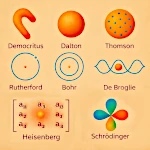 原子的各种形态:从古代直觉到量子力学