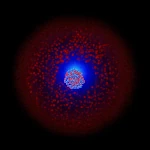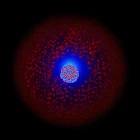


氩(Ar,Z = 18):隐藏在我们呼吸空气中的惰性气体
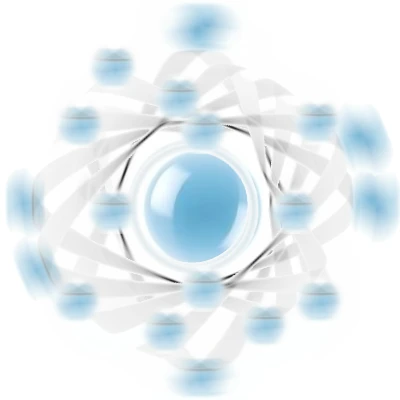
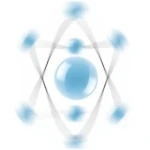
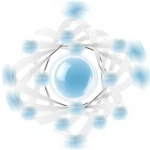
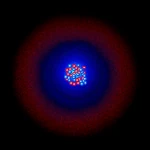
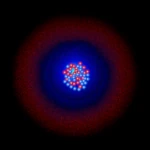
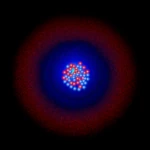
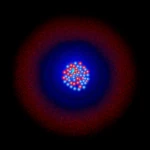
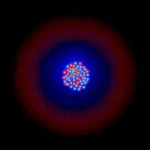
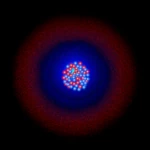
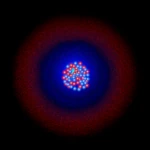
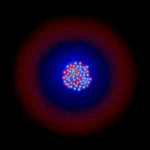
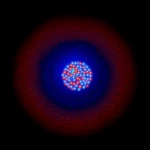
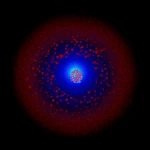
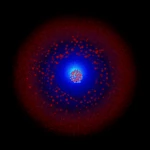
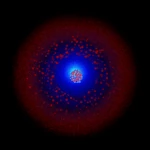
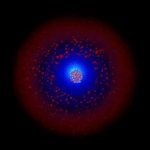
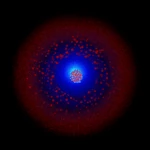
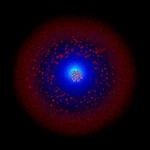
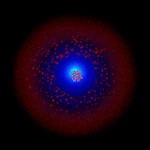
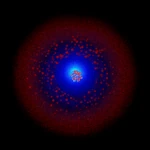
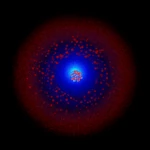
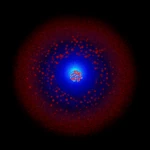
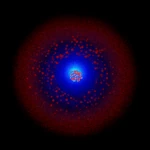
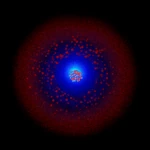
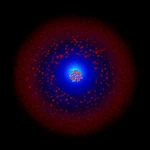
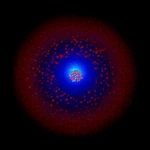
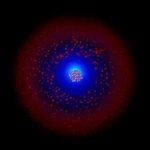
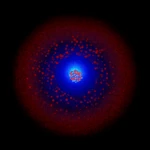
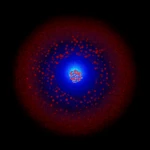
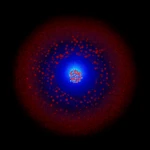
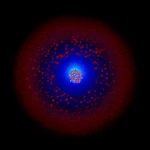
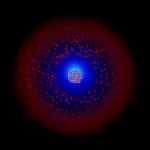
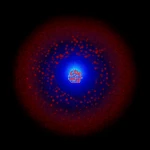
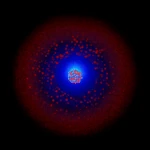
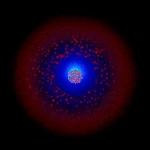
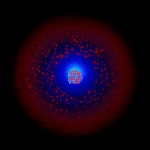
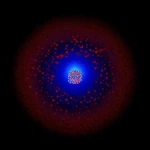
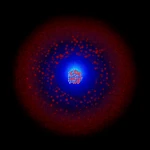
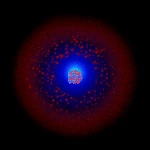
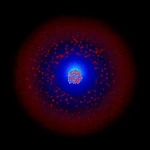
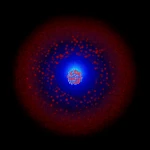
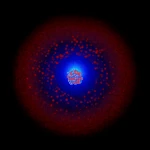
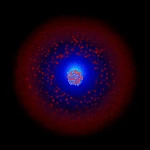
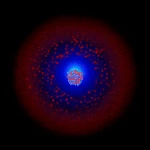
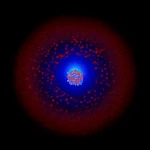
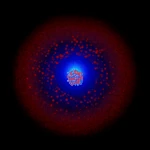
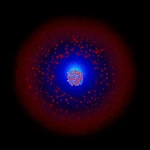
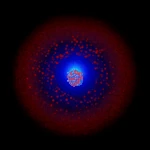
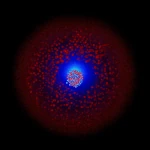
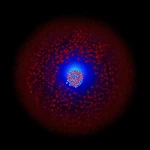
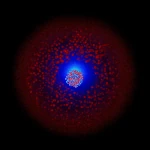
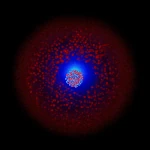
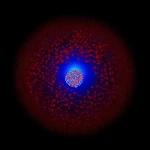
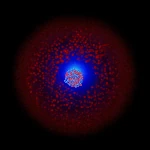
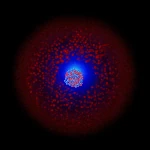
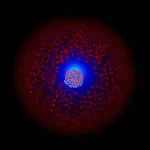
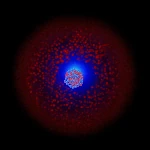
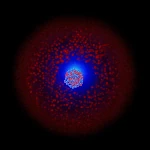
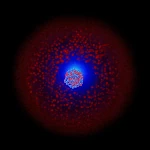
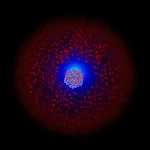
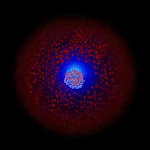
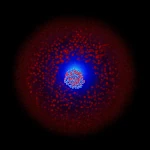
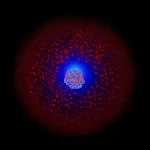
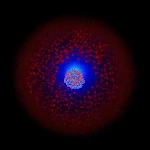
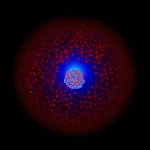
Simplified atomic model of the argon atom.
The most abundant isotope is \(\,^{40}\mathrm{Ar}\,\) with its 18 protons and 22 neutrons.
Image source: astronoo.com (新窗口)
氩气发现史
Argon was discovered through a meticulous investigation of an apparently insignificant anomaly. In 1892, the British physicist 瑞利勋爵 (John William Strutt, 1842–1919) observed that nitrogen extracted from the air was slightly denser (about 0.5%) than nitrogen obtained by chemical decomposition of nitrogen compounds. Intrigued by this difference, he collaborated with the chemist 威廉·拉姆齐 (1852–1916). In 1894, after methodically removing oxygen, nitrogen, carbon dioxide, and water vapor from the air, they isolated an unknown residual gas that did not react with any other element. They named this gas 氩 (from the Greek 阿尔戈斯 = inactive, lazy) due to its absolute chemical inertness. This discovery revolutionized chemistry by revealing the existence of an entire unsuspected family of elements: the noble gases. Rayleigh and Ramsay received the Nobel Prizes in Physics and Chemistry, respectively, in 1904 for this discovery.
结构与基本性质
Argon (symbol Ar, atomic number 18) is a noble gas in group 18 (formerly group VIII or 0) of the periodic table.
Its atom has 18 protons, 18 electrons, and usually 22 neutrons in its most abundant isotope (\(\,^{40}\mathrm{Ar}\)).
Three stable isotopes exist: argon-36 (\(\,^{36}\mathrm{Ar}\)), argon-38 (\(\,^{38}\mathrm{Ar}\)), and argon-40 (\(\,^{40}\mathrm{Ar}\)).
At room temperature, argon is a monatomic gas (Ar), colorless, odorless, tasteless, and completely chemically inert under normal conditions.
It is about 1.4 times denser than air (density ≈ 1.784 g/L at 0 °C).
Melting point of argon: 83.81 K (−189.34 °C).
Boiling point: 87.302 K (−185.848 °C).
Argon has a complete outer electron shell (configuration 3s² 3p⁶), giving it exceptional chemical stability.
It forms virtually no stable chemical compounds under normal conditions, although a few transient compounds have been observed in laboratories at very low temperatures.
氩同位素表
| 同位素 / 符号 | 质子(Z) | 中子(N) | 原子质量(u) | 天然丰度 | 半衰期/稳定性 | 衰变 / 备注 |
|---|---|---|---|---|---|---|
| 氩-40 — \(\,^{40}\mathrm{Ar}\,\) | 18 | 22 | 39.962383 u | ≈ 99.60% | 稳定 | 地球大气中含量极高的同位素,由钾-40的放射性衰变产生。 |
| 氩-36 — \(\,^{36}\mathrm{Ar}\) | 18 | 18 | 35.967546 u | ≈ 0.334% | 稳定 | 原始同位素;重要的地球化学示踪剂。 |
| 氩-38 — \(\,^{38}\mathrm{Ar}\) | 18 | 20 | 37.962732 u | ≈ 0.063% | 稳定 | 稀有同位素;用于地质研究。 |
| 氩-39 — \(\,^{39}\mathrm{Ar}\) | 18 | 21 | 38.964313 u | 宇宙成因示踪 | 269年 | 放射性β⁻衰变成钾-39。用于测定极地冰和地下水的年代。 |
| 氩-37 — \(\,^{37}\mathrm{Ar}\) | 18 | 19 | 36.966776 u | 非自然的 | 35.04天 | 通过电子捕获产生放射性氯-37,用于中微子探测。 |
| 其他同位素——\(\,^{30}\mathrm{Ar}\) 到 \(\,^{53}\mathrm{Ar}\) | 18 | 12 — 35 | — (变量) | 非自然的 | 毫秒到分钟 | 人工产生的高度不稳定同位素;实验核物理学。 |
氩的电子排布与电子壳层
注意::
Electron shells: 电子如何围绕原子核组织 (新窗口).
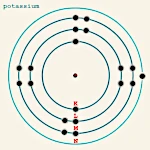
氩原子有18个电子,分布在三个电子层中。其完整电子排布为:1s² 2s² 2p⁶ 3s² 3p⁶, 简化形式为:[Ne] 3s² 3p⁶。该排布也可写作:K(2) L(8) M(8)。
壳层的详细结构
K壳层(n=1): contains 2 electrons in the 1s subshell. This inner shell is complete and highly stable.
L壳层(n=2): contains 8 electrons distributed as 2s² 2p⁶. This shell is also complete, forming a noble gas configuration (neon).
M壳层(n=3): contains 8 electrons distributed as 3s² 3p⁶. The 3s and 3p orbitals are completely filled, providing maximum stability. The 3d orbitals remain empty.
价电子与氧化态
Argon has 8 electrons in its outer shell (3s² 3p⁶), forming a 饱和电子构型. This configuration explains its exceptional chemical properties:
Argon neither loses nor gains electrons under normal conditions, which explains the absence of stable oxidation states.
The complete valence shell gives argon almost total chemical inertness, hence its classification among the noble gases (or rare gases).
Although argon compounds have been synthesized in the laboratory under extreme conditions, argon forms virtually no stable chemical compounds under ordinary conditions.
氩的电子构型中所有电子壳层均处于满填充状态,使其成为惰性气体的参照标准。这种结构赋予其特性:极高的化学稳定性(氩是最惰性的元素之一)、极高的电离能(极难移除电子),以及在常规条件下完全无反应性。由于饱和价电子层代表最优能量状态,氩不形成化学键。这种化学惰性使氩成为冶金、焊接及电灯泡中制造保护气氛的理想气体。氩的构型[Ar]被用作描述周期表中后续元素电子构型的参照基准。
化学反应活性
氩气在几乎所有条件下都具有化学惰性。其饱和的外层电子结构使其极为稳定且不易发生反应。与相邻元素氯和钾不同——它们极易形成化合物——氩气在正常条件下不参与任何化学反应。这种绝对惰性使氩成为众多工业流程中理想的保护气体。在实验室中,通过极低温度和强紫外辐射,已合成出少量不稳定化合物,如氟氩化氢(HArF),该物质在40K以上会迅速分解。这些奇特化合物虽无实际应用价值,但对理解化学键的极限具有理论意义。
氩气的工业与技术应用
- 作为电弧焊接(TIG、MIG)中的保护气体,以防止金属氧化;
- 在冶金学中,用于在活性合金(钛、锆)生产过程中创造惰性气氛;
- 填充白炽灯泡并延长灯丝寿命;
- 用于荧光灯管和放电灯管中产生蓝紫光;
- 作为双层或三层玻璃的填充气体,以提高隔热性能;
- 在气相色谱分析中作为惰性载气;
- 在医疗领域(眼科手术、皮肤科)使用的氩激光器中;
- 用于保存对氧化敏感的历史文献和艺术品;
- 在低温学与低温研究(液氩)中;
- 作为半导体晶体生长过程中的保护气氛;
- 在空气敏感材料的生产和储存过程中;
- 用于保护葡萄酒和食品免受氧化(惰性覆盖)。
- 在技术潜水中作为呼吸混合气体(三元混合气)的组成部分;
- 在核物理的粒子探测器中;
- 作为某些实验性核反应堆中的传热流体;
- 在科学研究中产生冷等离子体;
- 在电子工业中用于等离子清洗和蚀刻;
- 作为某些航空航天应用中的推进剂。
丰裕与生产
氩气含量极为丰富:它约占地球大气体积的0.934%,是继氮气(78%)和氧气(21%)之后的第三大丰富大气气体。这一比例相当于地球大气中约66万亿吨氩气。矛盾的是,尽管含量如此丰富,但由于其完全惰性,氩气直到1894年才被发现。几乎全部大气中的氩气都是氩-40,由地壳中钾-40(⁴⁰K)经过数十亿年的放射性衰变产生。工业氩气通过液态空气分馏法生产,该过程同时分离氮气和氧气。全球氩气年产量超过100万吨。得益于大气中的丰富含量及分离工艺的高效性,氩气价格相对低廉。
在地质学和放射性测年中的重要性
岩石中钾-40衰变积累的氩-40是钾-氩(K-Ar)测年法的基础,这是地质年代学中最重要的方法之一。该方法可测定数千年至数十亿年前的火山岩和变质岩年龄。钾-40的半衰期为12.5亿年,通过电子捕获衰变为氩-40,通过β⁻衰变为钙-40。高温下矿物中产生的气态氩会逸散,但在冷却结晶过程中被捕获。通过测量矿物中⁴⁰Ar/⁴⁰K比值,可确定其自上次熔融或变质作用以来经历的时间。精度更高的氩-氩(⁴⁰Ar/³⁹Ar)变体被广泛用于测定重大地质事件及地球演化历程。
在天体物理学和宇宙学中的作用
在原始宇宙中,氩几乎不存在。 氩-36和氩-38由大质量恒星在氧和硅聚变过程中通过核合成产生,随后经超新星爆发扩散。 在一些行星状星云和超新星遗迹中已探测到氩的存在。 地球上,氩-40的压倒性优势(99.6%)与太阳和陨石中氩-36主导的同位素组成形成鲜明对比。 这一差异表明,地球上的氩主要源于放射性成因(地壳中放射性衰变产生),而非原始残留。 对陨石和行星样本中氩同位素比值的分析,为太阳系形成与演化提供了关键线索。 火星大气中约含1.6%的氩,主要为氩-40,这证明了该行星过去的地质活动。
注意::
The argon we breathe every moment actually comes from the depths of the Earth.
Every liter of air we inhale contains about 9 milliliters of argon (0.934%), more than carbon dioxide (0.04%).
This argon is almost entirely argon-40, continuously produced for billions of years by the radioactive decay of potassium-40 in the rocks of Earth's crust and mantle.
Argon slowly escapes from rocks and accumulates in the atmosphere, where it persists indefinitely because, being chemically inert, it cannot be consumed by any biological or geochemical process.
Thus, every breath contains argon atoms that were once trapped deep within our planet, silently testifying to Earth's radioactive clock.
 核聚变所需的能量以及为什么铀是一个极限
 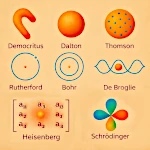 原子的各种形态:从古代直觉到量子力学