


Full text of Einstein's 1905 article on the nature and evolution of light
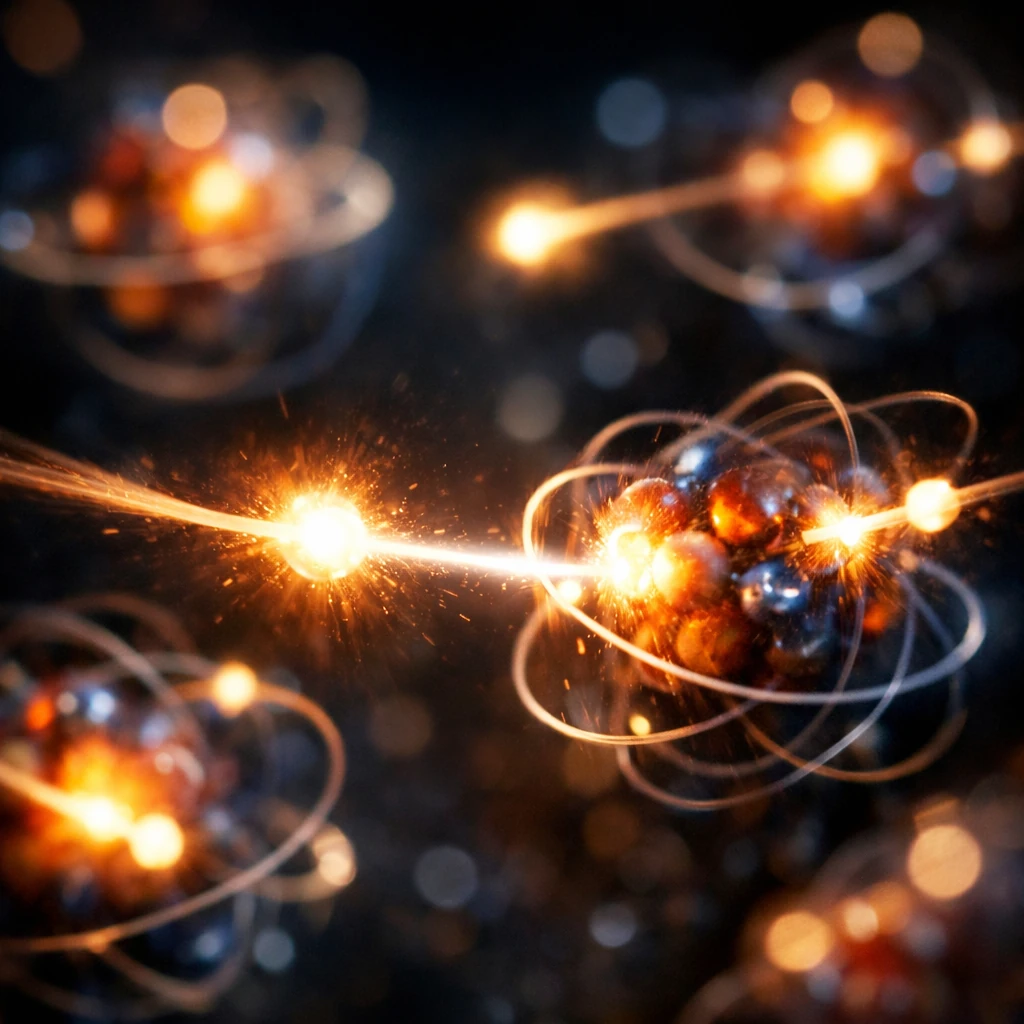
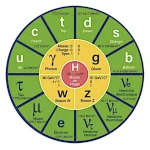
Symbolic representation of light quanta (photons) emitted and absorbed by matter, as described by Einstein in 1905 in his paper on a heuristic approach to the production and transformation of light.
Image source: astronoo.com (new window)
Scientific Summary
This seminal paper by Einstein (1905) introduces the light quantum hypothesis to resolve the failures of wave theory in explaining phenomena like the photoelectric effect and black-body radiation. He proposes that light energy is distributed in space as discrete quanta of energy (photons), with magnitude E = hν, linking frequency and energy. This revolutionary view, which complements the wave nature of light, explains that the energy of emitted electrons depends on the light's frequency, not its intensity, laying the foundations for quantum mechanics.
A Foundational Paper of Light Quantum Theory
In this historic paper published in 1905, Albert Einstein proposed a radical idea: light does not behave solely as a continuous wave, but also as a set of discrete energy particles. This hypothesis of light quanta (which we now call photons) explained phenomena that classical wave theory could not elucidate, such as the photoelectric effect, blackbody radiation, or photoluminescence. This work laid the foundations of quantum theory and earned Einstein the Nobel Prize in Physics in 1921.
Also worth exploring
Continue your exploration of the Universe with these topics:
On a Heuristic Point of View about the Creation and Conversion of Light
Albert Einstein (1905) — translation (public domain).
Maxwell's theory of electromagnetic processes in so-called empty space differs in a profound, essential way from the current theoretical models of gases and other matter. On the one hand, we consider the state of a material body to be determined completely by the positions and velocities of a finite number of atoms and electrons, albeit a very large number. By contrast, the electromagnetic state of a region of space is described by continuous functions and, hence, cannot be determined exactly by any finite number of variables. Thus, according to Maxwell's theory, the energy of purely electromagnetic phenomena (such as light) should be represented by a continuous function of space. By contrast, the energy of a material body should be represented by a discrete sum over the atoms and electrons; hence, the energy of a material body cannot be divided into arbitrarily many, arbitrarily small components.
However, according to Maxwell's theory (or, indeed, any wave theory), the energy of a light wave emitted from a point source is distributed continuously over an ever larger volume. The wave theory of light with its continuous spatial functions has proven to be an excellent model of purely optical phenomena and presumably will never be replaced by another theory. Nevertheless, we should consider that optical experiments observe only time-averaged values, rather than instantaneous values. Hence, despite the perfect agreement of Maxwell's theory with experiment, the use of continuous spatial functions to describe light may lead to contradictions with experiments, especially when applied to the generation and transformation of light.
In particular, black body radiation, photoluminescence, generation of cathode rays from ultraviolet light and other phenomena associated with the generation and transformation of light seem better modeled by assuming that the energy of light is distributed discontinuously in space. According to this picture, the energy of a light wave emitted from a point source is not spread continuously over ever larger volumes, but consists of a finite number of energy quanta that are spatially localized at points of space, move without dividing and are absorbed or generated only as a whole. Subsequently, I wish to explain the reasoning and supporting evidence that led me to this picture of light, in the hope that some researchers may find it useful for their experiments.
A certain problem concerning the theory of “black body radiation”
We begin by applying Maxwell's theory of light and electrons to the following situation. Let there be a cavity with perfectly reflecting walls, filled with a number of freely moving electrons and gas molecules that interact via conservative forces whenever they come close, i.e., that collide with each other just as gas molecules in the kinetic theory of gases.[1] In addition, let there be a number of electrons bound to spatially well-separated points by restoring forces that increase linearly with separation. These electrons also interact with the free molecules and electrons by conservative potentials when they approach very closely. We denote these electrons, which are bound at points of space, as “resonators”, since they absorb and emit electromagnetic waves of a particular period.
According to the present theory of the generation of light, the radiation in the cavity must be identical to black body radiation (which may be found by assuming Maxwell's theory and dynamic equilibrium), at least if one assumes that resonators exist for every frequency under consideration. Initially, let us neglect the radiation absorbed and emitted by the resonators and focus instead on the requirement of thermal equilibrium and its implications for the interaction (collisions) between molecules and electrons.
According to the kinetic theory of gases, dynamic equilibrium requires that the average kinetic energy of a resonator equal the average kinetic energy of a freely moving gas molecule. Decomposing the motion of a resonator electron into three mutually perpendicular oscillations, we find that the average energy \(\bar{\varepsilon}\) of such a linear oscillation is
\[ \bar{\varepsilon} = \frac{R}{N} T \]
where \(R\) is the absolute gas constant, \(N\) is the number of “real molecules” in a gram equivalent and \(T\) is the absolute temperature. Because of the time averages of the kinetic and potential energy, the energy \(\bar{\varepsilon}\) is \(2/3\) as large as the kinetic energy of a single free gas molecule. Even if something (such as radiative processes) causes the time-averaged energy of a resonator to deviate from the value \(\bar{\varepsilon}\), collisions with the free electrons and gas molecules will return its average energy to \(\bar{\varepsilon}\) by absorbing or releasing energy. Hence, in this situation, dynamic equilibrium can only exist when every resonator has an average energy \(\bar{\varepsilon}\).
We apply a similar consideration now to the interaction between the resonators and the ambient radiation within the cavity. For this case, Planck has derived the necessary condition for dynamic equilibrium;[2] treating the radiation as a completely random process.[3] He found:
\[ \bar{\varepsilon} = \frac{L^3}{8\pi} \frac{1}{\nu^2} \frac{\rho_\nu}{d\nu} \]
Here, \(\bar{\varepsilon}\) is the average energy of a resonator of eigenfrequency \(\nu\) (per oscillatory component), \(L\) is the speed of light, \(\nu\) is the frequency, and \(\rho_\nu d\nu\) is the energy density of the cavity radiation of frequency between \(\nu\) and \(\nu + d\nu\). If the net radiative energy of frequency \(\nu\) is not to continually increase or decrease, the following equality must hold
\[ \bar{\varepsilon} = \frac{R}{N} T \]
or, equivalently,
\[ \frac{R}{N} T = \frac{L^3}{8\pi} \frac{1}{\nu^2} \frac{\rho_\nu}{d\nu} \]
This condition for dynamic equilibrium not only lacks agreement with experiment, it also eliminates any possibility for equilibrium between matter and aether. The wider the range of frequencies of the resonators is chosen the bigger the radiation energy in the space becomes, and in the limit we obtain:
\[ \int_0^\infty \rho_\nu d\nu = \infty \]
Planck's derivation of the fundamental quantum
In the next section we want to show that the determination that Mr. Planck gave of the elementary quanta is to some extent independent of the “black body radiation” theory that he created. The formula by Planck[4] for \(\rho_\nu\) that suffices for all experiments so far goes
\[ \rho_\nu = \frac{8\pi \nu^2}{L^3} \frac{h\nu}{e^{h\nu/kT} - 1} \]
where
\[ h = \frac{R}{N} \frac{\ln C}{C} \]
In the limit of large values of \(T/\nu\), that is for large wavelengths and radiation densities this formula approaches the form:
\[ \rho_\nu = \frac{8\pi \nu^2}{L^3} \frac{R}{N} \frac{T}{\nu} \]
One recognizes that this formula is the same as the one that was derived from Maxwell theory and electron theory. Equating the coefficients of the formulas:
\[ \frac{R}{N} = \frac{h\nu}{e^{h\nu/kT} - 1} \cdot \frac{1}{T} \]
or
\[ N = \frac{R}{k} \]
that is, a hydrogen atom weighs \(1/N\) gram \(= 1.62 \times 10^{-24}\,\text{g}\). This is precisely the value found by Mr. Planck, which is in satisfactory agreement with values obtained in other ways. This brings us to the conclusion: the larger the energy density and the wavelength of radiation the more suitable the theoretical basis that we used; but for small wavelengths and low radiation densities the basis fails completely.
In the following the “black body radiation” is to be considered in terms of what is experienced, without forming a picture of the creation and propagation of the radiation.
The entropy of radiation
The following discussion is contained in a famous work of Mr. Wien, and is only included here for the sake of completeness. Let there be radiation taking up volume \(v\). We assume that the observable properties of the radiation are determined completely when the radiation densities \(\rho(\nu)\) are given for all frequencies.[5] Since we can regard radiations of different frequency as separable without doing work or transferring heat the entropy of the radiation can be expressed in the form
\[ S = \int \phi(\rho, \nu)\, d\nu \]
where \(\phi\) is a function of the variables \(\rho\) and \(\nu\). \(\phi\) can be reduced to a function of only one variable by expressing that the entropy of radiation between reflecting walls is not changed by adiabatic compression. We won't go into that however, but investigate right away how the function \(\phi\) can be obtained from the radiation law of the black body.
In the case of “black body radiation” \(\rho\) is such a function of \(\nu\) that for a given energy the entropy is a maximum, that is, that
\[ \delta \left( S - \frac{E}{T} \right) = 0 \]
When
\[ E = \int \rho(\nu)\, d\nu \]
From this it follows that for any choice of \(\rho\)
\[ \frac{\partial \phi}{\partial \rho} = \frac{1}{T} \]
Where \(T\) is independent of \(\nu\). Thus
\[ \frac{\partial^2 \phi}{\partial \rho^2} = 0 \]
is independent of \(\nu\). For the temperature increase of \(dT\) of a black body radiation of volume \(v = 1\) the following equation is valid:
\[ dE = \int \frac{\partial \rho}{\partial T} d\nu\, dT \]
or, since \(\frac{\partial \phi}{\partial \rho}\) is independent of \(\nu\):
\[ dS = \int \frac{\partial \phi}{\partial \rho} \frac{\partial \rho}{\partial T} d\nu\, dT \]
Since \(dE\) is equal to the transferred heat, and the process is reversible we also have:
\[ dS = \frac{dE}{T} \]
Equating formulas gives:
\[ \frac{dE}{T} = \int \frac{\partial \phi}{\partial \rho} \frac{\partial \rho}{\partial T} d\nu\, dT \]
This is the black body radiation law. So it's possible to determine the black body radiation from the function \(\phi\). Conversely, through integration one can obtain \(\phi\) from the black body radiation law keeping in mind that \(\phi\) vanishes for \(\rho = 0\).
Limiting law for the entropy of monochromatic radiation at low radiation density
Admittedly, the observations of “black body radiation” so far indicate that the law that Mr. Wien originally devised for the “black body radiation” is not exactly valid. However, for large values of \(\nu/T\) experiment completely confirms the law. We shall base our calculations on this formula, keeping in mind that the results will be valid within certain limitations only.
First, we get from this equation:
\[ \rho(\nu, T) = a\nu^3 e^{-b\nu/T} \]
and then, using the relation obtained in the preceding section:
\[ \phi(\rho, \nu) = -\frac{\rho}{b\nu} \ln \left( \frac{\rho}{a\nu^3} \right) \]
Let there be a radiation of energy \(E\), with a frequency between \(\nu\) and \(\nu + d\nu\). Let the radiation extend over volume \(v\). The entropy of this radiation is:
\[ S = -\frac{E}{b\nu} \ln \left( \frac{E}{a\nu^3 v} \right) \]
We will limit ourselves to investigating the dependency of the radiation's entropy on the volume that is occupied. Let the entropy of the radiation be called \(S_0\) when it occupies the volume \(v_0\), then we get:
\[ S - S_0 = \frac{E}{b\nu} \ln \left( \frac{v}{v_0} \right) \]
This equation shows that the entropy of monochromatic radiation of sufficiently low density varies with volume according to the same law as the entropy of an ideal gas or that of a dilute solution. In the following the equation just found will be interpreted in terms of the principle introduced by Mr. Boltzmann that says that the entropy of a system is a function of the probability of its state.
Molecular theoretical investigation of the volume dependence of the entropy of gases and dilute solutions
In calculating entropy on the grounds of molecular theory the word “probability” is often used in a meaning that isn't covered by the definition in probability theory. Especially the “cases of equal probability” are often set by hypothesis, where the applied theoretical representation is sufficiently definite to deduce probabilities without fixing them by hypothesis. I will show in a separate work that in considerations of thermal processes one obtains a complete result with the so-called “statistical probability”. This way I hope to remove a logical difficulty that is in the way of fully implementing Boltzmann's principle. Here however only its general formulation and application in quite specific cases will be given.
When it's meaningful to talk about the probability of a state of a system, and additionally every increase of entropy can be described as a transition to a more probable state, the entropy \(S_1\) of a system is a function of the probability \(W_1\) of its instantaneous state. In the case of two systems \(S_1\) and \(S_2\), one can state:
\[ S = S_1 + S_2,\quad W = W_1 W_2 \]
If one considers these systems as a single system with entropy \(S\) and probability \(W\), then:
\[ S = f(W),\quad S_1 = f(W_1),\quad S_2 = f(W_2) \]
and
\[ W = W_1 W_2 \]
The latter equation expresses that the states of the two systems are independent. From these equations it follows:
\[ f(W_1 W_2) = f(W_1) + f(W_2) \]
and hence finally
\[ S = k \ln W + C \]
The quantity \(k\) is also a universal constant; it follows from kinetic gas theory, where the constants \(R\) and \(N\) have the same meaning as above. Denoting the entropy at a particular starting state as \(S_0\), and the relative probability of a state with entropy \(S\) as \(W\) we have in general:
\[ S - S_0 = k \ln W \]
We now consider the following special case. Let a number (\(n\)) of movable points (for example molecules) be present in a volume \(v_0\), these points will be the subject of our considerations. Other than these, arbitrarily many other movable points can be present. As to the law that describes how the considered points move around in the space the only assumption is that no part of the space (and no direction) is favored over others. The number of the (first-mentioned) points that we are considering is so small that mutual interactions are negligible. The system considered, which can be for example an ideal gas or a diluted solution, has a certain entropy.
We take a part of the volume \(v_0\) with a size of \(v\) and we think of all \(n\) movable points displaced to that volume \(v\), with otherwise no change of the system. Clearly this state has another entropy (\(S\)), and here we want to determine that entropy difference with the help of Boltzmann's principle. We ask: how large is the probability of the last-mentioned state relative to the original state? Or, what is the probability that at some point in time all \(n\) independently moving points in a volume \(v_0\) have by chance ended up in the volume \(v\)?
For this probability, which is a “statistical probability” one obtains the value:
\[ W = \left( \frac{v}{v_0} \right)^n \]
one derives from this, applying Boltzmann's principle:
\[ S - S_0 = k n \ln \left( \frac{v}{v_0} \right) \]
It's noteworthy that for this derivation, from which the Boyle–Gay-Lussac law and the identical law of osmotic pressure can be easily derived thermodynamically,[6] there is no need to make any assumption regarding the way the molecules move.
Interpretation of the volume dependence of the entropy of monochromatic radiation using Boltzmann's principle
In paragraph 4 we found for the dependence of entropy of the monochromatic radiation on volume the expression:
\[ S - S_0 = \frac{E}{b\nu} \ln \left( \frac{v}{v_0} \right) \]
This formula can be recast as follows:
\[ S - S_0 = k \ln \left( \frac{v}{v_0} \right)^{E/h\nu} \]
Comparing this with the general formula that expresses Boltzmann's principle we arrive at the following conclusion: If monochromatic radiation of frequency \(\nu\) and energy \(E\) is enclosed (by reflecting walls) in the volume \(v_0\), then the probability that at an arbitrary point in time all of the radiation energy located in a part \(v\) of the volume \(v_0\) is:
\[ W = \left( \frac{v}{v_0} \right)^{E/h\nu} \]
Subsequently we conclude: In terms of heat theory monochromatic radiation of low density (within the realm of validity of Wien's radiation formula) behaves as if it consisted of independent energy quanta of the magnitude \(\frac{R}{N} \nu\).
We also want to compare the average magnitude of the energy quanta of the “black body radiation” with the mean average energy of the center-of-mass motion of a molecule at the same temperature. The latter is \(\frac{3}{2} (R/N) T\), and for the average energy of the energy quanta Wien's formula gives:
\[ \bar{\varepsilon}_\nu = \frac{R}{N} \nu \]
The fact that monochromatic radiation (of sufficiently low density) behaves as regards to dependency of entropy on volume like a discontinuous medium that consists of energy quanta of magnitude \(R\nu/N\) suggests we should investigate whether the laws of generation and transformation of light are what they must be if light consisted of such energy quanta. In the following we will address that question.
Stokes' rule
Let monochromatic light be transformed by photoluminescence into light of another frequency, and let it be assumed that according to the result just obtained the generating as well as the generated light consists of energy quanta of magnitude \((R/N) \nu\), where \(\nu\) is the corresponding frequency. The transformation process can then be interpreted as follows. Each generating energy quantum of frequency \(\nu_1\) is absorbed and generates—at least with sufficiently small density of the generating energy quanta—by itself a light quantum of frequency \(\nu_2\); possibly other light quanta of frequency \(\nu_3, \nu_4\) etc. as well as other forms of energy (e.g. heat) can be generated simultaneously. Through which intermediate processes the final result comes about is immaterial.
If the photoluminescing substance isn't a continuous source of energy it follows from the energy principle that the energy of the generated energy quanta are not larger than the generating light quanta; therefore the following relation must hold:
\[ h\nu_2 \leq h\nu_1 \]
or
\[ \nu_2 \leq \nu_1 \]
As is well known this is Stokes' rule. Especially noteworthy is that with weak illumination the amount of generated light must, other circumstances being equal, be proportional to the amount of exciting light, since every incident energy quantum will cause one elementary process of the above indicated kind, independent of the action of other exciting energy quanta. In particular there will be no lower limit of the intensity of the exciting light below which the light would be incapable of exciting light.
According to the way the understanding of the phenomena is laid down here deviations from Stokes' rule are conceivable in the following cases:
- Case 1: When the number of energy quanta per unit of volume that are simultaneously involved in the transformation is so large that the energy quantum of the generated light can receive the energy of several exciting energy quanta.
- Case 2: When the generating (or generated) light does not have the energy characteristics of “black body radiation” that is in the realm of validity of Wien's law, when for instance the exciting light is generated by a body of such high temperature that for the wavelengths considered Wien's law is no longer valid.
The last mentioned possibility merits special attention. According to the developed understanding it cannot be excluded that a “non-Wienian radiation”, even in high dilution, would behave energetically differently from a “black body radiation” within the validity range of Wien's law.
On the generation of cathode rays by illumination of solid bodies
The usual understanding, that the energy of light is distributed over the space through which it travels in a continuous way encounters extraordinarily large difficulties in attempts to explain photo-electric phenomena, as has been presented in the groundbreaking article by Mr. Lenard.[7] According to the understanding that the exciting light consists of energy quanta of energy \((R/N)\nu\) the generation of cathode rays by light can be conceived as follows.
Quanta of energy penetrate the surface layer of the solid, and their energy is transformed, at least partially, in kinetic energy of electrons. The simplest picture is one where the light quantum gives its entire energy to a single electron; we assume that this will occur. However, it must not be excluded that electrons accept the energy of light quanta only partially. An electron that has been loaded with kinetic energy will have lost some of its energy when it arrives at the surface. Other than that we must assume that on leaving the solid every electron must do an amount of work \(P\) (characteristic of that solid).
Electrons residing right at the surface, excited at right angles to it, will leave the solid with the largest normal velocity. The kinetic energy of such electrons is
\[ \frac{1}{2} m v^2 = h\nu - P \]
If the body is charged to a positive potential \(\Pi\) and surrounded by conductors with potential zero and \(\Pi\) is just enough to prevent loss of electricity by the body, then we must have:
\[ h\nu - P = e\Pi \]
where \(e\) is the electrical mass of the electron, or
\[ \Pi = \frac{h\nu - P}{e} \]
where \(E\) is the charge of one gram equivalent of a single-valued ion and \(P'\) is the potential of this amount of negative electricity with respect to this body.[8] If we set \(E = 9.6 \times 10^3\), then \(\Pi \times 10^{-8}\) is the potential in volts that the body will attain when it is irradiated in vacuum.
To see now whether the derived relation agrees with experiment to within an order of magnitude we set \(P' = 0\), \(\nu = 1.03 \times 10^{15}\) (corresponding to the ultraviolet limit of the solar spectrum), and \(h = 4.866 \times 10^{-27}\). We obtain \(\Pi \times 10^7 = 4.3\) Volt, which agrees to within an order of magnitude with the results of Mr. Lenard.[9]
If the formula derived is correct, then \(\Pi\), as a function of frequency of the excited light represented in Cartesian coordinates, must be a straight line, whose inclination is independent from the nature of the substance investigated. As far as I can see no contradiction exists between our understanding and the properties of photo-electric action observed by Mr. Lenard.
If each energy quantum of the exciting light releases its energy independently from all others to the electrons, the distribution of velocities of the electrons, which means the quality of the generated cathode radiation, will be independent of the intensity of the exciting light; the number of electrons that exits the body, on the other hand, will, in otherwise equal circumstances, be proportional to the intensity of the exciting light.[10] We expect that limits of validity of these rules will be similar in nature to the expected deviations from Stokes' rule.
In the preceding it has been assumed that the energy of at least some of the energy quanta of the generating light is transferred completely to a single electron. If one does not start with that natural supposition then instead of the above equation one obtains:
\[ h\nu = P + e\Pi + E_{\text{loss}} \]
For cathode-luminescence, which constitutes the inverse process of the one just examined, one obtains by way of analogous consideration:
\[ h\nu = e\Pi - P \]
For the materials investigated by Mr. Lenard \(P e\) is always significantly larger than \(h\nu\), as the voltage that the cathode rays have had to traverse to generate even visible light is in some cases several hundred, in other cases thousands of volts.[11]
Ionization of gases by ultraviolet light
We have to assume that in ionization of a gas by ultraviolet light always one absorbed light energy quantum is used for the ionization of just one gas molecule. Firstly it follows that the ionization energy (that is, the theoretically necessary energy to ionize) of a molecule cannot be larger than the energy of an absorbed light energy quantum. Taking \(J\) as the (theoretical) ionization energy per gram equivalent, we have:
\[ J \leq \frac{E}{N} h\nu \]
According to Lenard's measurements for air the largest wavelength that has an effect is about \(1.9 \times 10^{-5}\,\text{cm}\), so
\[ \nu = \frac{c}{\lambda} \approx 1.6 \times 10^{15}\,\text{s}^{-1} \]
An upper limit for the ionization energy can also be obtained from the ionization voltage in rarefied gases. According to Stark[12] the smallest measured ionization voltage (for platinum anodes) is for air about 10 volt.[13] We have thus for \(J\) an upper limit \(9.6 \times 10^{12}\), which is nearly the same as the one just found.
There is another consequence that in my mind is very important to verify. If every light energy quantum ionizes one molecule then the following relation must exist between the absorbed quantity of light \(L\) and the number \(j\) of thereby ionized gram molecules:
\[ L = j h\nu \]
If our understanding reflects reality this relation must hold for every gas that (at the particular frequency) has no absorption that isn't accompanied by ionization.
Bern, March 17, 1905
Note on rights: The English text above is a Wikisource translation of Einstein's 1905 paper, indicated as being in the public domain (both original and translation).
FAQ – On Einstein's 1905 Paper
Why is this paper so important?
This paper introduced the revolutionary idea that light can behave as discrete particles (quanta), in addition to its wave-like behavior. This resolved paradoxes such as the photoelectric effect and laid the foundations for quantum mechanics.
What is a light quantum?
A light quantum is a discrete packet of electromagnetic energy. Today, we call them photons. Unlike classical waves which can have any energy, photons have a fixed energy determined by their frequency: E = hν.
How did Einstein explain the photoelectric effect?
Einstein proposed that each photon transfers all its energy to a single electron in the metal. If this energy exceeds the work function (the energy required to free the electron from the metal), the electron is emitted with kinetic energy equal to hν - P, where P is the work function.
Why couldn't classical wave theory explain the photoelectric effect?
Wave theory predicted that the energy of emitted electrons would depend on the intensity of light, not its frequency. However, Lenard's experiments showed that the energy of electrons depended solely on the frequency of light, not its intensity.
What is the relationship between this paper and Planck's constant?
Einstein used Planck's constant h, introduced by Max Planck in 1900 to explain blackbody radiation. Einstein was the first to recognize that this constant had a deeper physical significance, related to the very nature of energy.
Why did this paper take time to be accepted?
The idea that light could have particle properties was so radical that it took years to be accepted by the scientific community. It was not until Compton's experiments in 1923 (Compton scattering) that the corpuscular nature of light was definitively confirmed.
What is the connection with relativity?
1905 is often called Einstein's annus mirabilis (miraculous year) because he published four revolutionary papers that year, including this one on light quanta and his paper on special relativity. Although these works appear different, they share a common approach: challenging received ideas and proposing new theoretical frameworks to explain inexplicable phenomena.
 Texte intégral de l’article d’Einstein de 1905 sur la nature et l’évolution de la lumière
  La vitesse de la lumière: la limite ultime que rien ne peut franchir
  Le réel nous échappe: ces vérités que l'on ne pourra jamais prouver
  La physique de l'Univers en 50 équations: mode d'emploi
 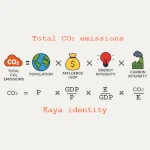 L'équation de Kaya: L'équation qui complique notre décarbonation
  La vitesse indépassable dans l’Univers: quand l'énergie devient infinie
  À quelle distance se trouve l’horizon?
  Comment les Panneaux Solaires Injectent-ils l'Électricité dans le Réseau?
  Dynamique de la Quantité de Mouvement pour expliquer la propulsion des fusées ou des méduses
  Comment l'énergie des électrons dicte les propriétés chimiques
  Comment peser le soleil ?
  Le rôle clé du principe d'incertitude quantique: Aucune particule ne peut être immobile
  Énergie et puissance: Ne pas confondre, le temps fait toute la différence
  Pourquoi y a-t-il une limite au froid, mais pas au chaud?
  La loi de la chute des corps de Galilée
  La Loi des gaz parfaits: Une équation, des milliers d'applications
  L'équation de Schrödinger a révolutionné notre vision de la matière
  Diagramme de Feynman : visualiser la physique des particules
  La magie du théorème de Noether: Du principe de moindre action aux lois de conservation
  Rapport entre masse grave et masse inertielle et principe d'équivalence
 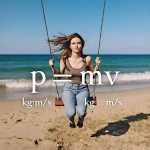 Troisième Equation de la Physique: La quantité de mouvement pour comprendre les collisions
 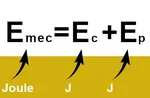 La deuxième équation essentielle en physique: L'intuition d'une grandeur qui se conserve
 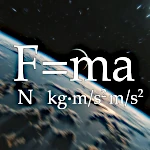 La première équation de la physique: Comment mathématiser la force
 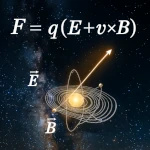 La force électromagnétique ou force de Lorentz
  L'énergie solaire reçue varie en fonction de l'inclinaison
  Pourquoi le marbre est plus froid que le bois ?
  Pourquoi un photon, qui n'a pas de masse, a une énergie ?
  Formule de Bayes et Intelligences Artificielles
  Les sept constantes fondamentales de la physique
  Quelle est la température ressentie dans l'espace interstellaire ?
  Courbes de rayonnement du corps noir: la loi de Planck
  Le principe d'équivalence, les effets gravitationnels sont indiscernables d'une accélération
  Les conséquences de E=mc2 sur notre compréhension de l'Univers
  Comment peser le soleil ?
  Equation de la chute libre des corps (1604)
  Coulomb vs Newton: la mystérieuse similitude des forces de l'Univers
  Equation de Boltzmann sur l'entropie (1877)
  Les équations de la relativité restreinte (1905)
  L'équation de la relativité générale (1915)
  Équations de la rotation planétaire: entre moment cinétique et équilibre gravitationnel
  Équation de la vitesse orbitale d'une planète
  L'équation de Planck
  Comprendre l'équation de Schrödinger sans faire de maths
  Les trois lois de Newton: De la pomme qui tombe aux planètes qui tournent
  Les équations de Maxwell
  Equation de Dirac
  Conservation de l'énergie : Un principe fondamental de la physique
  Equation de l'induction électromagnétique
  Pourquoi les particules élémentaires n'ont pas de masse ?