


Small Bodies
A multitude of objects in the Solar System
The Solar System is home to millions of small bodies, including asteroids, comets, and dwarf planets. These objects, often modest in size but essential for understanding the history of the Solar System, are distributed across different regions according to their origin and composition.
Asteroids and dwarf planets: worlds at the frontiers
Most asteroids are concentrated in the belt located between Mars and Jupiter, a remnant of material that never managed to form a planet. Dwarf planets, such as Pluto, evolve in the peripheral zones, notably near the Kuiper Belt, where many icy objects orbit.
Comets, messengers from the outer reaches
Comets come mainly from the Kuiper Belt and the vast Oort Cloud. Made of ice and dust, they light up as they approach the Sun, forming a spectacular tail. Studying them offers valuable insight into the primitive materials that shaped the Solar System.
There are items on this page
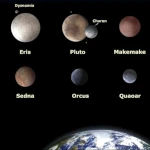 Dwarf Planets: The Forgotten Worlds of the Solar System
 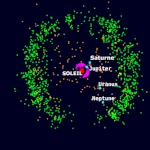 Kuiper Belt: Composition and Origins
  Haumea and its Moons: A Singularity of the Solar System
 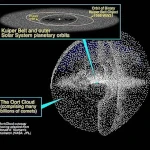 The Enigma of the Oort Cloud: Indirect Evidence and Uncertainties
 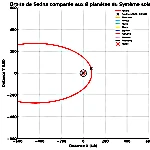 Sedna: The Mysterious Remnant at the Edge of the Solar System
  Quaoar: The Dwarf Planet That Defies the Roche Limit with Its Two Rings
 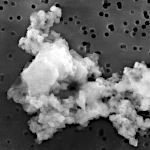 What is Dust? Between the Dust on Our Shelves and the Dust that Builds Planets
 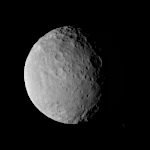 Ceres: Boundary Between Asteroid and Dwarf Planet
 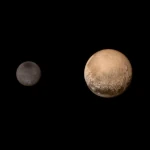 Pluto and its Moons: Charon, Nix, Hydra, Styx, and Kerberos
 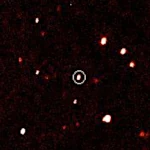 Eris: The Dwarf Planet at the Edge of the Solar System
 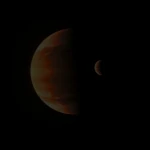 Gonggong: An Eccentric Witness to Distant Perturbations
 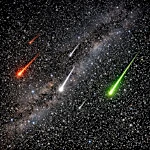 Meteor Showers: Perseids, Leonids, Geminids...
 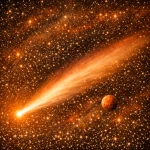 Interstellar Comets: When the Universe Sends its Messengers
 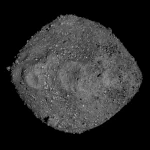 The Asteroid Bennu: The Building Blocks of Life
  Formation of Asteroids: From Cosmic Dust to Small Rocky Bodies
  Yarkovsky Effect: Orbit and Rotation of Asteroids
 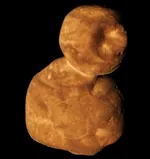 Arrokoth: Unique Witness to the Primordial Solar Nebula
 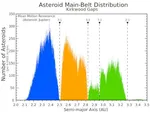 The Kirkwood Gaps in the Main Asteroid Belt
 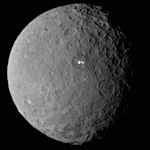 Asteroid Belt: Dark, Bright, or Red
 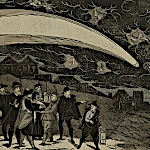 The Great Comet of 1577 Shattered the Crystal Spheres
  The Invisible Threat of Asteroids: From Pebbles to Flying Mountains
 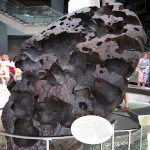 Meteorites: Messengers from Space and Witnesses of the Solar System
  Comet Hartley 2: The Icy Heart Scrutinized by Deep Impact
  When Two Asteroids Collide: The Strange Case of P/2010 A2
  2005 YU55: The 400 m Asteroid that Grazed Earth
  Asteroid Apophis: The Perfect Candidate for a Global Impact?
 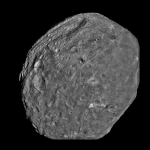 Vesta: The Colossus of the Asteroid Belt
  From Asteroids to Planets
 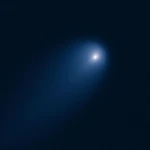 Comet Ison C/2012: between the promise of brilliance and disillusionment
 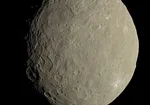 Giants of the Asteroid Belt: Classification by Size
 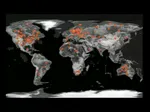 Impact Craters on Earth: Between Destruction and Mineral Resources
  Online Simulator: Orbits of Asteroids
  Online Simulator: Orbits of Near-Earth Asteroids
 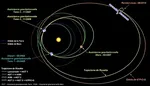 Rosetta has a date with a comet
 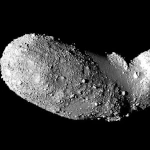 Near-Earth Asteroids: An Underestimated Threat?
 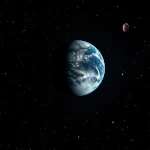 Asteroid 2009 DD45: A Reminder of Planetary Vulnerability to Asteroids
  Strange Resemblance Between Comet Hartley 2 and Asteroid Itokawa
 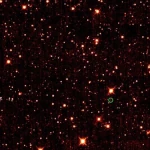 Earth Trojan Asteroids: The Companions Sharing our Orbit
 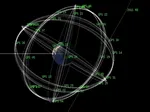 Torino Scale: a classification system for impact risks
  The Nice Model: Towards an Explanation of the Late Heavy Bombardment
 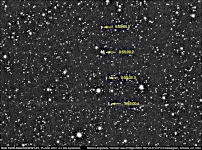 NEO Monitoring: The Case of Asteroid 2012 LZ1
 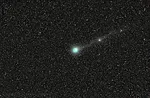 Comet Lemmon C/2012 F6: The green visitor of the southern hemisphere
 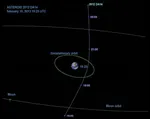 Asteroid 2012 DA14 passed on February 15, 2013
  Near-Earth Asteroid 2012 BX34: A Record Close Approach to Our Planet
 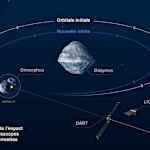 Didymos and Dimorphos: The First Asteroid Moon Moved by Humanity
 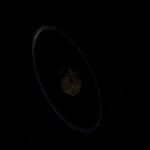 Chariklo and its rings: a surprising centaur asteroid
 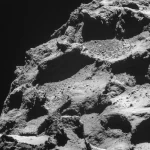 Rosetta and Philae: A Feat 500 Million Kilometers from Earth
  The Passage of Comets: Eccentric Orbits at the Heart of the Solar System
 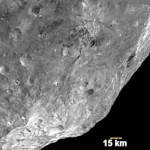 Vesta and its Curiosities: The Enigma of the Torn South Pole
 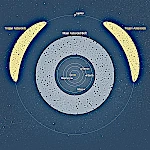 Meeting the Asteroids: The Main Belt
 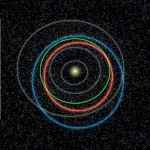 Orbits of Near-Earth Asteroids: When Asteroids Brush Past Earth
 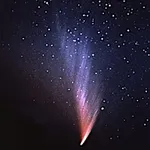 Comets: Streaks of Light, Promises of Life, and Cosmic Threats
 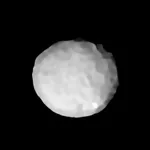 Asteroid Pallas: A Giant of the Main Belt
 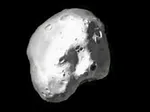 Asteroid Juno: an unknown giant of the solar system
  Ganymed (1036): Near-Earth and Mars-crosser
 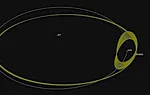 Earth's quasi-satellite: 2016 HO3