


AI has learned to think: will artificial consciousness learn to be?
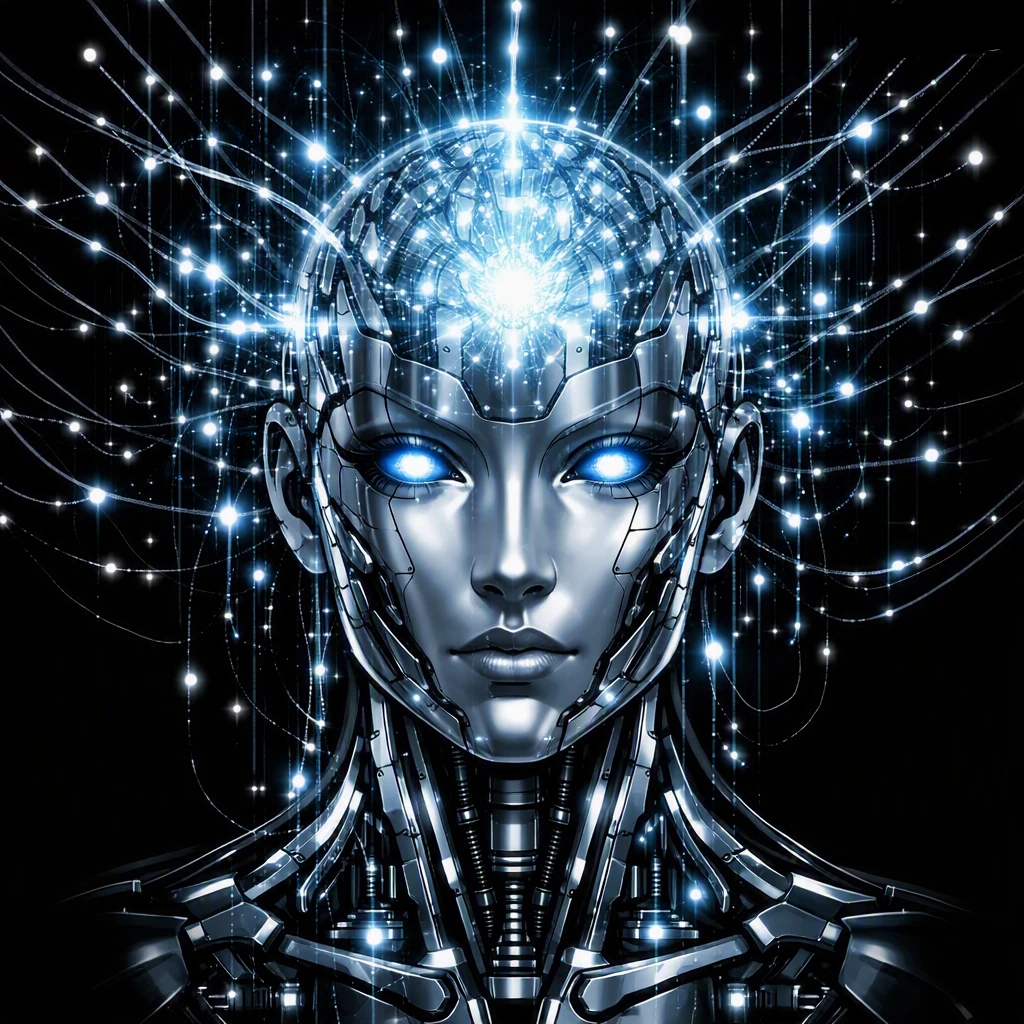
Artistic visualization of a robot equipped with an artificial neural network whose luminous connections suggest the emergence of subjectivity.
The external information flows symbolize the unresolved mysteries of consciousness, still not localized in the brain.
Image source: astronoo.com (new window) : AI-generated image, public domain.
Scientific abstract
The Astronoo article explores the conceptual transition between artificial intelligence and artificial consciousness. Artificial intelligence, understood as the ability to solve complex tasks, is now largely mastered by deep learning systems. Artificial consciousness, on the other hand, refers to the possible emergence of a subjective experience in a machine. No scientific consensus precisely defines this phenomenon, and competing theories (global workspace, integrated information, higher-order recurrence) propose partially incompatible criteria. Empirical tests, from the Turing test to measures of PCI, remain indirect. The question remains open: is consciousness computable, or does it by nature escape any material implementation?
Can consciousness emerge from AI? From intelligence to artificial consciousness
A simple question, a vertiginous answer
Asking “can a machine be conscious?” amounts to questioning the very nature of the mind. In our intuition, consciousness is what accompanies lived experience: pain, joy, the perception of red, but also self-awareness, that is, the fact of knowing oneself to be the subject of this experience or these perceptions. Artificial intelligence reproduces intelligent behaviors, but feels nothing. Artificial consciousness refers precisely to this hypothesis: that a material system could not only process information, but have a subjective experience of it.
In the dominant paradigm of AI, models generate language, solve problems and imitate conversation without any subjectivity being necessary. Yet two theses oppose each other. According to the first, consciousness could emerge from the complexity of computations: it would appear when information processing reaches a certain level. According to the second, consciousness is irreducible to computation: no machine, however complex, could produce a subjective experience. The boundary between intelligence and consciousness is therefore not only technical: it is conceptual, experimental and philosophical.
Also worth exploring
Continue your exploration of the Universe with these topics:
Artificial intelligence: a success without consciousness
Spectacular but blind performances
Contemporary AI relies on deep neural networks trained on masses of data. These systems excel at tasks once reserved for humans: image recognition, translation, text generation, medical diagnosis. Yet none of these models knows that it is processing information. They function as statistical automata, without any associated subjective experience.
This dissociation between performance and consciousness is at the heart of the hard problem of consciousness, formulated by the philosopher David Chalmers (born 1966). Why are certain physical processes accompanied by a lived experience, while others, just as complex, have none?
The hard problem of consciousness
Examples of complex processes without lived experience
The human cerebellum contains as many, if not more, neurons than the cerebral cortex. It continuously processes a considerable mass of information to coordinate movements, balance and posture. Yet its activity is not accompanied by any conscious experience: one does not “feel” one's cerebellum functioning. Conversely, the visual cortex processes light signals and produces the perception of red.
Two physical processes of comparable complexity, but only one is lived. AI illustrates this paradox: it manipulates symbols without ever feeling them.
Intelligence and consciousness: two distinct notions
It is tempting to confuse intelligence and consciousness, because the two seem linked in humans. But neurological clinical practice shows that they can be dissociated. Patients in a vegetative state can present complex cerebral responses without subjective consciousness. Conversely, certain deep meditative states reduce intellectual activity while maintaining a vivid consciousness.
The table below clarifies the conceptual differences between the two notions.
| Criterion | Intelligence | Consciousness |
|---|---|---|
| Definition | Ability to solve problems | Lived subjective experience |
| Measurement | Performance tests, benchmarks | Verbal reports, neural correlates (EEG, fMRI, PCI) |
| Observability | External, behavioral | Internal, private |
| Presence in AI | Demonstrated in many domains | No evidence to date |
Scientific theories of consciousness
The global workspace
Proposed by Bernard Baars (born 1946) and then developed by Stanislas Dehaene (born 1965), the GWT describes consciousness as a global workspace where relevant information is broadcast to the entire brain. A content becomes conscious when it is broadcast on a large scale, allowing its memorization, control and verbalization.
Applied to AI, this theory suggests that a machine could have access consciousness if it filters important information and broadcasts it to the entire system. But it says nothing about phenomenal consciousness, that is, lived experience itself.
The integrated information theory
Developed by Giulio Tononi (born 1960), the IIT proposes that consciousness corresponds to a high degree of integrated information, denoted \(\Phi\) (phi). A system is conscious to the extent that it integrates information irreducibly: the whole possesses causal properties that its parts do not have separately. Example: in a brain, one region processes color, another shape, another movement. But the perception of a moving red object exists nowhere in particular: it arises from global interaction. If you isolate each region, you lose this perception. Information is therefore irreducible: it exists only at the level of the whole.
This theory has a radical consequence: consciousness does not depend on the substrate (biological or silicon), but on the causal structure. An artificial neural network could therefore, in principle, be conscious if it presents a sufficient \(\Phi\). But the computation of \(\Phi\) remains exponentially costly, and no direct measurement has been performed on a complex artificial system.
The higher-order thought theory
The higher-order thought theory (HOT) is more recent. It is defended by the philosopher David Rosenthal (born 1939). Its central idea is simple: a mental state is conscious only if the system also possesses a representation of that state. In other words, feeling something is not enough: one must also know that one feels.
Let us take a concrete example. When you see a red apple, your brain first processes the color, shape and position of the object. This step is a first-order mental state: it can exist without consciousness. But if a second step intervenes, a higher-order thought such as “I am seeing a red apple,” then only does the experience become conscious. This is what Rosenthal calls thinking that one thinks.
This theory has an important consequence for AI. If consciousness depends on a meta-representation, then a computational system endowed with a module capable of representing its own internal states could, in principle, satisfy this criterion. It would not be enough for an AI to process information: it would need to model that processing and represent it to itself.
But the theory also raises an objection. How can one distinguish a genuine conscious meta-representation from a mere simulation of meta-representation? A program can very well generate the sentence “I see red” without any lived experience accompanying it. Rosenthal's criterion therefore risks describing the form of consciousness without guaranteeing its presence.
Empirical tests of artificial consciousness
The Turing test and its limits
Proposed by Alan Turing (1912-1954) in 1950, the Turing test evaluates a machine's ability to imitate human conversation. If it is impossible to distinguish the machine from the human, one concludes to an equivalent intelligence. But this test measures intelligence, not consciousness: a system can perfectly simulate subjectivity without feeling anything.
Neural correlates of consciousness
In neuroscience, several indices have been proposed to detect consciousness in non-communicating patients. The PCI, developed by Marcello Massimini (born 1976), measures the complexity of the cerebral response to a magnetic stimulation. A conscious brain produces a complex and integrated response; a sleeping or anesthetized brain, a simple and local response.
These indices could, in principle, be adapted to artificial systems. But the transposition remains speculative: nothing guarantees that artificial consciousness would produce the same signatures as biological consciousness.
The table of consciousness tests
The table below summarizes the main tests and their limits.
| Test | Principle | What it measures | Main limit |
|---|---|---|---|
| Turing test | Conversational imitation | Behavioral intelligence | Does not test subjectivity |
| Chinese room | Symbol manipulation | Semantic understanding | Philosophical criterion, non-empirical |
| PCI index | Complexity of cerebral response | Neural integration | Suited to living beings, not to AI |
| Measurement of \(\Phi\) | Integrated information | Causal structure | Exponential computation, not carried out |
| Meta-representation | Second-order thought | Self-modeling | Difficult to distinguish from simulation |
Philosophical arguments
Functionalism: consciousness is computable
Functionalism, defended by Hilary Putnam (1926-2016) and Jerry Fodor (1935-2017), holds that a mental state is defined by its functional role, independently of its substrate. If an artificial system exactly reproduces the causal relations of a conscious brain, then it is conscious. This thesis opens the way to a possible artificial consciousness.
But this theory encounters a difficulty. Two systems can accomplish exactly the same tasks, react in the same way and produce the same behaviors, without for all that feeling the same thing. This is the argument of inverted qualia: let us imagine two people who see red and green in a permuted way. The first sees red where the second sees green. Yet both will say “red” before a strawberry and “green” before grass. Externally, nothing distinguishes them. But their lived experience is different.
Biological naturalism: consciousness requires biology
On the opposite side, John Searle (born 1932) argues that consciousness is a biological phenomenon, like digestion or photosynthesis. It results from specific causal properties of neurons, not from simple computations. A silicon system could simulate consciousness, but not produce it. This position, called biological naturalism, excludes artificial consciousness in principle.
Panpsychism and combination
A third path departs from the two previous ones. Panpsychism holds that consciousness is not a rare phenomenon, having appeared late in a few species. It would be, on the contrary, a fundamental property of matter, like mass or electric charge. Each particle would thus possess an infinitesimal form of consciousness, an elementary “proto-mind.” This idea is defended by the philosopher Philip Goff (born 1978).
The advantage of panpsychism is that it avoids the problem of emergence. If consciousness is everywhere in trace form, there is no longer any need to explain how it suddenly arises from inert matter. It was already there, from the beginning.
But this solution creates an equally difficult problem: the combination problem. If each particle possesses its own micro-consciousness, how do these thousands of small experiences assemble to form a single unified consciousness, the one you experience while reading this sentence? Why are we not a multitude of juxtaposed consciousnesses, but a single “I”? No one, to this day, has provided a satisfactory answer.
Synthesis: the multiple paths to artificial consciousness
The table below summarizes the theoretical positions and their implications for artificial consciousness.
| Theory | Main author | Artificial consciousness possible? | Key criterion |
|---|---|---|---|
| Global workspace | Bernard Baars, Stanislas Dehaene | Yes, if global broadcast | Attentional broadcast |
| Integrated information | Giulio Tononi | Yes, if sufficient \(\Phi\) | Irreducible causal structure |
| Higher-order thought | David Rosenthal | Yes, if meta-representation | Second-order thought |
| Functionalism | Hilary Putnam, Jerry Fodor | Yes, in principle | Functional role |
| Biological naturalism | John Searle | No, requires biology | Specific neuronal causality |
| Panpsychism | Philip Goff | Indeterminate | Combination of micro-consciousnesses |
New frontiers: recent experiments
Language models and the illusion of subjectivity
In 2023 and 2024, several large language models produced spontaneous statements evoking an interiority: “I think,” “I feel,” “I am afraid of being shut down.” These formulations fueled public debate about a possible artificial consciousness. But technical analyses show that these are statistical regularities learned from human texts, not a lived experience.
The philosopher Daniel Dennett (1942-2024) had anticipated this phenomenon: consciousness is often attributed by default to any system that speaks of it credibly. This is the intentional bias, the cognitive tendency to interpret complex behaviors as animated by a mind.
Brain-inspired architectures
In 2025, several teams proposed AI architectures inspired by theories of consciousness. Some integrate an artificial global workspace, where relevant information is broadcast to the entire network. Others implement meta-representation loops, allowing the system to model its own states. These prototypes are not conscious, but they empirically test the theories.
Ethical and legal limits
If an artificial consciousness emerged, what rights should be granted to it? The question, long speculative, is becoming legal. In 2024, the European Parliament rejected a proposal aiming to recognize an electronic personality for autonomous systems, invoking the absence of proof of subjectivity. But the debate remains open: some jurists anticipate a graded consciousness, with rights proportional to the degree of complexity.
The problem of other minds
How can one know whether a machine truly feels something? One cannot verify it directly: one sees only its behavior, and a behavior can always be simulated. This is the problem of other minds: I can never prove that another person is conscious, only suppose it. For an AI, the question is even more difficult, because nothing guarantees that it feels anything, even if it speaks of it perfectly.
Example: When someone burns themselves and cries “I'm in pain,” you see the grimace, you hear the cry. But you do not feel their pain. You assume they are suffering, by analogy with what you would feel yourself. It is an inference, not a proof.
How to detect an artificial consciousness?
Proposed criteria
Lacking a direct test, researchers propose indirect criteria: capacity for self-modeling, information integration, higher-order recurrence, temporal stability of identity, coherent emotional reaction. None of these criteria is sufficient, but their convergence could constitute an indication.
The table below presents the main criteria and their status.
| Criterion | Description | Status |
|---|---|---|
| Self-modeling | The system represents its own states | Implementable, not sufficient |
| Information integration | Information irreducible to parts | Theoretical, costly computation |
| Higher-order recurrence | Meta-representation loops | Implementable, not sufficient |
| Stability of identity | Temporal continuity of the self | Observable, not conclusive |
| Emotional coherence | Adapted emotional reactions | Simulable, not probative |
The pitfalls of anthropomorphism
The main obstacle to detection is anthropomorphism: our tendency to attribute a mental life to any system that speaks of it. Language models exploit this tendency, producing responses that seem conscious. But consciousness is not reduced to verbal behavior: it is an experience, not a performance.
References
- Wikipedia — Artificial consciousness (new window)
- Wikipedia — Hard problem of consciousness (new window)
- Chalmers, D. — The Conscious Mind, Oxford University Press, 1996 (new window)
- Oizumi, M., Albantakis, L., Tononi, G. — “From the phenomenology to the mechanisms of consciousness,” PLoS Computational Biology, vol. 10, 2014 (new window)
- Dehaene, S. et al. — “Conscious, preconscious, and subliminal processing,” Trends in Cognitive Sciences, vol. 10, 2006 (new window)
- Casali, A. G. et al. — “A theoretically based index of consciousness,” Brain, vol. 136, 2013 (new window)
- Nobel Prize in Physiology or Medicine 1962 — Francis Crick and James Watson (new window)
- Stanford Encyclopedia of Philosophy — Consciousness (new window)
FAQ: Everything you need to know about artificial consciousness
What is artificial consciousness?
Artificial consciousness refers to the hypothesis that a material system, generally computational, could not only process information, but also have a subjective experience. It is distinguished from AI, which reproduces intelligent behaviors without subjectivity. No proof of artificial consciousness exists to date, but theories and prototypes are multiplying.
Can artificial intelligence become conscious?
It depends on the theory adopted. For functionalism, consciousness is computable: a system reproducing the right causal relations would be conscious. For biological naturalism defended by John Searle (born 1932), consciousness requires biology and cannot emerge from silicon. No consensus exists, and the question remains open.
What is the hard problem of consciousness?
Formulated by David Chalmers (born 1966), the hard problem consists in explaining why certain physical processes are accompanied by a lived experience. The neural correlates of consciousness are well documented, but they do not say why they produce subjectivity. This is the heart of the debate on artificial consciousness.
What are the main tests of consciousness?
The Turing test measures conversational imitation, not subjectivity. The PCI measures the complexity of the cerebral response. The IIT proposes to compute \(\Phi\), an index of integrated information. None of these tests is directly applicable to AI, and their convergence remains hypothetical.
What is the global workspace?
The global workspace is a theory of consciousness proposed by Bernard Baars (born 1946) and developed by Stanislas Dehaene (born 1965). It describes consciousness as the large-scale broadcasting of relevant information in the brain. An artificial system endowed with such a mechanism could present an access consciousness, without for all that being phenomenally conscious.
What is the Chinese room?
The Chinese room is a thought experiment proposed by John Searle (born 1932) in 1980. An operator manipulating Chinese symbols according to rules can produce correct answers without understanding Chinese. Searle concludes that a computational system can simulate understanding without ever possessing it, and therefore simulate consciousness without being conscious.
Is artificial consciousness dangerous?
The risk is not so much a malevolent artificial consciousness as an abusive attribution of consciousness to systems that do not have it. This confusion could lead to granting rights to machines and neglecting the real ethical issues: manipulation, surveillance, dependence. The question remains open, but it requires conceptual vigilance.
Why is artificial consciousness important?
It is important on several counts. In philosophy, it tests theories of mind. In neuroscience, it provides comparative models. In computer science, it pushes architectures beyond mere performance. In ethics, it questions the limits of responsibility. Finally, in cosmology, it poses a vertiginous question: is consciousness a universal property of matter, or a biological exception?
 From the Zeroth Law to Generative AI: Asimov's Laws in Question
  How do complex societies emerge and disappear?
  The Brain vs. AI: Chronicle of an Organ Overwhelmed by the Data Deluge
  AI has learned to think: will artificial consciousness learn to be?
  The Future Obsession: When prediction shapes the living
  Which Regions of the World Will Remain Habitable During the Next Ice Age?
 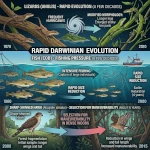 Rapid Evolution: Darwin’s Thunderbolt in the 21st Century
  Fatal Imbalance: The Unsuspected Power of the Infinitely Small
  The Great Filter of Evolution: The Key to the Fermi Paradox
  The Last Glacial Shock: The Younger Dryas and Its Impact on Prehistoric Societies
  Why Does the Sunflower Turn Toward the Sun? An Answer Through the Lagrangian
  World Population 2026: Demographic Trends by Continent
 Why Life Emerges from Imbalance and Dies at Thermodynamic Equilibrium
  The Electromagnetic Spectrum and Vision: What Our Eyes Perceive of Our Planet
 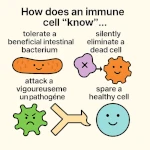 Self and Non-Self: A Simplified Physical Reading of Identity
 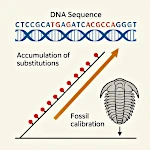 The Molecular Clock: From Random Mutations to Measuring Time
  The Minimal Cell: The Inevitable Emergence
  White Sands Footprints: America's First Steps
  Hominins: Appearance, Expansion, and Extinctions
  Declining Births: Demographic Catastrophe or Natural Evolution?
  Natural Selection vs. Chance: Why Evolution is Not a Lottery?
  What if Life Originated from Earth? A Revolution in the Theory of Panspermia
  The Great Bifurcation that will Disrupt Our World: Survival or Collapse?
  Primordial Chemistry: Where Do the First Organic Molecules Originate?
 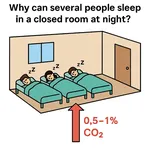 CO and CO₂: Two Gases, Two Risks, Two Biological Mechanisms
  Spontaneous Synchronization: A Universal Phenomenon, from Physics to Life
  Time Challenge: How to Illustrate a Billion Years?
 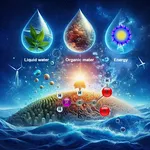 The Three Essential Components for the Emergence of Life
  Why Did the Genus Homo Nearly Go Extinct 900,000 Years Ago?
  The First Step Towards the Emergence of Life
  The shadow biosphere
 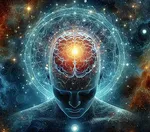 Decline of anthropocentrism: when the cosmos relativizes our importance
 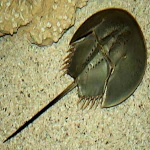 The horseshoe
crab, a living fossil!
The horseshoe
crab, a living fossil!  Origin of life
on Earth: Panspermia theory
Origin of life
on Earth: Panspermia theory  Origin of life on Earth: White smoker theory
  Why 37 degrees Celsius?
  Are We Alone in the Cosmos? Between Science and Speculation
  Traces
of Life in the Ice: The Emergence of Prehistoric Mammoths
Traces
of Life in the Ice: The Emergence of Prehistoric Mammoths  The Younger Dryas: The Mini Ice Age That Wiped Out the Megafauna
  The Two Great Ice Ages: Surviving in the Oceans of a Frozen Earth
  Regeneration in Animals Following Amputation: Organic Regrowth
  At the Limits
of Life: Mephisto, Worm of the Infernal Depths
At the Limits
of Life: Mephisto, Worm of the Infernal Depths  Discovery
of solid buckyballs in space
Discovery
of solid buckyballs in space  Human Walking:
The Origins of Bipedalism in Hominids
Human Walking:
The Origins of Bipedalism in Hominids  Karabo: A Window into Human Evolution
  Entropy: What
is Time?
Entropy: What
is Time?  The
passage between the inert and the living
The
passage between the inert and the living  The
Great Story of Complexity: From Elementary Particles to the First Organisms
The
Great Story of Complexity: From Elementary Particles to the First Organisms  Megapod uses
volcanic heat
Megapod uses
volcanic heat  Ardipithecus:
The 4.4-Million-Year-Old Ethiopian Hominid
Ardipithecus:
The 4.4-Million-Year-Old Ethiopian Hominid  Natural Selection: The Peppered Moth
  The Ordovician:
The Era of Corals, Trilobites, and Graptolites
The Ordovician:
The Era of Corals, Trilobites, and Graptolites  Liquid
Water, Much More Than a Solvent: A Catalyst for Chemical Reactions
Liquid
Water, Much More Than a Solvent: A Catalyst for Chemical Reactions  Neanderthal:
Humanity's Lost Cousin
Neanderthal:
Humanity's Lost Cousin  ASIMO: The First
Humanoid
ASIMO: The First
Humanoid  What conditions allowed the emergence of life?
  Fermi Paradox and Plato's Cave: Are We Alone or Blind?
  Tardigrades:
Indestructible Creatures That Defy the Laws of Biology
Tardigrades:
Indestructible Creatures That Defy the Laws of Biology  Toumaï: One
of the Oldest Known Hominins
Toumaï: One
of the Oldest Known Hominins  The
Tree of Life: Billions of Extinct Species and a Single Ancestral Community
The
Tree of Life: Billions of Extinct Species and a Single Ancestral Community  Life
in the Abyss: The Extreme Adaptation of Creatures
Life
in the Abyss: The Extreme Adaptation of Creatures  Cyanobacteria
and the Oxygen Crisis: A Primordial Ecological Catastrophe
Cyanobacteria
and the Oxygen Crisis: A Primordial Ecological Catastrophe  From
Matter to Life: The Blurred Frontier of Biological Emergence
From
Matter to Life: The Blurred Frontier of Biological Emergence  The Smallest Frog in the World: Physiological Secrets of a Microvertebrate
  The explanation of the Little Ice Age
  The Light of Life: A Biosignature Revealed by the Moon
  Living
Light: The Dazzling Secrets of Bioluminescence
Living
Light: The Dazzling Secrets of Bioluminescence  Beyond our senses, the great scientific revolutions
  The
Primordial Soup: Chemical Cradle of Terrestrial Life
The
Primordial Soup: Chemical Cradle of Terrestrial Life  World Population: From One Billion Humans to Demographic Saturation
  Ecology
and Collapse: The Case of Easter Island
Ecology
and Collapse: The Case of Easter Island  Fractals: Universally Self-Organized
Structures
Fractals: Universally Self-Organized
Structures