


The Electromagnetic Spectrum and Vision: What Our Eyes Perceive of Our Planet
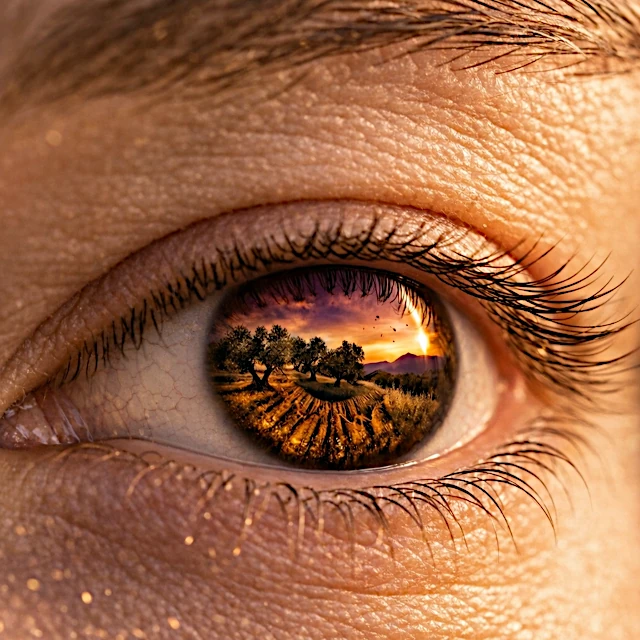
What we take for visual reality is just a tiny band of frequencies within the vastness of the electromagnetic spectrum.
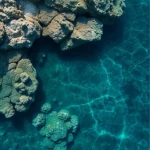
Why do water, air, and rocks impose their filters on our perception of the world?
Image source:
astronoo.com (new window)
Why Does Life Depend on the Electromagnetic Spectrum?
Because light provides the energy and information necessary for the organization of life: from ultraviolet radiation to radio waves, each portion of the spectrum interacts differently with biological matter. Photosynthesis captures a narrow band of visible light, organic molecules react to ultraviolet, and infrared heat regulates thermal balances. Terrestrial life has evolved by precisely adapting to this window of radiation that the atmosphere allows through. The electromagnetic spectrum is therefore not just a physical backdrop: it is the energetic architecture that makes the emergence, stability, and evolution of life possible.
Why Does Life Only See Such a Small Part of the Electromagnetic Spectrum?
A Tiny Window in a Vast Spectrum
The electromagnetic spectrum stretches from radio waves to gamma rays, with wavelengths ranging from several kilometers to fractions of a nanometer. Yet, our eyes only perceive a tiny window: visible light, centered around 550 nm. This narrow band is not an isolated biological coincidence; it is the result of an ancient dialogue between the physics of our star, the chemistry of our atmosphere, and the fragility of living molecules.
The Optical Window: A Privileged Passage for Life
Visible light corresponds precisely to a region of the spectrum where Earth's atmosphere is relatively transparent, and where the energy carried by photons is sufficient to trigger chemical reactions without breaking complex molecules like DNA (deoxyribonucleic acid). Below, in the far UV (ultraviolet), photons become destructive to chemical bonds. Above, in the thermal infrared, the energy per photon decreases, and signals become harder to distinguish from ambient thermal noise.
A Vision Shaped by Earth's Geophysical History
Our vision bears the mark of a geophysical history. It has been shaped around the light that the Sun provides in abundance, the light that the atmosphere allows to pass without too much distortion, and the light that living molecules can absorb without breaking. The most suitable light band emerged from a compromise between the availability of rays, the transparency of the atmosphere, and the chemical stability of molecules, even though it represents only a tiny fraction of possible frequencies.
The Planet Imposes Its Filters, Life Selects Its Sensors
Earth Is Not Just a Blue Planet: It Is Also a Spectral Filter
Atmospheric gases strongly absorb certain frequency bands and allow others to pass through. Visible light slips through a wide window of transparency, while the most energetic ultraviolet is largely blocked by ozone, thus protecting organic molecules from the most aggressive photons.
In the infrared, the situation is partially reversed. Gases like water vapor, carbon dioxide, and methane effectively absorb certain wavelengths, trapping heat and contributing to the greenhouse effect. However, there remain infrared windows through which Earth can radiate into space. These windows condition how the planet cools.
Water: A Protective Filter Favorable to Cellular Life
Before colonizing land, life thrived in the oceans, protected by a unique environment. Water acts as a huge spectral filter: it absorbs the most energetic wavelengths while allowing blue and green wavelengths, which are less damaging to aquatic cells, to penetrate. Organisms like algae and marine plants exploit this attenuated and selective light.
In many aquatic species, natural selection has favored visual systems optimized for blue light, which is dominant at depth. Their perception of the world thus results from a selection among the frequencies of a filtered and protective light spectrum.
Rocks, Soils, and Vegetation: Mirrors Revealing Life
On the surface of the continents, rocks, soils, and vegetation interact with light in unique ways depending on its wavelength. Leaves, for example, intensely absorb red and UV light but strongly reflect near-infrared light, which satellites use to map vegetation cover.
In this environment, certain colors become essential indicators. Being able to distinguish the bright green of a healthy leaf from the brown of a withered one, or to spot the contrast between an arid soil and a lush meadow, confers a major evolutionary advantage. Thus, color perception is not random: it is shaped by the spectral richness of Earth's surfaces, which guides the selection of species.
Vision: A Natural Selection of Available Frequencies
Being born on Earth is like entering a room where the light has already been selected. Sensory systems are not created randomly: they exploit the available information channels. Our vision is thus the result of a natural selection among the frequencies that the atmosphere has allowed to pass. In short, our eyes are a miniature reflection of the geological and biological diversity of our planet.
A Vital Balance: Pigments and Receptors Under Evolutionary Pressure
The pigments and photoreceptors of living organisms must operate within a narrow spectral range, or risk disappearing. Photons must be energetic enough to trigger essential chemical reactions but must not exceed a destructive threshold: beyond that, they break molecular bonds, causing lethal mutations.
The visible band is therefore the only viable zone. Those whose pigments and receptors exploited this vital compromise were selected, while those without this property disappeared.
Summary Table: Spectrum Domains and Interactions with Life
| Spectral Domain | Typical Wavelengths | Dominant Interaction with Life | Terrestrial Example | Comment |
|---|---|---|---|---|
| Gamma rays | <0.01 nm | Intense ionization, severe DNA(deoxyribonucleic acid) damage | Solar flares, distant gamma-ray bursts | No organism directly resists this radiation. However, extremophile bacteria like Deinococcus radiodurans can repair their DNA(deoxyribonucleic acid) after exposure. |
| X-rays | 0.01 - 10 nm | Ionization, controlled medical use for imaging | X-ray of bones, imaging of hot galaxies | Absent in natural terrestrial environments (except rare geothermal sources). Life has never integrated them as a signal. |
| UV(ultraviolet) (far) | 10 - 200 nm | Breaking of chemical bonds, DNA(deoxyribonucleic acid) mutations | Sunburn, sterilization by UV(ultraviolet) lamps | The ozone layer blocks these wavelengths. Without it, surface life would be impossible. Some cave-dwelling microorganisms have lost their repair systems. |
| UV(ultraviolet) (near) | 200 - 400 nm | Mutagenic effects, but also signals for some animals and plants | UV(ultraviolet) patterns on flowers and bird feathers, bee vision | An essential biological window. From arthropods to vertebrates (e.g., some rodents), UV(ultraviolet) perception guides food search and mating displays. |
| Visible light | 400 - 700 nm | Vision, photosynthesis, synchronization of circadian rhythms | Chlorophyll in plants, human trichromatic vision | Core of Earth's perceptual window. It is around this band that visual complexity and photosynthesis have evolved, shaping the biosphere. |
| Near infrared | 0.7 - 5 µm | Thermal perception, plant health signature | Prey detection in some snakes (rattlesnakes), red edge effect for vegetation | Rattlesnakes and vipers have dedicated sensory organs. Plants strongly reflect this radiation, a signal that some insects or birds could exploit. |
| Far infrared | 5 - 1000 µm | Thermal radiation, body temperature regulation | Heat exchange between skin and environment, sun exposure behaviors | No organism "sees" this band, but it governs thermoregulation. Deserts and poles impose strong radiative constraints on living beings. |
| Microwaves | 1 mm - 10 cm | Dielectric heating, debated non-thermal effects | Artificial exposure (telephony, microwaves), weak natural interactions | No species has naturally adapted to these frequencies, except for some hypotheses about the orientation of certain beetles by the modulated magnetic field. |
| Radio waves | >10 cm | Long-distance communication, very low direct interaction | Telephony signals, radio astronomy | Biological organisms do not pick up these waves. Yet, our radio emissions create constant "noise" that species can neither perceive nor avoid. |
Key Takeaways
The electromagnetic spectrum is a vast continuum, but terrestrial life uses only a narrow band. This selection is not arbitrary; it results from a compromise between the spectrum of our star, the filters of the atmosphere and water, and the limits of the chemistry of life. Our eyes, pigments, and receptors are local responses to these constraints.
Understanding what our mode of perception says about our planet means recognizing that seeing, for us, means "seeing in the visible band," and that this obvious fact is contingent. Elsewhere, around other stars and on other worlds, life could carve up the spectrum differently, with other colors, other windows, and other blind spots.
FAQ – Electromagnetic Spectrum and Life
What is the electromagnetic spectrum?
It is the continuous range of electromagnetic waves classified by their wavelength or frequency, ranging from radio waves to gamma rays. It includes visible light, the only portion perceptible to the human eye.
Why is visible light essential to life?
It carries the ideal energy for photosynthesis without being too energetic to destroy biological molecules. It is a window of stability in an otherwise dangerous spectrum.
Are ultraviolet rays beneficial or dangerous?
Both. UV rays enable the synthesis of vitamin D, but in excess, they damage DNA and promote mutations. Fortunately, the ozone layer filters out most of the most harmful UV rays.
Do microwaves and radio waves impact living beings?
Their energy is too low to break molecular bonds. However, they can cause heating when concentrated, as in a microwave oven.
Why are X-rays and gamma rays dangerous?
Their very high energy ionizes atoms, breaks biological molecules, and alters DNA. They are naturally produced by the cosmos, but Earth's atmosphere largely protects us from them.
Could life exist with a different spectrum?
Theoretically, yes, but it would be radically different. Life on Earth is adapted to the transparency window of our atmosphere and solar emission. A different environment would give rise to other forms of biochemistry.
 From the Zeroth Law to Generative AI: Asimov's Laws in Question
  How do complex societies emerge and disappear?
  The Brain vs. AI: Chronicle of an Organ Overwhelmed by the Data Deluge
  AI has learned to think: will artificial consciousness learn to be?
  The Future Obsession: When prediction shapes the living
  Which Regions of the World Will Remain Habitable During the Next Ice Age?
 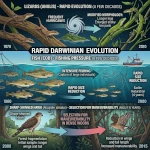 Rapid Evolution: Darwin’s Thunderbolt in the 21st Century
  Fatal Imbalance: The Unsuspected Power of the Infinitely Small
  The Great Filter of Evolution: The Key to the Fermi Paradox
  The Last Glacial Shock: The Younger Dryas and Its Impact on Prehistoric Societies
 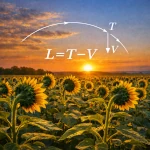 Why Does the Sunflower Turn Toward the Sun? An Answer Through the Lagrangian
  World Population 2026: Demographic Trends by Continent
 Why Life Emerges from Imbalance and Dies at Thermodynamic Equilibrium
  The Electromagnetic Spectrum and Vision: What Our Eyes Perceive of Our Planet
  Self and Non-Self: A Simplified Physical Reading of Identity
  The Molecular Clock: From Random Mutations to Measuring Time
  The Minimal Cell: The Inevitable Emergence
  White Sands Footprints: America's First Steps
  Hominins: Appearance, Expansion, and Extinctions
  Declining Births: Demographic Catastrophe or Natural Evolution?
  Natural Selection vs. Chance: Why Evolution is Not a Lottery?
  What if Life Originated from Earth? A Revolution in the Theory of Panspermia
  The Great Bifurcation that will Disrupt Our World: Survival or Collapse?
  Primordial Chemistry: Where Do the First Organic Molecules Originate?
 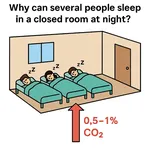 CO and CO₂: Two Gases, Two Risks, Two Biological Mechanisms
  Spontaneous Synchronization: A Universal Phenomenon, from Physics to Life
  Time Challenge: How to Illustrate a Billion Years?
 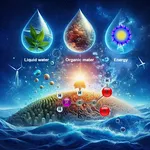 The Three Essential Components for the Emergence of Life
  Why Did the Genus Homo Nearly Go Extinct 900,000 Years Ago?
  The First Step Towards the Emergence of Life
  The shadow biosphere
  Decline of anthropocentrism: when the cosmos relativizes our importance
  The horseshoe
crab, a living fossil!
The horseshoe
crab, a living fossil!  Origin of life
on Earth: Panspermia theory
Origin of life
on Earth: Panspermia theory  Origin of life on Earth: White smoker theory
  Why 37 degrees Celsius?
  Are We Alone in the Cosmos? Between Science and Speculation
  Traces
of Life in the Ice: The Emergence of Prehistoric Mammoths
Traces
of Life in the Ice: The Emergence of Prehistoric Mammoths  The Younger Dryas: The Mini Ice Age That Wiped Out the Megafauna
  The Two Great Ice Ages: Surviving in the Oceans of a Frozen Earth
  Regeneration in Animals Following Amputation: Organic Regrowth
  At the Limits
of Life: Mephisto, Worm of the Infernal Depths
At the Limits
of Life: Mephisto, Worm of the Infernal Depths  Discovery
of solid buckyballs in space
Discovery
of solid buckyballs in space  Human Walking:
The Origins of Bipedalism in Hominids
Human Walking:
The Origins of Bipedalism in Hominids  Karabo: A Window into Human Evolution
  Entropy: What
is Time?
Entropy: What
is Time?  The
passage between the inert and the living
The
passage between the inert and the living  The
Great Story of Complexity: From Elementary Particles to the First Organisms
The
Great Story of Complexity: From Elementary Particles to the First Organisms  Megapod uses
volcanic heat
Megapod uses
volcanic heat  Ardipithecus:
The 4.4-Million-Year-Old Ethiopian Hominid
Ardipithecus:
The 4.4-Million-Year-Old Ethiopian Hominid  Natural Selection: The Peppered Moth
  The Ordovician:
The Era of Corals, Trilobites, and Graptolites
The Ordovician:
The Era of Corals, Trilobites, and Graptolites  Liquid
Water, Much More Than a Solvent: A Catalyst for Chemical Reactions
Liquid
Water, Much More Than a Solvent: A Catalyst for Chemical Reactions  Neanderthal:
Humanity's Lost Cousin
Neanderthal:
Humanity's Lost Cousin  ASIMO: The First
Humanoid
ASIMO: The First
Humanoid  What conditions allowed the emergence of life?
  Fermi Paradox and Plato's Cave: Are We Alone or Blind?
  Tardigrades:
Indestructible Creatures That Defy the Laws of Biology
Tardigrades:
Indestructible Creatures That Defy the Laws of Biology  Toumaï: One
of the Oldest Known Hominins
Toumaï: One
of the Oldest Known Hominins  The
Tree of Life: Billions of Extinct Species and a Single Ancestral Community
The
Tree of Life: Billions of Extinct Species and a Single Ancestral Community  Life
in the Abyss: The Extreme Adaptation of Creatures
Life
in the Abyss: The Extreme Adaptation of Creatures  Cyanobacteria
and the Oxygen Crisis: A Primordial Ecological Catastrophe
Cyanobacteria
and the Oxygen Crisis: A Primordial Ecological Catastrophe  From
Matter to Life: The Blurred Frontier of Biological Emergence
From
Matter to Life: The Blurred Frontier of Biological Emergence  The Smallest Frog in the World: Physiological Secrets of a Microvertebrate
  The explanation of the Little Ice Age
  The Light of Life: A Biosignature Revealed by the Moon
  Living
Light: The Dazzling Secrets of Bioluminescence
Living
Light: The Dazzling Secrets of Bioluminescence  Beyond our senses, the great scientific revolutions
  The
Primordial Soup: Chemical Cradle of Terrestrial Life
The
Primordial Soup: Chemical Cradle of Terrestrial Life  World Population: From One Billion Humans to Demographic Saturation
  Ecology
and Collapse: The Case of Easter Island
Ecology
and Collapse: The Case of Easter Island  Fractals: Universally Self-Organized
Structures
Fractals: Universally Self-Organized
Structures