


Human Brain and Artificial Intelligence: Similarities and Differences
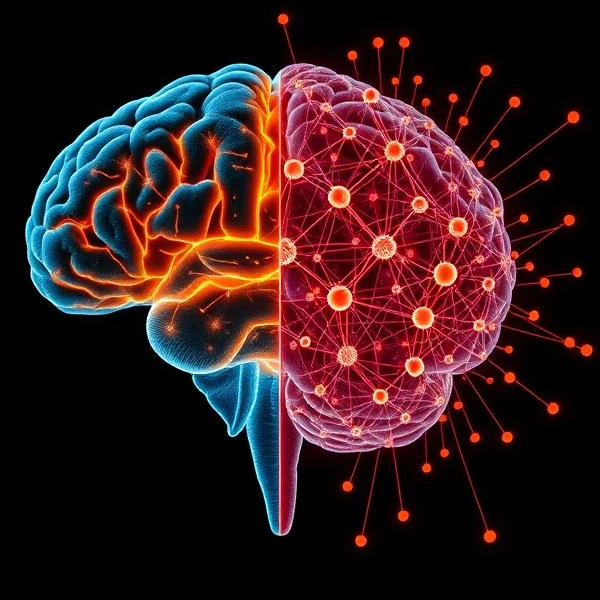
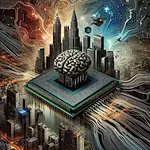
Between gray matter and code: an artistic fusion where the human brain and artificial intelligence intertwine, nourished by data from two universes.
Image source: astronoo.com (new window) — AI-generated image, public domain.
Scientific summary
The Astronoo article offers a comparison between the human brain and artificial intelligences in their decision-making processes. It shows that, when faced with a question, the brain gathers stored data, calculates probabilities and chooses a response, according to a logic that resembles that of artificial neural networks. Both systems share learning, adaptation and the management of uncertainty. However, the brain integrates emotions, moods and a personal history that machines cannot reproduce. The article thus highlights the unique sophistication of human cognition and the limits of AI.
Does the human brain work like artificial intelligence?
This article is devoted to the comparison between the human brain and artificial intelligences in their way of making decisions. But does the human brain really work like artificial intelligence? The answer is nuanced. Both gather data, calculate probabilities and produce a response: the brain draws on its memories and experience, AI on the data from its training. Both learn, adapt and correct their errors. Yet a fundamental divergence remains: the human brain integrates emotions, moods, anxieties and a personal history, all subjective factors that weigh on every choice. AI, on the other hand, is limited to objective calculations and predefined objectives. Understanding these parallels makes it possible to appreciate the sophistication of human cognition while designing machines capable of adapting to more nuanced contexts.
Also worth exploring
Continue your exploration of the Universe with these topics:
The Human Brain: A Decision-Making Machine
A multi-step decision process
The Human Brain is an extraordinary machine designed to make decisions. Every day, it processes an incalculable amount of information to allow us to navigate a complex and uncertain world.
When a question arises ("prompt" in AI language), the human brain begins by gathering the data stored in its neurons. These data are the fruit of experience, learning and memory. Similarly, an AI draws on the data provided during its training. Next, the brain calculates the probability of different responses based on the context and available information, just as an AI uses algorithms to determine the most probable response. Finally, the brain chooses a binary response (yes or no) based on this probability, a process that resembles the way an AI generates an output.
Striking similarities with AI
The decision-making process of the human brain and that of artificial intelligences therefore present fascinating similarities, although they operate in very different contexts. For example, when you choose a dish at a restaurant, your brain weighs tastes, memories associated with certain foods, and even your state of hunger to reach a decision. The decision-making process is strongly influenced by emotions, moods and personal experience.
The human brain integrates emotional, contextual and subjective dimensions that enrich its cognition, while AI is limited to calculations and objective data. This difference highlights the unique sophistication of human cognition.
Examples of Analogies between the Human Brain and Artificial Intelligences
Learning and Adaptation
The human brain and artificial intelligences share a remarkable capacity to learn and adapt. The human brain learns through neuroplasticity, that is, the ability of neurons to reorganize and form new connections based on lived experiences. For example, when a person learns to play a musical instrument, their brain physically modifies its neural networks to improve this skill.
Similarly, AI uses machine learning techniques to adapt and improve its performance. For example, a speech recognition algorithm improves by analyzing thousands of hours of speech to refine its ability to understand and interpret human language. However, unlike the human brain, which can learn autonomously from almost any experience, AI requires structured data and specific training to progress.
Decision-Making in an Uncertain Context
The human brain excels at decision-making in an uncertain context, where information is incomplete or ambiguous. For example, a doctor must often make a diagnosis based on partial or contradictory symptoms. The brain then uses heuristics (mental shortcuts) and past experiences to assess risks and make a decision.
AI, particularly those based on deep learning, can also make decisions in an uncertain context using probabilistic models. For example, a medical AI can predict the probability that a patient suffers from a disease by analyzing incomplete data. However, unlike the human brain, AI cannot integrate subtle contextual factors, such as intuition or empathy, which play a crucial role in human decisions.
Similarly, AI uses machine learning techniques to adapt and improve its performance. For example, a speech recognition algorithm improves by analyzing thousands of hours of speech to refine its ability to understand and interpret human language. However, unlike the human brain, which can learn autonomously from almost any experience, AI requires structured data and specific training to progress.
Creativity and Generation of Ideas
The human brain is capable of creativity, that is, generating new and original ideas by combining existing concepts in novel ways. For example, an artist can create a unique work of art inspired by their experiences, emotions and imagination.
AI, particularly text or image generation models such as GPT or DALL-E, can also produce creative content by combining existing data. For example, an AI can generate a poem or a painting inspired by millions of examples. However, this creativity is limited by the training data and algorithms: an AI cannot feel emotions or have an artistic intention, which distinguishes its creativity from that of a human being.
Similarly, AI uses machine learning techniques to adapt and improve its performance. For example, a speech recognition algorithm improves by analyzing thousands of hours of speech to refine its ability to understand and interpret human language. However, unlike the human brain, which can learn autonomously from almost any experience, AI requires structured data and specific training to progress.
Error Management and Learning from Failure
The human brain often learns from its mistakes. For example, a child who touches a hot plate quickly learns to avoid this danger in the future. This ability to learn from failures is essential for adaptation and survival.
AI can also learn from its mistakes thanks to techniques such as reinforcement learning. For example, a game algorithm like AlphaGo learns to improve its strategies by analyzing lost games. However, unlike the human brain, AI does not feel frustration or intrinsic motivation to improve: its learning is purely based on predefined objectives.
The Influence of Moods and Emotions
Subjective factors in decision-making
Where AI is limited to probabilistic calculations based on objective data, the human brain integrates subjective elements such as moods, mental state, anxieties, and tolerance thresholds. For example, a stressed or anxious person might interpret a situation differently from someone who is relaxed, even if the objective data are identical. These emotional and psychological factors play a crucial role in decision-making, adding a layer of complexity that AI cannot authentically reproduce.
The variable weight of emotions
It is important to note that emotions, as data stored in the brain, are also weighted differently depending on the context and personal history. For example, a traumatic experience can give greater weight to certain emotions, thereby influencing future decisions. Similarly, AI manipulates data with different weightings, but these weightings are determined by algorithms and not by subjective experience.
In summary
Key takeaways
The human brain and artificial intelligences do share basic mechanisms in their decision-making process, yet human experience is enriched by unique emotional and contextual elements. Understanding these parallels and divergences allows us not only to appreciate the sophistication of our own brain, but also to better design AI capable of adapting to more nuanced contexts.
References
- University of Oxford – Study shows that the way the brain learns is different from the way artificial intelligence systems learn (new window)
- PMC – Recent Advances at the Interface of Neuroscience and Artificial Intelligence (new window)
- alphaXiv – Brain-inspired learning in artificial neural networks: a review (new window)
- UTHealth SBMI – Artificial Intelligence vs. Human Intelligence: Which Excels Where and What Will Never Be Matched (new window)
- Psychreg – The Human Mind vs The Machine Mind: A Psychological Perspective on AI (new window)
- Digital Dharma – Artificial Neural Networks vs Biological Brains: Where the Metaphor Breaks (new window)
- Wiley – Shared Minds: The Cognitive Parallels Between Humans and Artificial Intelligence (new window)
FAQ: Everything you need to know about the human brain and artificial intelligences
What distinguishes the human brain from an artificial intelligence?
The human brain integrates emotions, moods, autobiographical memory and a personal history, while artificial intelligence is limited to probabilistic calculations performed on objective data. This fundamental difference explains why two people can react differently to the same situation, whereas an AI will always provide the most probable response according to its training.
Can artificial intelligences feel emotions?
No. AI can simulate emotional responses by imitating patterns observed in its training data, but it feels nothing. An AI can write a sad or joyful poem, but it experiences neither sadness nor joy. This absence of subjective experience constitutes one of the clearest boundaries between human cognition and artificial cognition.
How does the human brain make a decision?
The brain begins by gathering the data memorized in its neurons, derived from experience and learning. It then calculates the probability of different responses based on the context, and then chooses a binary response, yes or no. This process resembles that of an AI, with the difference that it is constantly modulated by emotions, fatigue and the mental state of the moment.
Do AI learn like the human brain?
Both systems learn, but in very different ways. The human brain learns through neuroplasticity, reorganizing its neural connections autonomously from almost any experience. AI, on the other hand, uses machine learning and requires structured data as well as specific training to progress.
Can artificial intelligence be creative?
An AI can produce new content by combining existing data, such as a poem, an image or a melody. But this creativity remains limited by its training data and algorithms. An AI has no artistic intention, no emotion, no desire to express something, which deeply distinguishes it from human creativity.
Is the human brain more performant than an AI?
It depends entirely on the task considered. AI excels at massive calculation, pattern recognition and processing vast volumes of data. The human brain, on the other hand, remains superior for contextual adaptation, intuition, empathy and decision-making in ambiguous situations. The two forms of intelligence are therefore complementary rather than opposed.
 The Different Types of AI Learning
  Agentic AI: When Machines Become Autonomous
  What AI Cannot Do
  Artificial Intelligence and Astronomy: Understanding the Role of AI Assistants
  AI Tools: How to Choose?
 Generative AI vs AGI: Where does imitation end and consciousness begin?
  Artificial networks vs biological networks: Two systems, one common architecture
 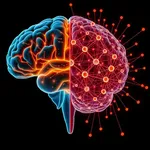 Human Brain and Artificial Intelligences: Similarities and Differences
  AlphaGo vs AlphaGo Zero: A Revolution in Artificial Intelligence
  The Next Step for Intelligent Machines
  The First Step Towards the Emergence of Life
  From Biological Neuron to Formal Neuron: Simplifying the Brain
  Artificial intelligence: the explosion of gigantism
  When AI models train on their own data, they go mad!
  How machines become intelligent
  Artificial intelligence: real threat or opportunity for humanity?
  How do machines understand, interpret and generate language in a similar way to humans?
  How does an artificial neural network work?