


Rapid Evolution: Darwin’s Thunderbolt in the 21st Century
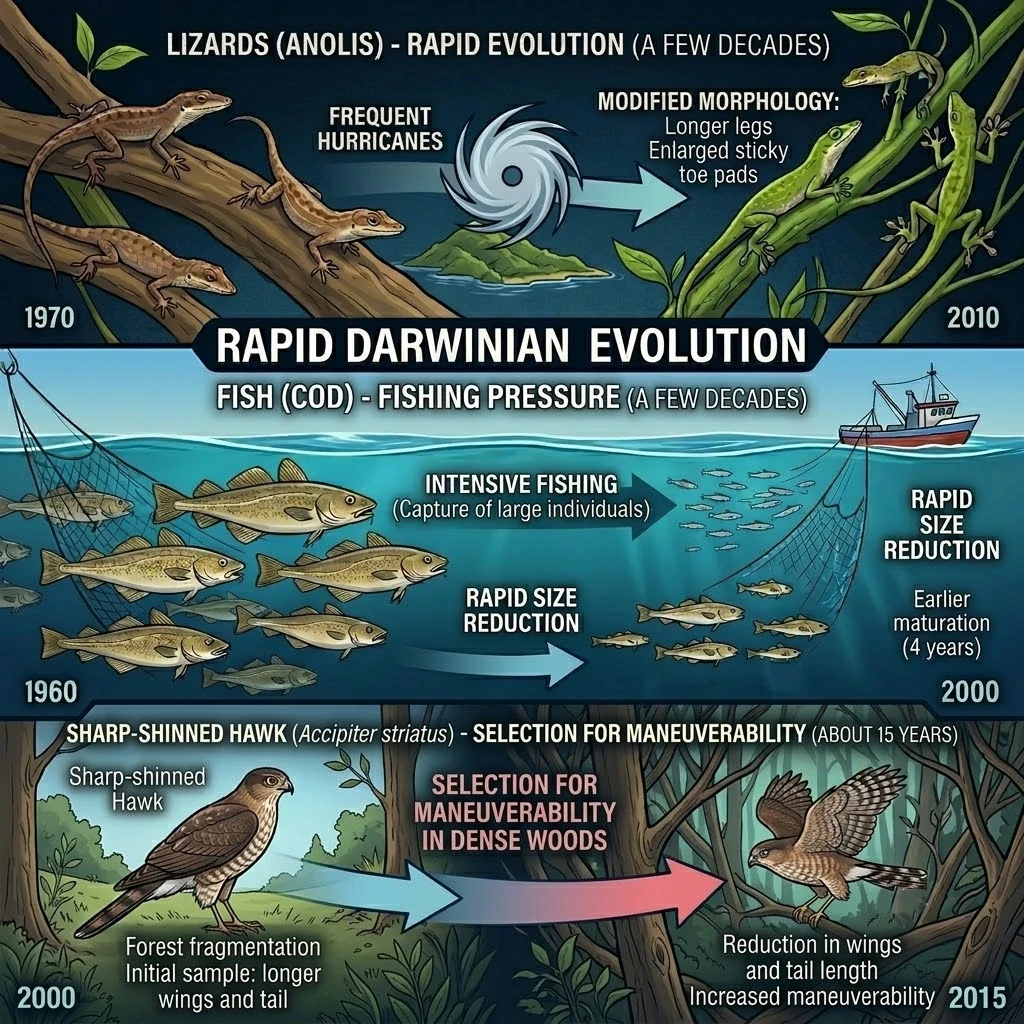
Lightning-fast evolution: when nature adapts in just a few decades.
Populations of lizards modifying their morphology (legs and adhesive pads) in just a few decades to resist hurricanes.
Fish shrinking in size under the pressure of intensive fishing that removes the largest individuals.
Birds adapting the length of their wings and tails in just 15 years to maintain maneuverability in fragmented forests.
Image source: astronoo.com (new window)
Scientific Summary
These articles explore cosmic and evolutionary phenomena that challenge our models. Evolution can be rapid under intense selection pressures. String theory unifies quantum physics and gravity via vibrating strings in extra dimensions, but remains unverified. JWST observes galaxies that are too massive and structured in the early Universe, challenging the ΛCDM model. Fermi bubbles, gamma-ray remnants of a past eruption of the galactic black hole, reveal a violent past of the Milky Way. Finally, the Great Filter proposes that cosmic silence is explained by a nearly insurmountable evolutionary barrier, located in our past or our future.
Why can evolution be so rapid, defying common misconceptions?
Contrary to what Charles Darwin (1809-1882) believed—who imagined natural selection as a slow process spanning millions of years—evolution can in fact be blazingly fast. Why? Because three conditions can accelerate the evolutionary pace: intense selective pressure (sudden environmental change), high genetic diversity within the population, and a short generation time. When these factors align, major transformations can appear in just a few generations, right before our eyes. This is the case for mosquitoes becoming resistant to insecticides in a few seasons, fish shrinking due to intensive fishing in about twenty years, or wall lizards modifying their digestive system in thirty years. Far from contradicting Darwin, these discoveries enrich his theory: evolution is not uniformly slow—it can also accelerate when circumstances demand it.
Also worth exploring
Continue your exploration of the Universe with these topics:
Darwin and Gradualism: A Revisited Legacy
In On the Origin of Species (1859), Darwin emphasized the slowness of change: “Natural selection acts only by accumulating slight, successive variations.” For him, the absence of transitional forms in the fossil record was due to the imperfection of these records, but he firmly believed in a uniform and very slow pace. This vision, called phyletic gradualism, dominated evolutionary biology for over a century.
However, as early as the 1970s, Niles Eldredge (1943–2022) and Stephen Jay Gould (1941–2002) proposed the theory of punctuated equilibria: evolution would experience long periods of stasis interrupted by sudden episodes of rapid speciation. Today, molecular biology and population ecology confirm that evolution can be very rapid when selective pressure is intense (climate change, human impact, pollution, predation). Far from contradicting Darwin, these discoveries enrich his theory by showing that the evolutionary pace is highly variable.
The Engines of Lightning-Fast Evolution
It is easy to understand how evolution can be rapid in microorganisms, whose generation time is measured in minutes or hours. But what is more surprising is that this evolutionary acceleration is also observed in macro-organisms (fish, reptiles, birds, or mammals), as the following examples show. For a population to evolve at high speed, four ingredients are necessary:
- A strong and rapid selective pressure: sudden environmental change (introduction of a predator, poison, or extreme climate change).
- A high pre-existing genetic diversity (or very rapid favorable mutations in short-generation species).
- A short generation time: bacteria (20 minutes), insects (a few weeks), small vertebrates (1-2 years).
- A small, isolated population: genetic drift can fix a mutation by chance alone, even if it is not advantageous; the founder effect accelerates divergence.
Thus, accelerated evolution is a spectacular illustration of natural selection: it does not create anything ex nihilo, but rather sorts and amplifies what already exists, sometimes at a startling speed. What Darwin did not anticipate was the speed at which humans modify environments, creating selective pressures of extreme intensity.
Examples of Rapid Evolution: What Science Has Measured
Intense environmental pressure and natural selection can cause morphological, physiological, or behavioral changes in the blink of a geological eye. Environmental pressure does not directly accelerate mutations. However, it favors the selection and fixation of advantageous mutations already present in the population. For example, in humans, about 70 new mutations appear in each generation—a stable figure, but which represents, at the scale of the entire species, billions of new variants every generation.
| Species | Environment / Pressure | Observed Change | Time Scale |
|---|---|---|---|
| Italian Wall Lizard (Podarcis sicula) | Introduction to a Croatian island (Pod Mrčaru) in 1971, more plant-based diet | Development of ceca (colic valves) to digest plants, wider head, more powerful bite | Less than 30 years (about 30 generations) |
| Northern Goshawk (Accipiter fuscus) | Forest fragmentation, selection for maneuverability | Reduction in wing and tail length to fly between dense trees | About 15 years |
| Lake Geneva Perch | Intensive fishing selecting large individuals | Earlier sexual maturity and reduced size to reproduce before being caught | 20 years (1980s-2000s) |
| Darwin’s Finch (Geospiza fortis) | Extreme drought in the Galápagos archipelago (1977) | 5% increase in beak size to consume hard seeds | Two years (a single drought) |
| Peppered Moth (Biston betularia) | Industrial pollution in England, darkening of tree trunks | Replacement of the light form with the dark (melanic) form, better camouflaged on soot-covered trunks | 50 years (mid-19th to early 20th century) |
| Atlantic Salmon (Salmo salar) | Intensive fishing selecting large, mature individuals | Reduction in adult size and earlier sexual maturity, documented hereditary genetic changes | 30 years (1970s–2000) |
| African Elephant (Loxodonta africana) | Intensive poaching selecting individuals with large tusks | Strong increase in the proportion of tuskless individuals (genetic trait linked to the X chromosome) | 30 years (Mozambique civil war, 1977–1992) |
| Fish (killifish, minnow) in contaminated rivers | Industrial discharges containing heavy metals (cadmium, copper, zinc) | Development of genetic tolerance to heavy metals, with changes in the expression of genes encoding metallothioneins | A few decades |
Key Takeaways: A New Perspective on the Power of Evolution
Darwinian evolution has a variable rhythm, dictated by the intensity of selection and demographic characteristics. What Darwin considered an almost imperceptible process on a human scale can, under certain conditions, become spectacular in just a few years. This rediscovery (rapid evolution) does not contradict Darwin’s theory—it modernizes and enriches it. And above all, it reminds us that life is not static: it reacts, sometimes at breakneck speed, under the influence of the disturbances we impose on it. A finding that is both fascinating and worrying, which should guide our decisions for the planet.
As Stephen Jay Gould (1941-2002) said: "Evolution has no purpose, but it has consequences."
FAQ: Rapid Evolution and Darwinism
Was Darwin wrong about the slowness of evolution?
Darwin believed that natural selection acted on minute variations and required geological time scales. He was right about the mechanism, but he was unaware of the potential for rapid evolution linked to short generations and extreme pressures. Today, we know that evolution can be very rapid (a few generations) without contradicting Darwinian gradualism: it uses existing genetic variability. Darwin simply underestimated the possible speed in changing environments.
What is “contemporary evolution” or “rapid evolution”?
Contemporary evolution refers to evolutionary changes measurable on a human scale (decades, or even less). It is often triggered by rapid environmental changes (pollution, climate, predation, fishing). Examples include antibiotic resistance, changes in bird beak size, or heavy metal tolerance in plants.
Can all species evolve rapidly?
No. Rapid evolution requires short generation times, high genetic diversity, and strong selective pressure. Large mammals, century-old trees, or species with small populations adapt much more slowly. This is why current extinctions mainly affect these slow-renewing species.
Can rapid evolution save species threatened by climate change?
For some species with short life cycles and high genetic variability (insects, annual plants, small fish), rapid adaptation is possible. For charismatic species with long lifespans (polar bears, corals, sea turtles), evolution is too slow to keep up with the current pace of climate change. The priority remains reducing emissions and protecting habitats.
 From the Zeroth Law to Generative AI: Asimov's Laws in Question
  How do complex societies emerge and disappear?
  The Brain vs. AI: Chronicle of an Organ Overwhelmed by the Data Deluge
  AI has learned to think: will artificial consciousness learn to be?
  The Future Obsession: When prediction shapes the living
  Which Regions of the World Will Remain Habitable During the Next Ice Age?
  Rapid Evolution: Darwin’s Thunderbolt in the 21st Century
  Fatal Imbalance: The Unsuspected Power of the Infinitely Small
  The Great Filter of Evolution: The Key to the Fermi Paradox
  The Last Glacial Shock: The Younger Dryas and Its Impact on Prehistoric Societies
  Why Does the Sunflower Turn Toward the Sun? An Answer Through the Lagrangian
 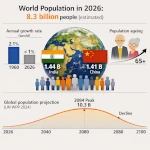 World Population 2026: Demographic Trends by Continent
 Why Life Emerges from Imbalance and Dies at Thermodynamic Equilibrium
  The Electromagnetic Spectrum and Vision: What Our Eyes Perceive of Our Planet
 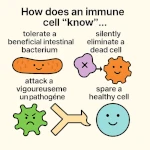 Self and Non-Self: A Simplified Physical Reading of Identity
  The Molecular Clock: From Random Mutations to Measuring Time
  The Minimal Cell: The Inevitable Emergence
  White Sands Footprints: America's First Steps
  Hominins: Appearance, Expansion, and Extinctions
  Declining Births: Demographic Catastrophe or Natural Evolution?
  Natural Selection vs. Chance: Why Evolution is Not a Lottery?
  What if Life Originated from Earth? A Revolution in the Theory of Panspermia
  The Great Bifurcation that will Disrupt Our World: Survival or Collapse?
  Primordial Chemistry: Where Do the First Organic Molecules Originate?
 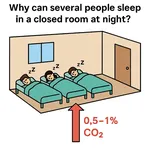 CO and CO₂: Two Gases, Two Risks, Two Biological Mechanisms
  Spontaneous Synchronization: A Universal Phenomenon, from Physics to Life
  Time Challenge: How to Illustrate a Billion Years?
 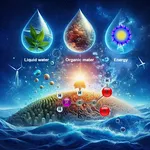 The Three Essential Components for the Emergence of Life
  Why Did the Genus Homo Nearly Go Extinct 900,000 Years Ago?
  The First Step Towards the Emergence of Life
  The shadow biosphere
  Decline of anthropocentrism: when the cosmos relativizes our importance
  The horseshoe
crab, a living fossil!
The horseshoe
crab, a living fossil!  Origin of life
on Earth: Panspermia theory
Origin of life
on Earth: Panspermia theory  Origin of life on Earth: White smoker theory
  Why 37 degrees Celsius?
  Are We Alone in the Cosmos? Between Science and Speculation
  Traces
of Life in the Ice: The Emergence of Prehistoric Mammoths
Traces
of Life in the Ice: The Emergence of Prehistoric Mammoths  The Younger Dryas: The Mini Ice Age That Wiped Out the Megafauna
  The Two Great Ice Ages: Surviving in the Oceans of a Frozen Earth
  Regeneration in Animals Following Amputation: Organic Regrowth
  At the Limits
of Life: Mephisto, Worm of the Infernal Depths
At the Limits
of Life: Mephisto, Worm of the Infernal Depths  Discovery
of solid buckyballs in space
Discovery
of solid buckyballs in space  Human Walking:
The Origins of Bipedalism in Hominids
Human Walking:
The Origins of Bipedalism in Hominids  Karabo: A Window into Human Evolution
  Entropy: What
is Time?
Entropy: What
is Time?  The
passage between the inert and the living
The
passage between the inert and the living  The
Great Story of Complexity: From Elementary Particles to the First Organisms
The
Great Story of Complexity: From Elementary Particles to the First Organisms  Megapod uses
volcanic heat
Megapod uses
volcanic heat  Ardipithecus:
The 4.4-Million-Year-Old Ethiopian Hominid
Ardipithecus:
The 4.4-Million-Year-Old Ethiopian Hominid  Natural Selection: The Peppered Moth
  The Ordovician:
The Era of Corals, Trilobites, and Graptolites
The Ordovician:
The Era of Corals, Trilobites, and Graptolites  Liquid
Water, Much More Than a Solvent: A Catalyst for Chemical Reactions
Liquid
Water, Much More Than a Solvent: A Catalyst for Chemical Reactions  Neanderthal:
Humanity's Lost Cousin
Neanderthal:
Humanity's Lost Cousin  ASIMO: The First
Humanoid
ASIMO: The First
Humanoid  What conditions allowed the emergence of life?
  Fermi Paradox and Plato's Cave: Are We Alone or Blind?
  Tardigrades:
Indestructible Creatures That Defy the Laws of Biology
Tardigrades:
Indestructible Creatures That Defy the Laws of Biology  Toumaï: One
of the Oldest Known Hominins
Toumaï: One
of the Oldest Known Hominins  The
Tree of Life: Billions of Extinct Species and a Single Ancestral Community
The
Tree of Life: Billions of Extinct Species and a Single Ancestral Community  Life
in the Abyss: The Extreme Adaptation of Creatures
Life
in the Abyss: The Extreme Adaptation of Creatures  Cyanobacteria
and the Oxygen Crisis: A Primordial Ecological Catastrophe
Cyanobacteria
and the Oxygen Crisis: A Primordial Ecological Catastrophe  From
Matter to Life: The Blurred Frontier of Biological Emergence
From
Matter to Life: The Blurred Frontier of Biological Emergence  The Smallest Frog in the World: Physiological Secrets of a Microvertebrate
  The explanation of the Little Ice Age
  The Light of Life: A Biosignature Revealed by the Moon
  Living
Light: The Dazzling Secrets of Bioluminescence
Living
Light: The Dazzling Secrets of Bioluminescence  Beyond our senses, the great scientific revolutions
  The
Primordial Soup: Chemical Cradle of Terrestrial Life
The
Primordial Soup: Chemical Cradle of Terrestrial Life  World Population: From One Billion Humans to Demographic Saturation
  Ecology
and Collapse: The Case of Easter Island
Ecology
and Collapse: The Case of Easter Island  Fractals: Universally Self-Organized
Structures
Fractals: Universally Self-Organized
Structures