


The nitrogen cycle: from air to life
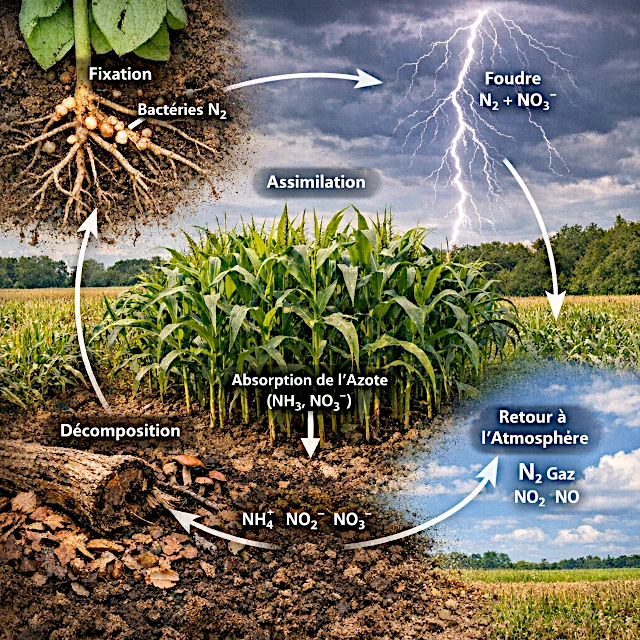
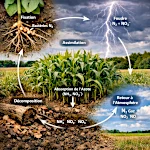
The biogeochemical nitrogen cycle unfolds in several major steps: atmospheric nitrogen is first fixed, notably by bacteria and lightning; it is then assimilated by plants, then returned to the soil through decomposition, before finally returning to the atmosphere.
Image source: astronoo.com (new window) - AI-generated image, public domain.
Scientific summary
The Astronoo article presents the nitrogen cycle, a set of biogeochemical transformations that make atmospheric nitrogen assimilable by living organisms. Dinitrogen (N₂) makes up about 78% of the air, but its triple bond renders it almost inert. Nitrogen-fixing bacteria, fungi and physical phenomena such as lightning convert this gas into ammonia, then into nitrites and nitrates. Plants absorb these compounds to build proteins and DNA. Decomposition and denitrification close the cycle by returning nitrogen to the atmosphere. The article also highlights human disturbances: synthetic fertilizers, eutrophication and N₂O emissions.
Why is the nitrogen cycle essential to life on Earth?
Nitrogen is an essential element for building proteins, amino acids and DNA. Yet Earth's atmosphere, which contains nearly 78% of it as dinitrogen (N₂), remains a resource inaccessible to most living beings. The N₂ molecule is stabilized by a triple chemical bond that is very difficult to break. The nitrogen cycle responds precisely to this paradox: it continuously transforms atmospheric nitrogen into assimilable forms, thanks to nitrogen-fixing bacteria, fungi, plants and natural phenomena such as lightning. Fixation produces ammonia, which is then transformed into nitrites and then nitrates through nitrification. Plants absorb these compounds and integrate them into their living matter; animals obtain them by consuming plants. Decomposition, ammonification and denitrification close the cycle by returning nitrogen to the atmosphere. Without these conversions, ecosystems could not maintain their fertility, ocean productivity would be profoundly altered and climate stability would be threatened. The nitrogen cycle is therefore an invisible but fundamental cog of the biosphere.
Also worth exploring
Continue your exploration of the Universe with these topics:
Why is nitrogen, although so abundant, so difficult to capture?
A colossal but inert atmospheric stock
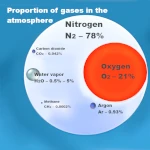
Earth's atmosphere contains nearly 78% dinitrogen (N₂) by volume, or 75% by mass. Yet this enormous potential resource for life remains inaccessible to the vast majority of living beings. No animal, no human, no plant can transform it directly into a nutrient.
The triple bond, lock of the N₂ molecule
The reason lies in the exceptional robustness of the triple chemical bond between the two nitrogen atoms (N≡N). Considerable energy is required to break this bond.
Two pathways to break the molecule
Two pathways exist: lightning and its 30,000 °C, or the chemical elegance of bacteria and their enzyme nitrogenase, capable of reducing N₂ to NH₃ (dinitrogen → ammonia). Without this prior rupture, no proteins, no DNA, no muscles, no neurons, no blood: no life.
A cycle in the service of the living
The nitrogen cycle is a cascade of transformations that converts an inert gas into assimilable nutrients, then returns it to the atmosphere.
N.B.:
Antoine Lavoisier (1743-1794) proposed the term "azote" (from the Greek "a-zôê", without life).
Paradoxically, this element, inert in gaseous form, proves indispensable to every living cell once it is fixed.
Which microorganisms for which transformation?
The table below compares the major pathways of the nitrogen cycle and their biological actors.
Specialized microbial actors
| Process | Chemical transformation | Bacteria + Fungi | Required conditions | Ecological role |
|---|---|---|---|---|
| Symbiotic fixation | \(N_2 \rightarrow NH_3\) | Rhizobium, Bradyrhizobium | Symbiosis with legume roots, microaerophilia | Nitrogen supply directly to cultivated plants |
| Free-living fixation | \(N_2 \rightarrow NH_3\) | Azotobacter (aerobic), Clostridium (anaerobic) | Soils, aquatic environments, available organic carbon | Diffuse but constant contribution to natural fertility |
| Nitrification (step 1) | \(NH_3 \rightarrow NO_2^-\) | Nitrosomonas, Nitrosospira | Strict aerobiosis, neutral to slightly alkaline pH | Formation of nitrites, precursors of nitrates |
| Nitrification (step 2) | \(NO_2^- \rightarrow NO_3^-\) | Nitrobacter, Nitrospira | Aerobiosis, tolerance to a wide range of temperatures | Production of nitrates, a highly assimilable form for plants |
| Denitrification | \(NO_3^- \rightarrow N_2\) (via \(NO_2^-\), NO, \(N_2O\)) | Pseudomonas, Paracoccus, Bacillus | Anoxia (saturated soils, sediments), labile organic matter | Closing of the cycle, return of \(N_2\) to the atmosphere |
| Ammonification (mineralization) | Organic N \(\rightarrow NH_4^+\) | Saprophytic fungi (Bacillus, Streptomyces, etc.) | Aerobiosis or anaerobiosis, decomposition of necromass | Recycling of nitrogen from organic waste |
N.B.:
Human activity through synthetic fertilizers has doubled the flows of reactive nitrogen entering terrestrial ecosystems since 1950.
When humans unbalance the nitrogen cycle
A rupture of equilibrium on a planetary scale
Before the industrial era, natural flows of biological and atmospheric fixation maintained a stable stock of reactive nitrogen in soils and waters. The work of Justus von Liebig (1803-1873) had already foreshadowed the importance of nitrogen compounds for fertility. But it was the invention of the Haber-Bosch process (first decade of the 20th century) that multiplied the production of synthetic nitrogen fertilizers. Today, anthropogenic fixation exceeds natural fixation.
Eutrophication and greenhouse gases
Excess nitrates leached by rain reach rivers and then coastlines, causing eutrophic dead zones where algal blooms asphyxiate aquatic fauna. The Gulf of Mexico and the Baltic Sea illustrate this diffuse pollution. Furthermore, nitrous oxide (N₂O), a by-product of nitrification and denitrification, is a greenhouse gas 300 times more powerful than carbon dioxide, contributing to global warming.
References
- Encyclopædia Britannica - Nitrogen cycle (new window)
- USGS - Nitrogen and Water (new window)
- NASA Earth Observatory - The Nitrogen Cycle (new window)
- Chinese Academy of Sciences (CAS) - Research progress on the forest nitrogen biogeochemical cycle (new window)
- Institute of Applied Ecology (CAS) - Uptake of atmospheric nitrogen dioxide by temperate forest canopies (new window)
FAQ: Nitrogen cycle
What is the nitrogen cycle?
It is the set of transformations that allow nitrogen to pass from its atmospheric form to forms usable by living organisms, then return to the atmosphere.
Why is atmospheric nitrogen not directly usable?
Because organisms cannot break the N₂ molecule, which is very stable. Only certain bacteria are capable of fixing it.
What is the role of bacteria in this cycle?
They carry out the key steps: fixation, nitrification, ammonification and denitrification, making nitrogen accessible or returning it to the atmosphere.
How do plants use nitrogen?
They absorb nitrates and ammonium present in the soil to build proteins, amino acids and DNA.
How do human activities disrupt this cycle?
Fertilizers, pollution and industrial combustion add too much reactive nitrogen to the environment, causing eutrophication, ecological imbalances and greenhouse gas emissions.
How can we protect or rebalance the nitrogen cycle?
We must reduce excess fertilizers, improve water treatment, preserve wetlands and living soils, and monitor N₂O emissions. These actions limit eutrophication and warming.
 The Paleocene-Eocene Transition: When Earth's Climate Suddenly Changed
  The Principle of Least Action: Why Does Nature Always Choose the Most Economical Path?
  Evolutionary Convergence: Chance, Necessity… or Mirage?
  The Five Mass Extinctions: What do these planetary catastrophes reveal?
  Cryosphere: when the ice giants still protect us
 The Nitrogen Cycle: From Air to Life
  The Jet Stream: When the Atmospheric River Overflows Its Banks
  The Carbon Cycle: The Harmonious Interaction of Oceans, Forests, and Subsoils
  The Water Paradox: Without it, no life
  Why did alternating current prevail?
 Evolution of Global Energy Consumption: From Steam Engines to Digital Servers
  The Demographic Transition: Growth or Decline?
  Lake Agassiz: A Deluge that Changed the Climate
  Drunken Forests: Understanding the Phenomenon of Permafrost Thaw
  There is Electricity in the Air!
  Why Doesn't CO2 Fall to the Ground?
  El Niño and La Niña: the two climatic phenomena of the Pacific
  Endangered Species: Dynamics of Extinction
  The Toxic Legacy of Acid Rain
  Major societal collapses: key periods and causes
  Global Warming in Figures: What the Scientific Data Says
  What is Sustainable Development?
 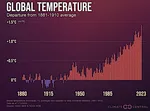 The Hottest Years Since Records Began
  Magnitude of upcoming climate change
  Earth in Crisis: Collapse or Renaissance?
  Ice on Borrowed Time: The Inexorable Decline of Arctic Sea Ice
 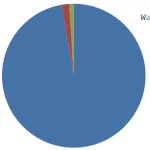 Earth's Water Reservoirs: From Oceans to Groundwater
  Sea Levels Are Rising, But How Fast?
  The Other Climate Threat: Earth Shrouded in Shadow and Humidity
  The Age of the Sahara: From Green Prairie to Stone Desert
  World Population from 1800 to 2100
  Oil: The Fall of a Giant in the Era of Renewable Energy
  Kamchatka King Crab: A Giant of the Oceans
  The collapse of a society
  Slight Progress in the Global Ecological Footprint
  The South Atlantic Anomaly
  The phenomenon of soil sinking is called subsidence
  The Planet's New Clouds