


The Water Paradox: Without it, no life

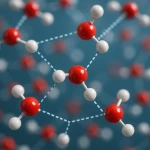
Illustration showing a network of water molecules (H₂O) in motion.
Oxygen atoms are represented in red, hydrogen atoms in white.
Dotted blue lines symbolize hydrogen bonds, key to the unique properties of water.
Image source: astronoo.com (new window)
Scientific Summary
The article explores the paradox of water (H₂O), a simple molecule with "abnormal" physicochemical properties that are nevertheless the sine qua non conditions for life. Its polar structure and the hydrogen bonds it forms give it a maximum density at 4°C (ice floats), a very high latent heat of vaporization, an exceptional specific heat capacity, a universal solvent power, a high dielectric constant, and the ability to self-assemble cell membranes. Without these anomalies, neither aquatic ecosystems in winter, nor thermoregulation of organisms, nor cellular metabolism would be possible. Water is not strange and vital: it is vital because it is strange.
Why is such a simple water molecule so vital?
Water (H₂O) possesses "anomalous" physical and chemical properties that, paradoxically, are the sine qua non conditions for life. Its polar structure and the hydrogen bonds it forms give it a series of unique characteristics: maximum density at 4°C (ice floats), very high latent heat of vaporization (cooling by evaporation), exceptional specific heat capacity (thermal buffer), universal solvent power, high dielectric constant (salt dissociation), and the ability to self-assemble cell membranes. Without these "anomalies," neither aquatic ecosystems in winter, nor the thermal regulation of organisms, nor cellular metabolism would be possible. Water is not strange and vital: it is vital because it is strange.
Also worth exploring
Continue your exploration of the Universe with these topics:
A seemingly ordinary molecule with extraordinary properties
Water, or H₂O, is one of the most common molecules in the observable universe and yet one of the most mysterious. Its simple chemical formula hides profoundly abnormal physical and chemical behavior, defying logical predictions. Without these "anomalies," life as we know it could never have emerged on Earth. This is the paradox: a strange substance whose oddities are the sine qua non conditions for biology.
As early as the 4th century BCE, the philosopher Empedocles (c. 490 BCE - c. 430 BCE) counted it among the four fundamental and indestructible elements of all matter (earth, water, air, fire). But it was not until the scientific advances of the 18th and 19th centuries that its true singularities were measured. Today, we understand that these properties stem directly from the polar structure of the molecule (asymmetric organization of electrical charges within a molecule, leading to a non-zero dipole moment) and the hydrogen bonds (secondary electrostatic chemical bond, crucial for the properties of water and DNA) it forms. In other words, its bent geometry and the strong polarity (difference in the distribution of electrical charge within a molecule) of the O-H bond generate a dense network of hydrogen bonds.
The vital anomalies of water
What physics and chemistry call anomalies (floating ice, exceptional solvent power, high heat capacity, etc.) are not happy coincidences but a coherent set of properties that, collectively, create the necessary conditions for the emergence and maintenance of life.
Water is not strange and vital; it is vital because it is strange.
| Abnormal property | Comparison with similar compounds | Vital consequence | Impact on the biosphere and the thermodynamics of life |
|---|---|---|---|
| Polar nature of the molecule (high dipole moment) | Water has a dipole moment of 1.85 Debye (D). Similar-sized molecules like methane (CH₄) or hydrogen sulfide (H₂S, ~1.1 D) are much less polar. | Creates strong hydrogen bonds and makes the molecule "adhesive" (cohesion and adhesion). Behaves like a "molecular magnet" for polar substances. | Physical origin of all other anomalies. Enables capillary transport of sap, solvation of nutrients, and formation of biological structures. Foundation of its role as a "universal solvent". |
| Maximum density at 4°C; ice less dense than liquid water | Almost all other substances have a solid denser than their liquid. | Ice floats, insulating water masses below. | Allows aquatic ecosystems to survive during glaciations. |
| Very high latent heat of vaporization | Much higher than for hydrogen sulfide (H₂S) or ammonia (NH₃). | Efficient cooling by evaporation (transpiration, climate regulation). | Stabilization of body temperature and regional climates. |
| Exceptional solvent power | Ability to dissolve ions and polar molecules far superior to most solvents. | Ideal medium for biochemical reactions and nutrient transport. | Sine qua non condition for cellular metabolism and blood/sap circulation. |
| Very high specific heat capacity | One of the highest known for a liquid. | Gigantic thermal buffer for organisms and the planet. | Smoothing of diurnal/nocturnal and seasonal temperature variations. |
| Exceptionally high dielectric constant | ε ≈ 80. Much higher than organic solvents (ethanol: ε≈24, benzene: ε≈2). | Allows easy dissociation and solvation of salts and charged molecules (ions, proteins, DNA). | Creates the ionic environment necessary for electrochemical gradients, nerve conduction, and macromolecule structure, keeping the system far from equilibrium. |
| Relatively low viscosity despite a strong hydrogen bond network | Dynamic viscosity (1 cP at 20°C) much lower than that of a liquid as cohesive as glycerin (~1500 cP). | Allows rapid diffusion of nutrients, waste, and molecular signals within and between cells. | Optimizes matter/energy exchange, enabling rapid metabolism and dynamic organism response, essential for maintaining the steady state. |
| Unique contact surface: water/air or water/hydrophobic interface | High surface tension creates a rigid "skin". Hydrophobic molecules spontaneously aggregate in water. | Self-assembly of cell membranes (lipid bilayer) and stabilization of protein 3D structure. | Foundation of cell compartmentalization and enzymatic catalysis. Allows the creation of ordered structures (negentropy) within the open system, using energy. |
| High thermal conductivity for a liquid | ≈ 0.6 W/(m·K), 20-30 times higher than air and higher than most organic liquids. | Rapid and homogeneous heat distribution within an organism or cell. | Prevents destructive hot spots, allowing uniform and efficient metabolism. Helps dissipate entropy produced by biochemical reactions. |
In one sentence: Water is life
Water allows living systems to remain open, structured, and irreversible, capable of exchanging energy and matter with their environment, while delaying the attainment of global thermodynamic equilibrium. For a biological system, global thermodynamic equilibrium corresponds to death. This is not a metaphor, it is a direct consequence of the laws of thermodynamics.
FAQ: Everything about the water paradox
Why does ice float on liquid water and why is this vital?
Ice floats because its density is lower than that of liquid water (water's maximum density is reached at 4°C). This is a major anomaly: most substances have a solid that is denser than their liquid. This property is vital because it allows ice to form an insulating layer on the surface of lakes and oceans in winter. This layer protects the liquid water below from freezing, thus allowing aquatic ecosystems to survive during ice ages. Without this anomaly, bodies of water would freeze from the bottom up, making aquatic life impossible.
How does water act as a "thermal buffer" for living organisms?
Water has a very high specific heat capacity (among the highest known for a liquid) and an exceptionally high latent heat of vaporization. This means it takes a lot of energy to raise its temperature or to make it evaporate. For living organisms, this translates into remarkable thermal stability: sweating (evaporation of water on the skin's surface) allows for very efficient cooling. On a planetary scale, oceans act as a gigantic thermal buffer that smooths out daily and seasonal temperature variations, making the climate habitable.
What is water's "universal solvent power" and why is it essential for life?
Thanks to its molecular polarity (high dipole moment) and its very high dielectric constant (ε≈80), water is an exceptional solvent. It easily dissolves ions (such as Na⁺, Cl⁻, K⁺), polar molecules, and proteins. This property creates the ideal medium for biochemical reactions and the transport of nutrients, waste, and molecular signals within and between cells. Without this solvent power, neither cellular metabolism, nor blood or sap circulation, nor nerve conduction (which relies on ionic gradients) would be possible. Water is the "solvent of life."
 The Paleocene-Eocene Transition: When Earth's Climate Suddenly Changed
  The Principle of Least Action: Why Does Nature Always Choose the Most Economical Path?
  Evolutionary Convergence: Chance, Necessity… or Mirage?
  The Five Mass Extinctions: What do these planetary catastrophes reveal?
  Cryosphere: when the ice giants still protect us
 The Nitrogen Cycle: From Air to Life
  The Jet Stream: When the Atmospheric River Overflows Its Banks
  The Carbon Cycle: The Harmonious Interaction of Oceans, Forests, and Subsoils
  The Water Paradox: Without it, no life
  Why did alternating current prevail?
 Evolution of Global Energy Consumption: From Steam Engines to Digital Servers
 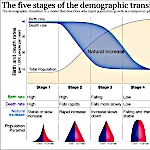 The Demographic Transition: Growth or Decline?
  Lake Agassiz: A Deluge that Changed the Climate
  Drunken Forests: Understanding the Phenomenon of Permafrost Thaw
  There is Electricity in the Air!
  Why Doesn't CO2 Fall to the Ground?
  El Niño and La Niña: the two climatic phenomena of the Pacific
  Endangered Species: Dynamics of Extinction
  The Toxic Legacy of Acid Rain
  Major societal collapses: key periods and causes
  Global Warming in Figures: What the Scientific Data Says
  What is Sustainable Development?
  The Hottest Years Since Records Began
  Magnitude of upcoming climate change
  Earth in Crisis: Collapse or Renaissance?
  Ice on Borrowed Time: The Inexorable Decline of Arctic Sea Ice
 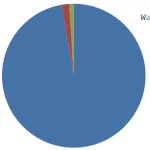 Earth's Water Reservoirs: From Oceans to Groundwater
 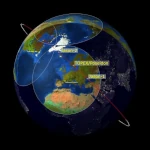 Sea Levels Are Rising, But How Fast?
  The Other Climate Threat: Earth Shrouded in Shadow and Humidity
 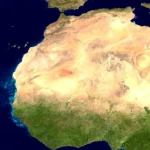 The Age of the Sahara: From Green Prairie to Stone Desert
 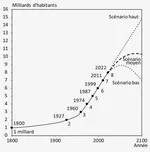 World Population from 1800 to 2100
  Oil: The Fall of a Giant in the Era of Renewable Energy
  Kamchatka King Crab: A Giant of the Oceans
  The collapse of a society
  Slight Progress in the Global Ecological Footprint
  The South Atlantic Anomaly
  The phenomenon of soil sinking is called subsidence
  The Planet's New Clouds