


The Other Climate Threat Plunging Earth into Shadow and Humidity
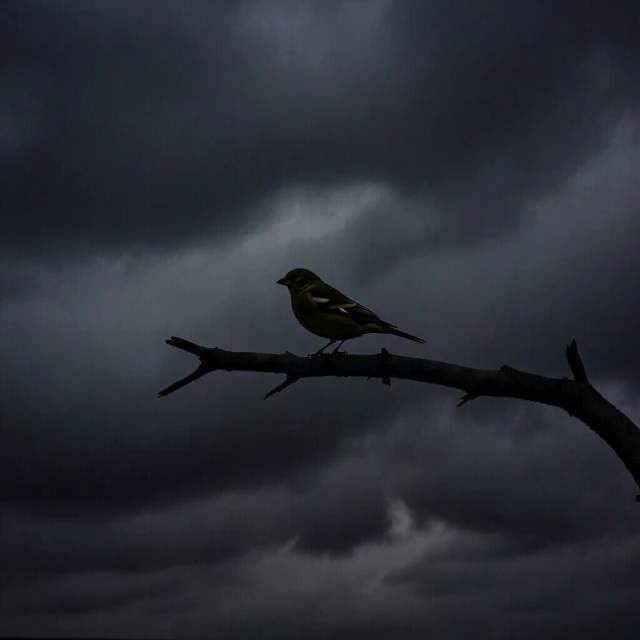
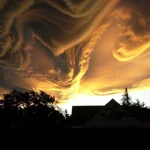
Global dimming: By absorbing and reflecting part of the solar radiation, these clouds alter Earth's energy balance and reduce direct sunlight, in direct response to global warming.
Image source: astronoo.com (new window) — AI-generated image, public domain.
Scientific summary
Astronoo's article analyzes the phenomenon of global dimming, a reduction in sunlight linked to increasing cloud cover. It details the physical mechanisms at play, notably the Clausius‑Clapeyron relation which amplifies atmospheric water vapor with warming. The study of cloud feedbacks, including the parasol effect and the greenhouse effect, reveals regional complexity. Recent satellite data and IPCC projections illuminate contrasting trends between persistent dimming linked to humidity and potential brightening due to aerosol reduction. The article highlights consequences for agriculture and ecosystems.
Why is global dimming a silent climate threat?
This article is dedicated to global dimming, a climate phenomenon less publicized than warming, but equally concerning. It refers to the gradual decrease in the amount of sunlight reaching Earth's surface. But what causes this darkening? The answer lies in the interaction between global warming and the water cycle. A warmer atmosphere, in accordance with the Clausius‑Clapeyron relation, holds more water vapor, which feeds a denser and more persistent cloud cover. These clouds act as a shield, reflecting part of the solar radiation back into space. However, they also trap infrared heat, creating a complex feedback whose net effect varies by region. The article explores this duality, presenting satellite observations and climate models that reveal contrasting trends: marked dimming in tropical and temperate zones, but also possible brightening in regions where pollution is decreasing. Understanding this phenomenon is crucial to anticipate its impacts on solar energy production, agriculture, and terrestrial ecosystems.
Also worth exploring
Continue your exploration of the Universe with these topics:
The sky is clouding over: a direct consequence of warming
Global dimming is finding an increasingly evident explanation in the very physics of global warming. The warmer atmosphere has an increased capacity to hold water vapor. According to the Clausius‑Clapeyron relation: for each degree of warming, the air can hold about 7% more moisture. This water vapor, rising and condensing, feeds a denser and more persistent cloud cover.
A complex feedback loop
This increase in cloudiness is not without consequence for the climate itself. Clouds play a dual role: they reflect part of the solar radiation back into space (parasol effect), but they also trap infrared radiation emitted by Earth (greenhouse effect). The net result of this cloud feedback is one of the greatest challenges in modern climatology. Recent satellite observations suggest that the cooling effect dominates in some regions, while the warming effect prevails elsewhere.
Physical mechanisms of cloud feedback
Cloud physics relies on complex microphysical processes. The concentration of condensation nuclei, droplet size, and optical thickness of clouds determine their ability to reflect or absorb radiation. Current climate models strive to represent these mechanisms, but they remain a major source of uncertainty in future projections.
A darker and wetter planet
The consequences of this thermally-driven dimming are already visible. The cloud invasion is the visible signature of global warming in action. It reminds us that each additional tenth of a degree translates into more moisture in the air, more clouds, and slightly less direct sunlight. There is a trend toward increasing cloud cover in tropical and temperate regions, with grayer winters and summers where the sun struggles to break through.
Table of cloud cover and atmospheric humidity evolution
| Climatic zone | Water vapor increase (1990‑2025) | Cloud cover evolution | Impact on sunlight |
|---|---|---|---|
| Tropical regions (Amazon, Congo Basin, Indonesia) | +6% to +8% | Marked increase in convective clouds | Decrease of 4% to 6% |
| Temperate zones (Europe, North America) | +4% to +6% | Increase in stratus and stratocumulus | Decrease of 2% to 4% |
| Boreal regions (Siberia, Canada, Scandinavia) | +5% to +7% | Low clouds more frequent in summer | Marked seasonal decrease |
| Temperate South America (Argentina, Chile, Southern Brazil) | +4% to +6% | Increase in frontal cloudiness | Decrease of 3% to 5% |
| Southern Africa (Namibia, Botswana, South Africa) | +3% to +5% | More invasive maritime clouds | Decrease of 2% to 4% |
| Australia and New Zealand | +4% to +6% | Increase in coastal and cyclonic clouds | Decrease of 3% to 5% |
| Antarctic region and Southern Ocean | +5% to +7% | Low clouds more frequent, accelerated melting | Moderate decrease but complex albedo effect |
Are we heading toward a darker or brighter world?
This question pits two contradictory trends arising from global warming.
On one hand, the increase in water vapor (7% more per degree) feeds a denser cloud cover, pushing toward a darker and wetter world. Thus, the persistent dimming scenario predicts a significant increase in high clouds in the tropics and stratus clouds in temperate zones, with a decrease in sunlight of 5% to 10% by 2100.
On the other hand, the reduction of polluting aerosols makes clouds less reflective and allows more light to pass through, accelerating global warming. In Europe and North America, where anti-pollution standards have significantly reduced emissions since the 1990s, solar radiation has increased by 1 to 2% per decade since the beginning of the 21st century. Thus, the scenario of sudden brightening, following the rapid disappearance of aerosols, could reveal a previously masked warming, triggering a "radiative collapse": a sky regaining its azure brightness while the planet undergoes unprecedented thermal acceleration.
The two forces at play
- The water vapor effect (warming → increase in oceanic and continental evaporation → rise in atmospheric water vapor content → increased condensation → formation of more numerous and thicker clouds → increased cloud albedo → increased reflection of solar radiation into space → reduction of light reaching the surface → global dimming).
- The aerosol effect (less pollution → fewer condensation nuclei → fewer but larger droplets → less reflective clouds (reduced albedo) → more light reaching the ground → local brightening but increased warming).
Consequences on ecosystems and agriculture
Reduced sunlight directly affects plant photosynthesis, with potential impacts on agricultural yields and the productivity of terrestrial ecosystems. Regions already under water stress could see their water balance modified by reduced evapotranspiration, while others could benefit from a mitigation of heatwaves.
Key takeaways
One certainty nevertheless emerges: tomorrow's world will be different from yesterday's. Whether we are heading toward a darker or brighter world, these variations will have major consequences on ecosystems, agriculture, energy production, and human well-being.
References
FAQ: Everything you need to know about global dimming
What is global dimming?
Global dimming is a phenomenon of reduced intensity of solar radiation reaching Earth's surface. It is mainly due to increasing cloud cover, itself linked to global warming and rising atmospheric water vapor. It manifests as a decrease in direct sunlight, observable over several decades.
What is the link between global warming and cloud formation?
Global warming increases the air's capacity to hold water vapor, thanks to the Clausius‑Clapeyron relation. This additional water vapor, when condensed, feeds the formation of more numerous and thicker clouds. This is a key mechanism of climate feedback.
Do clouds cool or warm the planet?
Clouds have a dual effect: they reflect solar radiation into space (parasol effect, cooling) and trap infrared radiation emitted by Earth (greenhouse effect, warming). The net effect varies according to cloud type, altitude, and geographic location. This is one of the greatest uncertainties in climate models.
Will we see global dimming or brightening in the future?
Two trends are competing: increasing water vapor, which pushes toward dimming, and the reduction of polluting aerosols, which can lead to brightening in some regions. IPCC climate projections indicate that the net effect will be regionally contrasted, but global warming will remain the dominant trend.
What are the impacts of global dimming on agriculture?
A reduction in sunlight can decrease crop yields by limiting photosynthesis. However, the effect is complex because it also depends on humidity, temperature, and water balance. Some crops could benefit from reduced evapotranspiration, while others would suffer from a lack of light.
 The Paleocene-Eocene Transition: When Earth's Climate Suddenly Changed
  The Principle of Least Action: Why Does Nature Always Choose the Most Economical Path?
  Evolutionary Convergence: Chance, Necessity… or Mirage?
  The Five Mass Extinctions: What do these planetary catastrophes reveal?
  Cryosphere: when the ice giants still protect us
 The Nitrogen Cycle: From Air to Life
  The Jet Stream: When the Atmospheric River Overflows Its Banks
  The Carbon Cycle: The Harmonious Interaction of Oceans, Forests, and Subsoils
  The Water Paradox: Without it, no life
  Why did alternating current prevail?
 Evolution of Global Energy Consumption: From Steam Engines to Digital Servers
  The Demographic Transition: Growth or Decline?
  Lake Agassiz: A Deluge that Changed the Climate
  Drunken Forests: Understanding the Phenomenon of Permafrost Thaw
  There is Electricity in the Air!
  Why Doesn't CO2 Fall to the Ground?
  El Niño and La Niña: the two climatic phenomena of the Pacific
  Endangered Species: Dynamics of Extinction
  The Toxic Legacy of Acid Rain
  Major societal collapses: key periods and causes
  Global Warming in Figures: What the Scientific Data Says
  What is Sustainable Development?
  The Hottest Years Since Records Began
  Magnitude of upcoming climate change
  Earth in Crisis: Collapse or Renaissance?
  Ice on Borrowed Time: The Inexorable Decline of Arctic Sea Ice
  Earth's Water Reservoirs: From Oceans to Groundwater
  Sea Levels Are Rising, But How Fast?
  The Other Climate Threat: Earth Shrouded in Shadow and Humidity
  The Age of the Sahara: From Green Prairie to Stone Desert
  World Population from 1800 to 2100
  Oil: The Fall of a Giant in the Era of Renewable Energy
  Kamchatka King Crab: A Giant of the Oceans
  The collapse of a society
  Slight Progress in the Global Ecological Footprint
  The South Atlantic Anomaly
  The phenomenon of soil sinking is called subsidence
  The Planet's New Clouds