


The Five Mass Extinctions: What do these planetary catastrophes reveal?
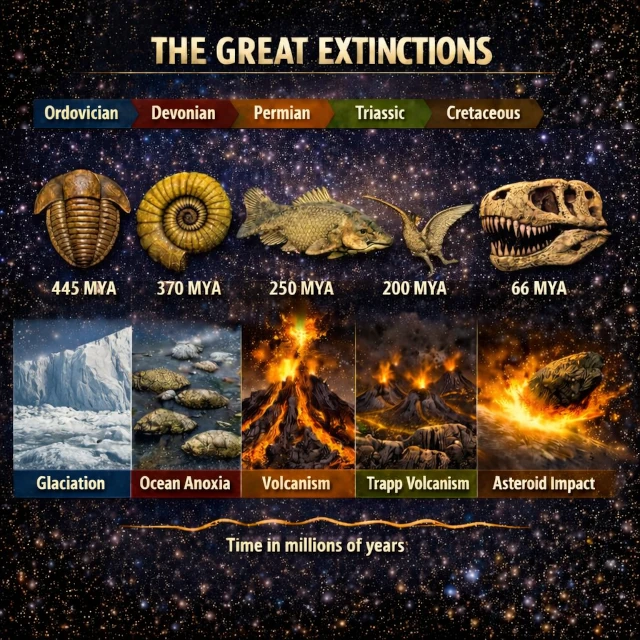
Timeline synthesizing the five major extinctions (Ordovician, Devonian, Permian, Triassic, Cretaceous).
Each crisis is symbolized by iconic fossils and probable causes.
Image source: astronoo.com (new window)
Why Has Earth Experienced Multiple Mass Extinctions?
Because the balance of life is periodically disrupted by global crises: asteroid impacts, colossal volcanic eruptions, extreme climate shifts, or ecosystem collapses can cause the rapid disappearance of the majority of species. Earth's history records at least five major mass extinctions, each profoundly reshaping the biosphere. But these catastrophes are not just endings—they also open new ecological niches, enabling the emergence of unprecedented forms of life. Mass extinctions thus appear as major turning points in evolution, where destruction paradoxically prepares the conditions for a rebirth of life.
Why do we speak of mass extinction?
A phenomenon of planetary scale
Since the appearance of life more than 3.8 billion years ago, Earth has experienced many episodes of accelerated species loss. But five crises exceed all others in their violence and scale. They are called mass extinctions (events during which more than 75% of living species disappear in a geologically short period of time). They eradicated up to 96% of marine species and forever altered ecosystems. After each disaster, certain species take advantage of the freed ecological niches, allowing them to diversify into new ecosystems.
Scientific criteria: the 75% threshold
The modern notion of mass extinction was popularized by American paleontologists Jack Sepkoski (1948-1999) and David M. Raup (1933-2015). Scientists consider an extinction to be "major" when it leads to the disappearance of at least 75% of species in a geologically brief period, generally less than 2 million years.
Table of the Five Great Mass Extinctions
| Extinction Name | Date (million years) | Percentage of Extinct Species | Main Causes | Notable Consequences |
|---|---|---|---|---|
| Ordovician-Silurian | ~ 445 (Late Ordovician) | ~ 85% (no land life yet) | Massive glaciation, drop in sea level, ocean anoxia | Disappearance of conodonts(small worm-like animals) and many trilobite(highly diverse marine invertebrates) families |
| Late Devonian | ~ 372 | ~ 75% (no land life yet) | Volcanic eruptions (traps), global anoxic events | Extinction of trilobites(marine arthropods with a rigid exoskeleton) and collapse of stromatoporoid reefs(marine sponges with a calcareous skeleton) |
| Permian-Triassic | ~ 252 | ~ 96% (marine) and ~70% (terrestrial) | Siberian Traps (giant volcanism), extreme global warming, ocean acidification | Collapse of marine life, known as the Great Dying, marked the most severe mass extinction in Earth's history |
| Triassic-Jurassic | ~ 201 | ~ 80% (marine and terrestrial) | Central Atlantic Magmatic Province volcanism, greenhouse gas emissions | Disappearance of large marine reptiles, early flying reptiles, and decline of primitive crocodilians |
| Cretaceous-Paleogene (formerly Cretaceous-Tertiary) | ~ 66 | ~ 76% (marine and terrestrial) | Chicxulub asteroid impact (Yucatán) + Deccan Traps | Extinction of non-avian dinosaurs(all dinosaurs except birds) and ammonites(marine cephalopod mollusks with coiled shells) |
The Worst Catastrophes of Life
Ordovician-Silurian (~445 Ma): The Great Glaciation
The drift of Gondwana toward the South Pole caused a sudden glaciation. Falling sea levels, ocean anoxia, and the collapse of trilobite and primitive coral reefs followed. 85% of species vanished, making it the 2nd deadliest extinction.
Late Devonian (~372 Ma): Reefs Die Off
The first land forests destabilized soils. Excess nutrients suffocated the oceans (anoxia, acidification). Collapse of stromatoporoid and coral reefs. Disappearance of trilobites, goniatites, and armored fish. ~75% of marine species extinct, a slow crisis over 20 million years.
Permian-Triassic (~252 Ma): The Great Dying
The Siberian Traps (giant volcanism) released CO₂ and methane. Extreme warming (+40°C in oceans), acidification, global anoxia, and toxic atmosphere. 96% of marine species and 70% of land vertebrates vanished, the worst crisis of life. 10 million years were needed to rebuild ecosystems.
Triassic-Jurassic (~201 Ma): The Rise of Dinosaurs
Giant volcanism in the CAMP (Central Atlantic) caused massive global warming. Disappearance of conodonts (oceans), decline of primitive ichthyosaurs, extinction of early flying reptiles and primitive crocodilians (land). ~80% of species extinct; dinosaurs took advantage of the ecological void to dominate the Jurassic.
Cretaceous-Paleogene (~66 Ma): The Impact That Changed Everything
A 10 km asteroid hit Chicxulub (Mexico). Nuclear winter: dust blocked the sun for years. Collapse of food chains. Extinction of non-avian dinosaurs (land), ammonites, and mosasaurs (seas). ~76% of species extinct; mammals became the new masters of the planet.
The Resilience of Life: Rebirth After the Apocalypse
The Fragile Balance Between Vulnerability and Tenacity
If the five great mass extinctions teach us one thing, it is the paradoxical power of resilience. On one hand, life is strikingly fragile: glaciation, giant volcanic eruptions, or cosmic impacts can annihilate in a few thousand years what evolution patiently built over hundreds of millions of years. On the other, life is almost inexplicably tenacious: even after the Great Dying of the Permian-Triassic, life always ended up diversifying.
The Metamorphosis of Species Through the Ages
Fossil records are clear: after every major crisis, new groups appear. After the Ordovician-Silurian extinction, jawed fish flourished, replacing faunas dominated by trilobites and brachiopods. After the Late Devonian crisis, which saw the collapse of stromatoporoid reefs, amphibians emerged from the waters and colonized land, while the first winged insects appeared. After the Permian-Triassic Great Dying, the most devastating of all, dinosaurs—mere marginal reptiles at the start of the Triassic—became masters of the world for the next 135 million years. After the Cretaceous-Paleogene impact, mammals, small nocturnal creatures hiding in the shadows of dinosaurs, took off and diversified. Life does not just survive: it reinvents itself. However, this reinvention has a price, and that price is time. A time so dizzying (several million years) that it exceeds the limits of our perception.
Creative Oblivion and the Rhythm of the Cosmos
The great extinctions reveal an essential truth: if life never truly goes out, it possesses the gift of forgetting. It is reborn constantly, with infinite patience, fitting into the immutable rhythm of the stars and galaxies, far beyond the human scale.
FAQ – Mass Extinctions
What is a mass extinction?
A mass extinction is an event during which a very large proportion of species disappears within a geologically short time. These crises profoundly reshape biodiversity and evolutionary pathways.
How many mass extinctions has Earth experienced?
Scientists identify five major mass extinctions, the most famous being the one that wiped out non‑avian dinosaurs 66 million years ago.
What causes mass extinctions?
They can result from massive volcanic eruptions, asteroid impacts, rapid climate change, ocean anoxia, or global ecosystem disruptions.
Are we currently experiencing a sixth mass extinction?
Many researchers argue that today’s accelerated species loss, largely driven by human activity, meets the criteria for a mass extinction.
How long does life take to recover after a mass extinction?
Biodiversity typically requires several million years to recover, although some ecological niches rebound more quickly.
Do mass extinctions promote the emergence of new species?
Yes. By removing dominant groups, they open ecological niches that allow new lineages to evolve and diversify.
 The Paleocene-Eocene Transition: When Earth's Climate Suddenly Changed
  The Principle of Least Action: Why Does Nature Always Choose the Most Economical Path?
  Evolutionary Convergence: Chance, Necessity… or Mirage?
  The Five Mass Extinctions: What do these planetary catastrophes reveal?
  Cryosphere: when the ice giants still protect us
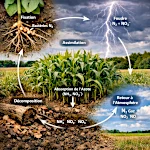 The Nitrogen Cycle: From Air to Life
  The Jet Stream: When the Atmospheric River Overflows Its Banks
 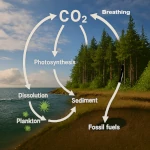 The Carbon Cycle: The Harmonious Interaction of Oceans, Forests, and Subsoils
  The Water Paradox: Without it, no life
 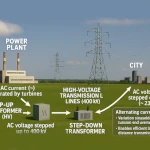 Why did alternating current prevail?
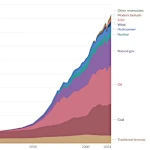 Evolution of Global Energy Consumption: From Steam Engines to Digital Servers
 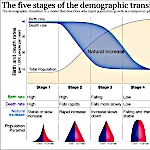 The Demographic Transition: Growth or Decline?
 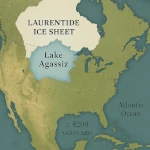 Lake Agassiz: A Deluge that Changed the Climate
  Drunken Forests: Understanding the Phenomenon of Permafrost Thaw
  There is Electricity in the Air!
  Why Doesn't CO2 Fall to the Ground?
  El Niño and La Niña: the two climatic phenomena of the Pacific
  Endangered Species: Dynamics of Extinction
  The Toxic Legacy of Acid Rain
  Major societal collapses: key periods and causes
  Global Warming in Figures: What the Scientific Data Says
  What is Sustainable Development?
  The Hottest Years Since Records Began
  Magnitude of upcoming climate change
  Earth in Crisis: Collapse or Renaissance?
  Ice on Borrowed Time: The Inexorable Decline of Arctic Sea Ice
  Earth's Water Reservoirs: From Oceans to Groundwater
  Sea Levels Are Rising, But How Fast?
  The Other Climate Threat: Earth Shrouded in Shadow and Humidity
 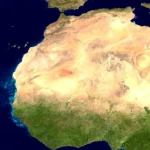 The Age of the Sahara: From Green Prairie to Stone Desert
 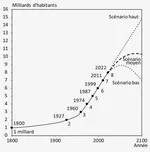 World Population from 1800 to 2100
  Oil: The Fall of a Giant in the Era of Renewable Energy
  Kamchatka King Crab: A Giant of the Oceans
 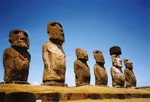 The collapse of a society
  Slight Progress in the Global Ecological Footprint
  The South Atlantic Anomaly
  The phenomenon of soil sinking is called subsidence
  The Planet's New Clouds