


Dark Energy: The Most Mysterious Force in the Universe
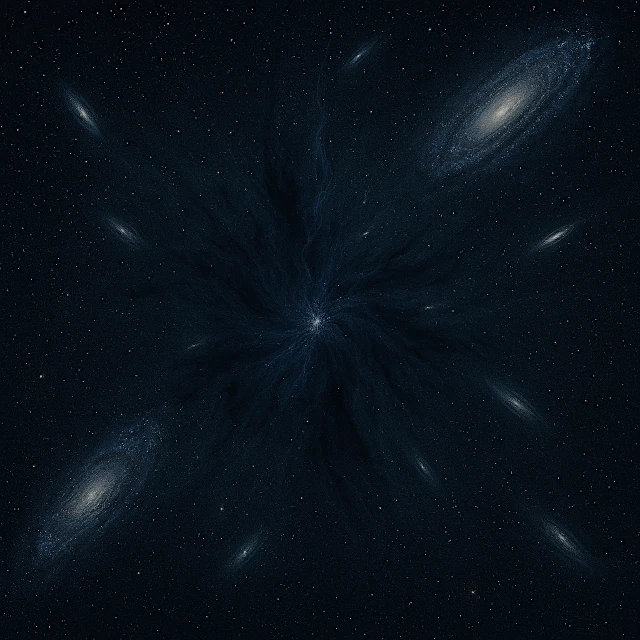
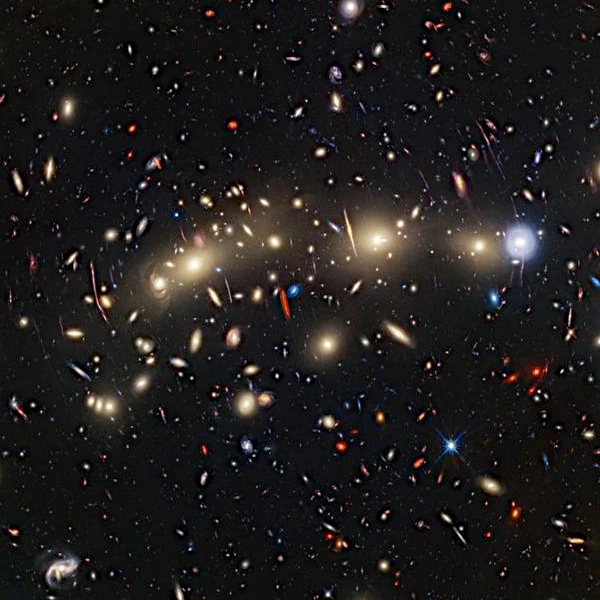
Dark energy acts as an expanding cosmic web, carrying galaxies away at an accelerating rate, defying the universal attraction of gravity.
Image source: astronoo.com (new window)
Scientific Summary
Dark energy is an unknown repulsive force constituting about 68.3% of the Universe's content and causing the acceleration of its expansion, discovered in 1998 through observations of type Ia supernovae. Invisible and acting on large scales against gravity, it is represented by the cosmological constant Λ in the standard ΛCDM model. Its exact nature (constant, dynamic field like quintessence, or modification of gravity) remains the greatest mystery of modern cosmology, the subject of numerous unconfirmed theories.
What is dark energy, this mysterious force accelerating the Universe?
Dark energy is an unknown repulsive force that constitutes about 68.3% of the Universe's content and causes the acceleration of its expansion, discovered in 1998 through observations of supernovae. Invisible and acting on a large scale against gravity, it is represented by the cosmological constant Λ in the standard ΛCDM model. Its exact nature (constant, dynamic field, or modification of gravity) remains the greatest mystery of modern cosmology.
Also worth exploring
Continue your exploration of the Universe with these topics:
A Discovery That Revolutionized Cosmology
At the end of the 20th century, cosmologists believed that the expansion of the Universe, initiated by the Big Bang, should slow down due to gravity. Two research teams, one led by Saul Perlmutter (1959-), the other by Brian Schmidt (1967-) and Adam Riess (1969-), made a stunning discovery in 1998. By observing Type Ia supernovae (very bright star explosions used as 'standard candles' to measure cosmic distances), they found that the light from these explosions was fainter than expected. This faintness meant they were farther away than predicted by models of a slowing expansion. The conclusion was revolutionary: the expansion of the Universe is not slowing down, it is accelerating.
This acceleration implies the existence of an unknown repulsive force, acting on a large scale against gravity. Scientists named this mysterious force "dark energy." Although counterintuitive, this concept is now the cornerstone of the standard model of cosmology, the \(\Lambda\)CDM (Lambda Cold Dark Matter) model, where Lambda (\(\Lambda\)) represents dark energy.
What Does Dark Energy Represent in the Cosmos?
According to the most precise data from the European Space Agency's (ESA) Planck satellite, published in 2018, the content of the Universe breaks down as follows:
- Dark energy: 68.3%, The mysterious force accelerating expansion.
- Dark matter: 26.8%, An invisible form of matter that does not interact with light but whose gravitational influence is detected.
- Ordinary (baryonic) matter: 4.9%, The matter that makes up stars, planets, and everything we know.
The dominant share of dark energy remains one of the greatest mysteries of modern physics. The most accepted current theory, though unconfirmed, is that it is a cosmological constant, a fixed property of empty space. But for many scientists, the idea that 68% of the Universe is a mysterious "constant" is deeply unsatisfying. The idea of constant dark energy is increasingly challenged by recent observations suggesting possible evolution.
How Do We Measure the Content of the Universe?
It is impossible to "weigh" the Universe directly. So how do scientists know that about 68% of its content is dark energy?
The key lies in dark matter. Although invisible, it exerts a measurable gravitational influence: it acts as a cosmic glue that keeps galaxies coherent. By observing the rotational speed of stars around their galaxy, astronomers can estimate the total mass-energy present. The result is striking: the detected mass-energy far exceeds that of visible matter. Thus, observable baryonic matter represents only a tiny fraction of the total energy contained in the Universe.
To complete the picture, scientists turn to the expansion of the Universe, measured using supernovae, and the study of the cosmic microwave background observed by the Planck satellite. Even by combining all matter, visible and dark, we only reach about 32% of the energy needed to explain cosmic acceleration. The remaining 68% corresponds to dark energy, which contributes to the acceleration of expansion as a gravitationally active form of energy.
How to Explain This Repulsive Force?
The acceleration of the Universe's expansion suggests the existence of a repulsive force that partially counteracts gravity. This "cosmic force" is not directly observable, but its effects are seen in the movement of galaxies and the cosmic microwave background. Scientists have developed several hypotheses to understand it, each based on different physical principles.
| Theory | Physical Principle | Key Observations | Scale of Effect | Strengths | Limitations |
|---|---|---|---|---|---|
| Cosmological Constant (Λ) | Vacuum energy with constant negative pressure | Cosmic microwave background, Type Ia supernovae, large-scale structure | Entire Universe | Simple, compatible with ΛCDM, explains acceleration well | Does not predict the exact value of Λ, "fine-tuning" problem |
| Quintessence | Dynamic scalar field evolving over time | Expansion evolution measured by supernovae and BAO | Large-scale Universe | Allows temporal variations in acceleration, more flexible than Λ | Hypothetical, undetected field, theoretical complexity |
| Modifications of Gravity (f(R), branes…) | Extensions or alterations of general relativity on large scales | Galaxy distribution, gravitational lenses, structure growth | Cosmological (10^8–10^10 light-years) | Can explain acceleration without dark energy | Complex, severe observational constraints, not yet confirmed |
| Quantum Vacuum Energy | Sum of quantum fluctuations of the vacuum | Indirect effects on expansion, consistency with quantum physics | Entire Universe | Based on known quantum physics | Predicts too high density, divergence with observations |
| Chaplygin Gas | Exotic fluid unifying dark matter and dark energy | Type Ia supernovae, cosmic expansion | Entire Universe | Possible unifying theory | Little direct evidence, highly speculative model |
| Holographic / Entropic Principles | Dark energy linked to information and cosmic surface (holographic principle) | Global cosmological parameters, entropy of the Universe | Entire Universe | Links to quantum gravity, innovative concepts | Conceptual theory, difficult to test experimentally |
| Dark Matter / Dark Energy Interactions | Dark matter and dark energy interact via an unknown force | Galaxy distribution, anomalies in structure growth | Large-scale Universe | Can explain some divergences observed with ΛCDM | Hypothetical, no direct evidence |
N.B.:
All these theories seek to account for the same observation: the accelerated expansion of the Universe.
None is yet definitively confirmed, but the cosmological constant Λ remains the simplest and most used in current models.
FAQ: Everything about dark energy
How was it discovered that the expansion of the Universe is accelerating?
In 1998, two teams studying type Ia supernovae found that their light was fainter than expected, indicating they were farther away than models of a decelerating expansion predicted. Therefore, expansion is not slowing down: it is accelerating. This discovery earned the 2011 Nobel Prize in Physics for Saul Perlmutter, Brian Schmidt, and Adam Riess.
What is the composition of the Universe according to current data?
According to measurements from the Planck satellite (ESA, 2018), the Universe consists of dark energy (68.3%), dark matter (26.8%), and only ordinary matter (4.9%) – which forms stars, planets, and living beings. Dark energy is therefore the dominant component, but also the least understood.
What are the main theories to explain dark energy?
The simplest and most widely used theory is the cosmological constant (Λ), a fixed property of empty space. Other hypotheses include quintessence (a time-varying dynamic field), modifications of gravity on large scales, or quantum vacuum energy. None are definitively confirmed, and recent observations suggest that dark energy might not be perfectly constant.
 Beyond Our Senses: What the Universe Still Hides from Us
  Little Red Dots: The Compact Enigmas of the Early Universe
  The Weak and Strong Anthropic Principles: Two Ways of Reading the Same Universe
  The Universe: Matter... or Information?
  Dark Energy: The Most Mysterious Force in the Universe
  The Fountains of Creation: The Myth of White Holes
  The Great Silence: 10 Insurmountable Walls to Meeting E.T.
 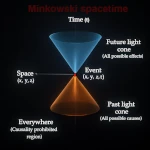 Why the Cause Always Precedes the Effect: The Order of the World is Written in This Principle
  Absolute Zero and Nothingness: Two Limits the Universe Refuses to Reach
  Economical Nature: The Secrets of Conserved Quantities
  The Incredible Precision of the Universe's Laws: Chance or Necessity?
  The Mystery of the Arrow of Time: Why Can't We Go Back?
  The Big Bang: At the Frontiers of the Model
  When Space Bends: The Tiny Slope That Guides the Universe
  Nabataean Astronomy: Masters of the Desert Between Starry Skies and Stone Constructions
  Polynesian Astronomy: The Art of Navigating the Pacific Ocean
  Mesopotamian Astronomy: The Cradle of Celestial Observation
  Andean Astronomy: A Sacred Link Between Sky and Earth
  Ancient Persian Astronomy: Between Babylon and the Islamic Golden Age
  Mayan Astronomy: Celestial Cycles Dictated Religious, Agricultural, and Political Time
  Islamic Astronomy: When Baghdad Illuminated the Sky of Science
  Indian Astronomy: From Sacred Poetry to Scientific Thought
  Ancient Greek Astronomy: The Universe of Philosophers in Search of Cosmic Order
  The Three Cosmic Shapes: A Hidden Geometry of the Universe
  Egyptian Astronomy: Between Sky and Nile, the Secrets of Time
  Babylonian Astronomy: When the Sky Predicted Destiny
  Chinese Imperial Astronomy: A Millennial Scientific Legacy
  Extreme Cosmic Objects: Where Physics Explodes
  Mirror Universe: Coexistence of Two Worlds in a Cosmic Reflection
  The first second of our history
  Time Dilation: Relativistic Mirage or Reality?
  Space Through Time: A Constantly Evolving Concept
  The Expanding Universe: What Does "Creating Space" Really Mean?
  From Nothingness to the Cosmos: Why Is There Something Rather Than Nothing?
  How can the Universe measure 93 billion light-years?
  How can we say that the Universe has an age?
  First Proof of the Expansion of the Universe
  Space-time slices of the observable Universe
  When the Universe Was Blind: The Long Night Before the First Stars
  Alternative theories to the accelerated expansion of the universe
  The primitive atom: the first cosmological theory
  Great walls and filaments: the great structures of the Universe
  The Origins of the Universe: A History of Cosmic Representations
  Lyman-alpha Blobs: Gaseous Traces of the First Galaxies
  Perspective on the Inflation of the Universe
  The Planck Universe: the Image of the Universe Becomes Clearer
 The sky is immense with Laniakea
  The Symmetries of the Universe: A Journey Between Mathematics and Physical Reality
  The Geometry of Time: Exploring the Fourth Dimension of the Universe
  How to measure distances in the Universe?
  Why ‘nothing’ is impossible: Do nothingness and emptiness exist?
  The Horizon Problem: Understanding the Uniformity of the Cosmos
  What is Dark Matter? The Invisible Force Shaping the Universe
  Metaverse, the next stage of evolution
  Multiverse: An Ocean where each Spacetime Bubble has its own Physical Laws
  Cosmological Recombination: When the Universe Became Transparent
  Cosmological constants: the fine-tuning of the universe
  The Thermodynamics of the Sandpile and the Avalanche Effect
  The engine of the accelerated expansion of the Universe
  The X-Ray Universe: When Space Becomes Transparent
  The oldest galaxies in the universe
 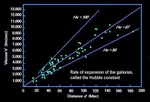 Hubble constant and expansion of the Universe
  Dark Energy: When the Universe Defies Its Own Gravity
  What is the Size of the Universe? Between Cosmological Horizon and Infinity
  Quantum Vacuum and Virtual Particles: The Physical Reality of Nothingness
  Paradox of the dark night
  Journey into the Heart of Paradoxes: The Enigmas That Revolutionized Science
  Cosmic Microwave Background: The Thermal Echo of the Big Bang