


The Great Silence: 10 Insurmountable Walls to Meeting E.T.
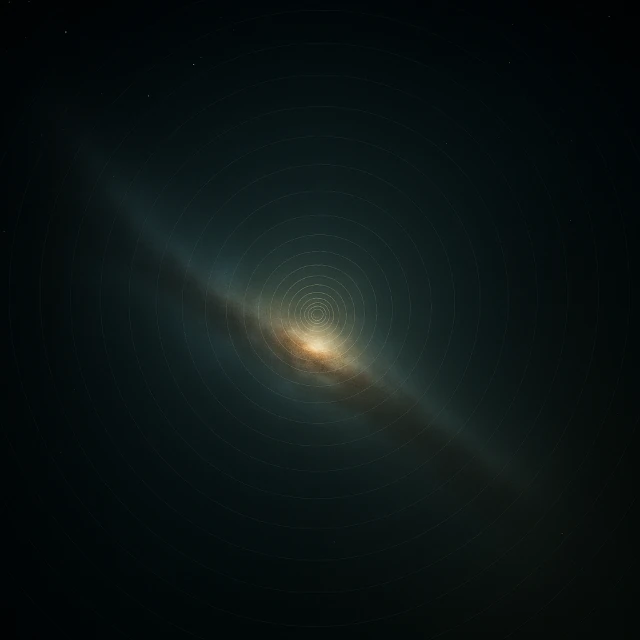
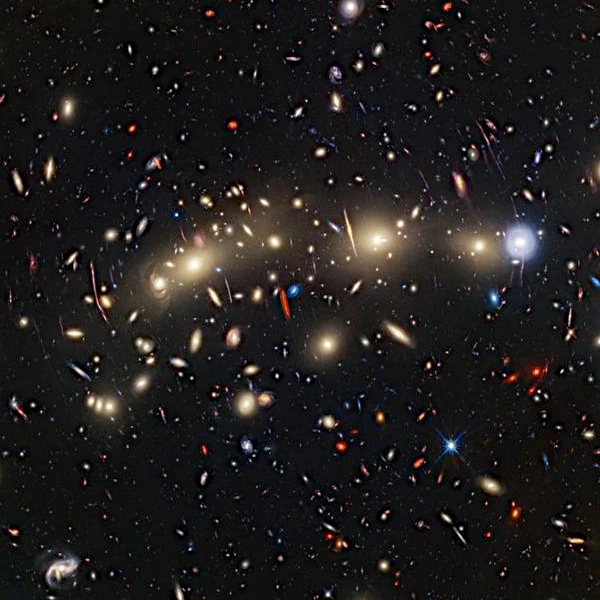
The Milky Way in the deep, dark Universe, where signals emitted by a civilization—ours—seem to get lost in a cosmos dominated by the Great Silence.
Image source: astronoo.com (new window)
Scientific Summary
The Great Silence refers to the absence of signals or traces of extraterrestrial civilizations, despite the vastness of the Universe and the colossal number of potentially habitable worlds. This article explores ten obstacles to interstellar communication: the unlikely temporal synchronization window, the barrier of distances, the Great Filter effect, the rarity of truly habitable planets, the singularity of technological intelligence, the instability of civilizations, the zoo hypothesis, fundamental technological incomprehension, disinterest in physical expansion, and the primitiveness of our searches. This silence questions our place in the Universe.
Why is the Universe so silent?
The Great Silence refers to the troubling paradox that, despite a cosmos filled with billions of galaxies and countless potentially habitable worlds, we detect no clear signs of advanced civilizations. Radio telescopes scan the sky and probes explore planets, yet no artificial signal or unmistakable technological trace breaks this cosmic quiet. Either intelligent life is extremely rare, fragile, short‑lived, or it develops in ways that escape our detection methods. This silence is not merely an absence of response: it is a mystery that challenges our models, our expectations, and perhaps the unique place we occupy in the Universe.
Also worth exploring
Continue your exploration of the Universe with these topics:
The Great Silence of the Universe
With about 200 billion stars in our galaxy and billions of galaxies in the observable Universe, the probability that intelligent life exists elsewhere seems mathematically certain. Yet, after more than six decades of active research (since Project Ozma in 1960) and thousands of hours of radio and optical listening, we have detected no clearly artificial signal, no indisputable technological trace.
This contrast between statistical expectation and total lack of evidence constitutes the Fermi Paradox, and its corollary that scientists call The Great Silence.
The Great Silence: Ten Obstacles to Interstellar Communication
1. An Unlikely Synchronization Window
The Universe is 13.8 billion years old. Our technological civilization capable of emitting radio signals has existed for only about 200 years. For interstellar dialogue to be possible, two conditions must be met simultaneously: two civilizations must exist at the same time and be sufficiently spatially close.
The probability that a given civilization is active at the same time as ours depends on its average lifespan \(L\). If we optimistically assume that a technological civilization lasts 10,000 years (which is already 50 times our current age), the probability of temporal overlap over the age of the Universe \(T = 13.8 \times 10^9\) years is about one in 1.4 million.
If we compress the history of the Universe into one year (365 days), each day represents about 38 million years. A 10,000-year civilization would then last less than 0.002 seconds. The probability that two of these cosmic "blinks" occur simultaneously is infinitesimal.
2. The Insurmountable Barrier of Distances
The speed of light (\(c = 299,792\ \text{km/s}\)) is an absolute cosmic limit (special relativity (fundamental theory of modern physics concerning space, time, and gravity)). This universal constant, while immense on our scale, becomes derisory in the face of interstellar distances. Even with automated probes at subluminal speeds, the propagation time on a galactic scale would remain on the order of hundreds of thousands of years.
But the obstacle goes far beyond mere communication delay. The equation \(E = mc^2\) implies that accelerating even a modest mass to a speed close to \(c\) requires energy tending towards infinity. For example, to accelerate a 1-ton probe to 90% of the speed of light, the required energy is on the order of the current global energy consumption for several months.
These constraints make any interstellar conversation absurd and any manned travel impossible. Advanced civilizations, if they exist, would face these same physical laws.
3. The Great Filter Effect
Economist Robin Dale Hanson (1959-) proposes the idea of a Great Filter (critical and unlikely step that life must overcome to reach the stage of interstellar civilization). His reasoning starts from a simple observation: on Earth, it took about 4.5 billion years to go from the formation of the planet to a technological civilization capable of emitting radio signals.
If the development of intelligent life were a probable or common process in the galaxy, given that many stars are older than the Sun, we should observe traces of civilizations much older and more advanced than ours. The fact that we see nothing suggests that at least one step in this long evolutionary chain is extremely unlikely, which is the Great Filter.
The unlikely step could be, for example, the transition from unicellular to complex multicellular life (which took about 3 billion years on Earth). If this is the case, we are a rare galactic exception and the silence is explained by the extreme rarity of intelligent life.
This filter, wherever it is, is very effective at preventing the emergence or persistence of civilizations visible on a galactic scale.
4. The Extreme Rarity of Truly Habitable Planets
The "habitable zone," where water can exist in liquid form, is only the first filter in a long series of conditions necessary for the emergence and maintenance of a complex biosphere. Earth benefits from an exceptional convergence of factors that could be extraordinarily rare in the galaxy, such as plate tectonics, a protective magnetic field, the existence of a stabilizing moon, etc.
Even with all these conditions met, the transition from prebiotic chemistry to the first living cell (LUCA (last Universal Common Ancestor of all life on Earth)) remains one of the greatest scientific mysteries. On Earth, this event occurred relatively early (within the first 800 million years), but this does not prove its probability. The space of possible molecular combinations is so vast that the spontaneous emergence of a self-replicating system could have an extremely low probability.
The "Rare Earth" hypothesis proposed by Peter Ward (1949-) and Donald Brownlee (1943-) suggests that the combination of all these astronomical, geological, chemical, and biological factors is so exceptional that planets like Earth could be extremely rare.
5. The Singularity of Technological Intelligence
Life on Earth has existed for about 3.7 billion years. For most of this history, it remained unicellular. Complex multicellular life only appeared during the Cambrian explosion (period of rapid evolution and diversification of complex life forms, about 541 million years ago), "only" 541 million years ago. Since then, billions of species have appeared and disappeared, but only one (ours) has developed technological intelligence capable of emitting signals into space.
This singularity suggests that human-like intelligence is not an inevitable outcome of evolution, but rather a contingency in evolutionary history. If we replayed the tape of life and restarted it from its initial conditions, in 3.7 billion years, evolution would not reproduce current technological intelligence.
6. The Instability of Civilizations
The advent of technology brings not only communication and exploration capabilities, but also exponentially more powerful means of destruction. This correlation between technological power and the power of self-annihilation suggests that technological civilizations may have an intrinsically limited lifespan, a phenomenon sometimes called the "sustainability filter".
Astronomer Michael H. Hart (1932-) was one of the first to formalize this idea in his 1975 article "Explanation for the Absence of Extraterrestrials on Earth". He argued that even if civilizations were common, they would disappear rapidly after reaching a certain technological level, too quickly to colonize the galaxy or establish lasting communication.
In this scenario, the Great Silence does not indicate the absence of intelligent life in the galactic past, but rather that the "noisy" phase (emitting detectable signals) of a civilization is extraordinarily brief (perhaps a few millennia) before it collapses or mutates into a silent form.
7. The Zoo Hypothesis or Discreet Observation
The "galactic zoo" hypothesis, formulated by astronomer John A. Ball (1941-) in 1973, proposes that sufficiently advanced extraterrestrial civilizations know of our existence, but deliberately observe a strict policy of non-intervention. They would study us from a distance, like naturalists observing a preserved ecological reserve, waiting for our civilization to reach a threshold of technological or ethical maturity before considering any contact.
The zoo hypothesis raises profound questions about the nature of science. It is described as "non-falsifiable" by some, as it can explain both the presence and absence of evidence. For physicist Enrico Fermi (1901-1954), if such civilizations existed, they should have left traces of their activities elsewhere in the galaxy, making the hypothesis of deliberate silence unlikely on a large scale.
8. Fundamental Technological Misunderstanding
Our search for extraterrestrial signals is based on a human cognitive tendency: to look for answers or solutions where it is easiest to look, like a man searching for his lost keys under a lamppost, not because he thinks he lost them there, but because that's where the light is strongest.
Our current approach assumes that extraterrestrials would communicate according to our own criteria. However, as astronomer Sebastian von Hoerner (1919-2003) already pointed out, a much older civilization may have long abandoned electromagnetic communication for more sophisticated methods, just as we have largely abandoned smoke signals for the internet.
A civilization could be perfectly "noisy" by its own standards, but completely undetectable to us.
9. Disinterest in Physical Expansion
The classic model of galactic colonization, such as the one popularized by the "colonization wave" equation, is based on a fundamental assumption: any advanced technological civilization will inevitably seek to spread physically throughout the galaxy, exploiting the resources of other star systems. However, a civilization that has crossed a certain technological and energetic threshold could follow a radically different trajectory, which some authors call the "inward turn" or the "post-expansionist transition".
If this hypothesis is true, the Milky Way could be populated by ancient, wise, and silent civilizations, perfectly capable of traveling between stars but choosing not to do so. They would be "invisible" not due to lack of capability, but due to lack of interest. The Great Silence would then not be a paradox, but the expected consequence of a certain civilizational maturity.
10. Our Research Is Still Primitive
The aphorism that "absence of evidence is not evidence of absence" finds its full application here. Our efforts to detect intelligent extraterrestrial life are extraordinarily limited compared to the immensity of the parameters to be explored. We have examined only a fraction of the billions of stars in the Milky Way, only a fraction of the electromagnetic spectrum, only a fraction of the sky for short and intermittent durations, etc.
Astronomer Jill Tarter (1944-), an iconic figure of SETI, often compares our current search to "having taken a glass of water from the ocean and, finding no fish, concluding that the ocean is empty". The real paradox, in this perspective, may not be the silence of the Universe, but our own impatience in drawing cosmological conclusions from such a ridiculously small sample.
A "Equation" as a Probabilistic Framework for the Great Silence
The Drake Equation formalizes this questioning: \(N = R^* \times f_p \times n_e \times f_l \times f_i \times f_c \times L\). Each factor represents an unknown probability. If the product is large, where are they? If the product equals 1, we are alone.
| Symbol | Parameter | Definition | Optimistic Value (Drake, 1961) | Modern Estimate (Consensus) |
|---|---|---|---|---|
| \(\mathbf{N}\) | Number of civilizations | Number of communicating civilizations in the Milky Way at any given time | \(N \approx 10\) | Between \(N \approx 10^{-5}\) and \(N \approx 10^4\) |
| \(R^*\) | Star formation rate | Number of stars forming per year in the Milky Way | 10/year | 1-3/year |
| \(f_p\) | Fraction of stars with planets | Proportion of stars with a planetary system | 0.5 | \(\approx 1\) (almost all) |
| \(n_e\) | Habitable planets per system | Average number of planets in the habitable zone per planetary system | 2 | 0.1 - 0.3 |
| \(f_l\) | Fraction where life appears | Proportion of habitable planets where life actually emerges | 1 | Unknown (0 to 1) "Rapid on Earth" argument: possibly high "Rare Earth" argument: very low |
| \(f_i\) | Fraction with intelligent life | Proportion of planets with life where human-like intelligence develops | 0.01 | Very uncertain (10\(^{-3}\) to 1) Depends on evolutionary contingency |
| \(f_c\) | Communicating fraction | Proportion of intelligent civilizations that develop technology to communicate over interstellar distances | 0.01 | 0.1 - 1 (if intelligence ⇒ technology) But could be 0 if early self-destruction |
| \(L\) | Lifespan of communicating civilizations | Average duration (in years) during which a civilization emits detectable signals | 10,000 years | Extremely uncertain 100 to 10\(^6\) years depending on assumptions Our current \(L\): ~100 years |
FAQ: Understanding the Great Silence
What is the Great Silence?
It refers to the complete absence of signals or traces from extraterrestrial civilizations despite the vastness of the Universe.
Why is it considered a paradox?
Because statistics suggest intelligent life should exist elsewhere, yet we observe nothing.
Could intelligent life be extremely rare?
Yes. The emergence of intelligence may require an improbable chain of events.
Could civilizations simply be too far away?
They might exist, but their signals could be too weak, distant, or brief to detect.
Do civilizations tend to disappear quickly?
Some hypotheses suggest technological civilizations may not survive long.
Why don’t we detect extraterrestrial technology?
Our instruments are limited, and advanced civilizations may use unknown technologies.
Does the silence mean we are alone?
Not necessarily. It may reflect our observational limits or radically different forms of intelligence.
What does this silence teach us?
It highlights our fragility, our apparent isolation, and the importance of understanding ourselves.
 Beyond Our Senses: What the Universe Still Hides from Us
  Little Red Dots: The Compact Enigmas of the Early Universe
  The Weak and Strong Anthropic Principles: Two Ways of Reading the Same Universe
  The Universe: Matter... or Information?
  Dark Energy: The Most Mysterious Force in the Universe
  The Fountains of Creation: The Myth of White Holes
  The Great Silence: 10 Insurmountable Walls to Meeting E.T.
  Why the Cause Always Precedes the Effect: The Order of the World is Written in This Principle
  Absolute Zero and Nothingness: Two Limits the Universe Refuses to Reach
  Economical Nature: The Secrets of Conserved Quantities
  The Incredible Precision of the Universe's Laws: Chance or Necessity?
  The Mystery of the Arrow of Time: Why Can't We Go Back?
  The Big Bang: At the Frontiers of the Model
  When Space Bends: The Tiny Slope That Guides the Universe
  Nabataean Astronomy: Masters of the Desert Between Starry Skies and Stone Constructions
  Polynesian Astronomy: The Art of Navigating the Pacific Ocean
  Mesopotamian Astronomy: The Cradle of Celestial Observation
  Andean Astronomy: A Sacred Link Between Sky and Earth
  Ancient Persian Astronomy: Between Babylon and the Islamic Golden Age
  Mayan Astronomy: Celestial Cycles Dictated Religious, Agricultural, and Political Time
  Islamic Astronomy: When Baghdad Illuminated the Sky of Science
  Indian Astronomy: From Sacred Poetry to Scientific Thought
  Ancient Greek Astronomy: The Universe of Philosophers in Search of Cosmic Order
  The Three Cosmic Shapes: A Hidden Geometry of the Universe
  Egyptian Astronomy: Between Sky and Nile, the Secrets of Time
  Babylonian Astronomy: When the Sky Predicted Destiny
  Chinese Imperial Astronomy: A Millennial Scientific Legacy
  Extreme Cosmic Objects: Where Physics Explodes
  Mirror Universe: Coexistence of Two Worlds in a Cosmic Reflection
  The first second of our history
  Time Dilation: Relativistic Mirage or Reality?
  Space Through Time: A Constantly Evolving Concept
  The Expanding Universe: What Does "Creating Space" Really Mean?
  From Nothingness to the Cosmos: Why Is There Something Rather Than Nothing?
 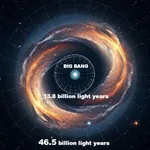 How can the Universe measure 93 billion light-years?
  How can we say that the Universe has an age?
  First Proof of the Expansion of the Universe
 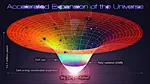 Space-time slices of the observable Universe
 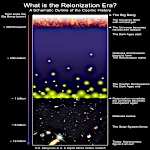 When the Universe Was Blind: The Long Night Before the First Stars
  Alternative theories to the accelerated expansion of the universe
  The primitive atom: the first cosmological theory
  Great walls and filaments: the great structures of the Universe
  The Origins of the Universe: A History of Cosmic Representations
  Lyman-alpha Blobs: Gaseous Traces of the First Galaxies
  Perspective on the Inflation of the Universe
  The Planck Universe: the Image of the Universe Becomes Clearer
 The sky is immense with Laniakea
  The Symmetries of the Universe: A Journey Between Mathematics and Physical Reality
  The Geometry of Time: Exploring the Fourth Dimension of the Universe
  How to measure distances in the Universe?
  Why ‘nothing’ is impossible: Do nothingness and emptiness exist?
  The Horizon Problem: Understanding the Uniformity of the Cosmos
  What is Dark Matter? The Invisible Force Shaping the Universe
  Metaverse, the next stage of evolution
  Multiverse: An Ocean where each Spacetime Bubble has its own Physical Laws
  Cosmological Recombination: When the Universe Became Transparent
  Cosmological constants: the fine-tuning of the universe
  The Thermodynamics of the Sandpile and the Avalanche Effect
  The engine of the accelerated expansion of the Universe
  The X-Ray Universe: When Space Becomes Transparent
  The oldest galaxies in the universe
  Hubble constant and expansion of the Universe
  Dark Energy: When the Universe Defies Its Own Gravity
  What is the Size of the Universe? Between Cosmological Horizon and Infinity
  Quantum Vacuum and Virtual Particles: The Physical Reality of Nothingness
  Paradox of the dark night
  Journey into the Heart of Paradoxes: The Enigmas That Revolutionized Science
  Cosmic Microwave Background: The Thermal Echo of the Big Bang