


宇宙加速膨胀的替代理论
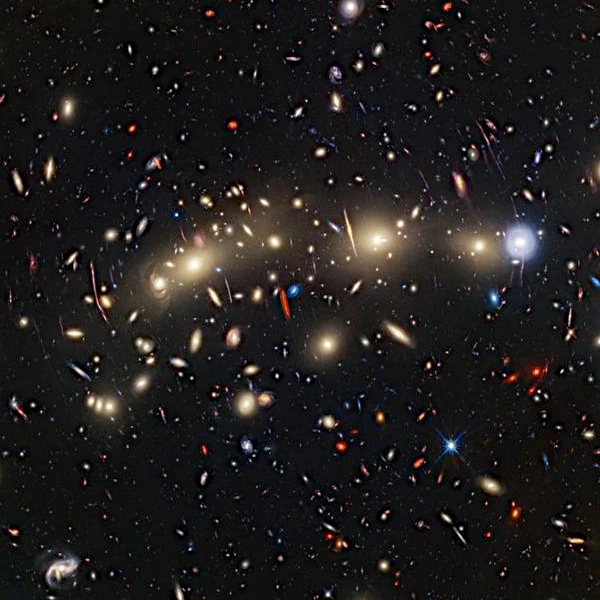
图片:JWST 美国宇航局詹姆斯·韦伯太空望远镜(公共领域)
什么是ΛCDM标准模型?
宇宙的绝大部分(70%)以未知形式存在。
在标准ΛCDM(Lambda冷暗物质)模型中,宇宙的加速膨胀归因于一种通常被称为暗能量的暗能量形式。标准ΛCDM模型是2023年最被接受的宇宙学模型。它描述宇宙由68%的暗能量、27%的暗物质和5%的普通物质组成。暗能量无处不在。
ΛCDM模型与包括哈勃定律、星系分布及宇宙组成在内的广泛观测结果相符。然而,该模型也带来了一些理论问题,包括暗能量的本质以及它在宇宙中占据如此大比例的事实。
解释可以简单地来自广义相对论所引入的宇宙学常数,该常数具有非零值。阿尔伯特·爱因斯坦于1917年2月将其方程中的这一常数Λ加入广义相对论(1915年),只要赋予它一个非常精确的值,就能解释这种膨胀。对于某些宇宙学家而言,这并不令人满意,因此他们试图探索超越这一常数的理论。
存在大量替代理论或模型扩展,试图以不同方式解释这种加速现象。这些替代理论被提出用于解释宇宙膨胀,而不涉及暗能量。它们可分为两类:一类修改宇宙的组成,另一类修改引力理论。
修改宇宙构成的理论
•**精质**假设存在一个动态标量场,称为精质场,它用随时间演化的能量充满宇宙。这种演化可能导致宇宙膨胀加速度在不同宇宙纪元中发生变化。 •**K-本质**意味着存在一个充满宇宙的动态标量场。与具有简单状态方程(如精质场相关)的标量场不同,K-本质场可以具有更复杂的状态方程。 •**幻影暗能量**处于一种“幻影”状态方程中,其暗能量密度随时间增加,导致宇宙膨胀加速度越来越快。与导致加速但有限膨胀的标准暗能量不同,幻影暗能量暗示膨胀在有限时间内趋于无限,这可能对宇宙的最终命运产生有趣且推测性的影响。 •**耦合精质**通过引入比ΛCDM模型中简单宇宙学常数Λ更多的自由度,解释了观测到的宇宙膨胀加速度。 •**恰普雷金气体**引入了与恰普雷金状态方程相关的负压力。它可能产生排斥力,从而模拟暗能量的效应。 •**雅努斯**是物理学家朱利安·巴伯提出的一种宇宙学理论。其核心思想是认为时间并非基本实体,而是一个涌现概念。巴伯提出,我们感知的时间源于一种称为雅努斯对称性的特殊对称性,这种对称性连接了两个镜像宇宙的优先状态。这两个宇宙由理论描述,雅努斯对称性以某种方式连接它们,使得每个宇宙中涌现出时间概念。 •**雅努斯-佩蒂特**基于与巴伯原始理论相同的原理,但引入了一个新假设。佩蒂特的假设是,雅努斯理论中的负度量与存在于额外维度中的一种物质或能量形式相关联。这个额外维度隐藏于我们的观测之外,但它与我们感知的空间维度相互作用。
修正广义相对论的理论
• 高斯-博内理论是广义相对论的一种扩展,它在引力场方程中加入了额外项。更准确地说,它引入了高斯-博内项,这是引力作用中二次曲率项的一种特定组合。 • 爱因斯坦-以太理论是对阿尔伯特·爱因斯坦广义相对论的一种替代方法。它通过引入一个称为以太场的矢量场(一个与时空相关的单位矢量)来修改引力理论。该理论旨在探索洛伦兹对称性(描述物理定律在洛伦兹变换下的不变性)可能自发破缺的情景。 • 级联引力基于这样一个概念:我们观察到的时空可能包含多个额外维度,超出我们通常感知的四维(三个空间维度和一个时间维度)。这些额外维度在极小尺度上被压缩,而该理论探索的是它们对宇宙学尺度的影响。 • 神奇四侠是由物理学家约翰·莫法特和保罗·韦森提出的一种宇宙学理论。它基于这样一种观点:宇宙的膨胀是由于一种称为“韦森物质”的新型物质或能量的存在。 • 伽利略子理论是引力背景下的一类标量场理论,它推广了伽利略的对称性质。“伽利略子”这一名称源于这些理论与经典力学中伽利略运动具有相似的对称性。 • DGP理论(德瓦利-加巴达泽-波拉蒂理论)是由吉亚·德瓦利、格雷戈里·加巴达泽和马西莫·波拉蒂在21世纪初提出的引力理论。DGP理论的主要特点是引入了额外的时空维度,除了我们通常观察到的四维(三个空间维度和一个时间维度)之外。这些额外维度在弦理论和额外维度背景下常被称为“膜”。 • 布兰斯-迪克理论旨在通过向引力方程中引入一个额外的标量场(有时称为“膨胀子”)来探索超越标准爱因斯坦引力的可能性。 • 双引力是物理学领域的一种理论假设,它探索引力可能源于两个不同引力场相互作用而非仅一个的可能性。 • 霍恩德斯基理论是一类特殊的替代引力理论,涵盖了标量-张量引力模型。它由格雷戈里·霍恩德斯基于1974年提出,其特点是存在一种第五种力,这种力源于一个与引力非最小耦合的标量场,不同于标准的牛顿引力。 • f(R)理论是一类修正引力理论,它通过在场方程中引入一个任意函数f(R)来推广爱因斯坦引力。f(R)理论假设广义相对论的曲率常数是时空曲率的函数,这意味着引力在不同尺度上可能有所不同。 • 有质量引力是爱因斯坦广义引力的一种扩展,它探索了传递引力力的粒子(称为引力子)可能具有非零质量的可能性。与广义引力中引力子被视为无质量不同,有质量引力提出这些粒子具有一定质量。 • 兰德尔-桑德拉姆理论通过包含一个额外维度(通常称为“紧致”额外维度)来扩展通常的时空维度。该理论的主要特征通过两个模型描述,通常称为RS1和RS2。
总之,
科学家并不缺乏创造力。在理论物理学和宇宙学领域,存在许多其他替代理论,试图解释暗能量或宇宙加速膨胀等现象。其中一些理论比其他理论更具推测性,其影响可能超越当前的观测范围。这些领域的研究十分活跃,但目前尚无任何替代理论被广泛接受为对宇宙观测现象的完整且确定的解释。然而,它们代表了解决ΛCDM模型理论问题的有前景的途径。
 Beyond Our Senses: What the Universe Still Hides from Us
  Little Red Dots: The Compact Enigmas of the Early Universe
  The Weak and Strong Anthropic Principles: Two Ways of Reading the Same Universe
  The Universe: Matter... or Information?
  Dark Energy: The Most Mysterious Force in the Universe
  The Fountains of Creation: The Myth of White Holes
  The Great Silence: 10 Insurmountable Walls to Meeting E.T.
  Why the Cause Always Precedes the Effect: The Order of the World is Written in This Principle
  Absolute Zero and Nothingness: Two Limits the Universe Refuses to Reach
  Economical Nature: The Secrets of Conserved Quantities
 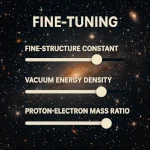 The Incredible Precision of the Universe's Laws: Chance or Necessity?
  The Mystery of the Arrow of Time: Why Can't We Go Back?
 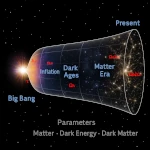 The Big Bang: At the Frontiers of the Model
  When Space Bends: The Tiny Slope That Guides the Universe
  Nabataean Astronomy: Masters of the Desert Between Starry Skies and Stone Constructions
  Polynesian Astronomy: The Art of Navigating the Pacific Ocean
  Mesopotamian Astronomy: The Cradle of Celestial Observation
  Andean Astronomy: A Sacred Link Between Sky and Earth
  Ancient Persian Astronomy: Between Babylon and the Islamic Golden Age
  Mayan Astronomy: Celestial Cycles Dictated Religious, Agricultural, and Political Time
  Islamic Astronomy: When Baghdad Illuminated the Sky of Science
  Indian Astronomy: From Sacred Poetry to Scientific Thought
 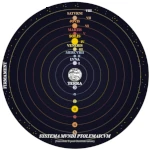 Ancient Greek Astronomy: The Universe of Philosophers in Search of Cosmic Order
 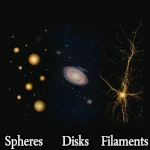 The Three Cosmic Shapes: A Hidden Geometry of the Universe
  Egyptian Astronomy: Between Sky and Nile, the Secrets of Time
  Babylonian Astronomy: When the Sky Predicted Destiny
  Chinese Imperial Astronomy: A Millennial Scientific Legacy
  Extreme Cosmic Objects: Where Physics Explodes
  Mirror Universe: Coexistence of Two Worlds in a Cosmic Reflection
  The first second of our history
  Time Dilation: Relativistic Mirage or Reality?
  Space Through Time: A Constantly Evolving Concept
  The Expanding Universe: What Does "Creating Space" Really Mean?
  From Nothingness to the Cosmos: Why Is There Something Rather Than Nothing?
  How can the Universe measure 93 billion light-years?
  How can we say that the Universe has an age?
  First Proof of the Expansion of the Universe
  Space-time slices of the observable Universe
 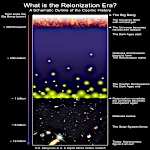 When the Universe Was Blind: The Long Night Before the First Stars
  The primitive atom: the first cosmological theory
 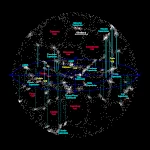 Great walls and filaments: the great structures of the Universe
 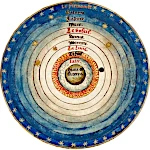 The Origins of the Universe: A History of Cosmic Representations
  Lyman-alpha Blobs: Gaseous Traces of the First Galaxies
  Perspective on the Inflation of the Universe
  The Planck Universe: the Image of the Universe Becomes Clearer
 The sky is immense with Laniakea
  The Symmetries of the Universe: A Journey Between Mathematics and Physical Reality
  The Geometry of Time: Exploring the Fourth Dimension of the Universe
  How to measure distances in the Universe?
  Why ‘nothing’ is impossible: Do nothingness and emptiness exist?
  The Horizon Problem: Understanding the Uniformity of the Cosmos
  What is Dark Matter? The Invisible Force Shaping the Universe
  Metaverse, the next stage of evolution
  Multiverse: An Ocean where each Spacetime Bubble has its own Physical Laws
  Cosmological Recombination: When the Universe Became Transparent
  Cosmological constants: the fine-tuning of the universe
  The Thermodynamics of the Sandpile and the Avalanche Effect
  The engine of the accelerated expansion of the Universe
  The X-Ray Universe: When Space Becomes Transparent
  The oldest galaxies in the universe
  Hubble constant and expansion of the Universe
  Dark Energy: When the Universe Defies Its Own Gravity
  What is the Size of the Universe? Between Cosmological Horizon and Infinity
  Quantum Vacuum and Virtual Particles: The Physical Reality of Nothingness
  Paradox of the dark night
  Journey into the Heart of Paradoxes: The Enigmas That Revolutionized Science
  Cosmic Microwave Background: The Thermal Echo of the Big Bang