


Little Red Dots: The Compact Enigmas of the Early Universe

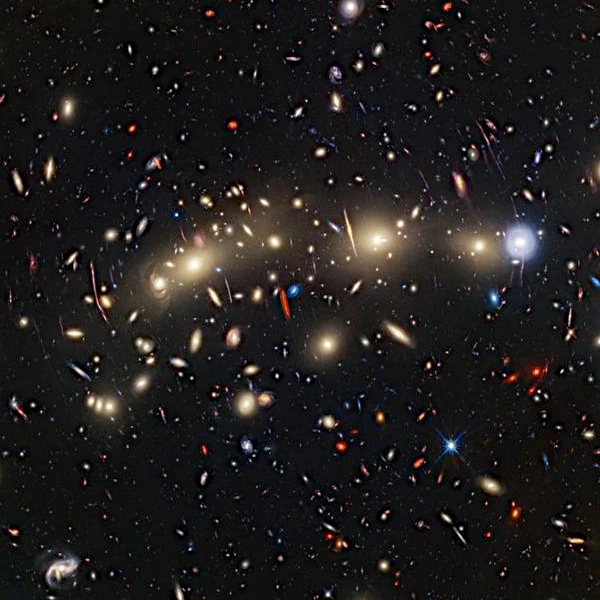
In the early cosmic history, JWST glimpsed a class of ultra-young and distant objects, called "Little Red Dots."
These extremely compact objects were observed at approximately 12.6 to 13.2 billion light-years away.
Image source: D. Kocevski et al., Astrophysical Journal Letters accepted/arXiv:2404.03576, 2025 (new window)
Scientific Summary
This article explores the nature of "little red dots", a population of celestial objects discovered by the James Webb Space Telescope in the early Universe, approximately 12.6 to 13.2 billion years ago (redshift z ≈ 5 to 9). These sources are extremely compact (radius of 80 to 300 parsecs) and exhibit very broad hydrogen emission lines, suggesting gas velocities exceeding 1,000 km/s. Their intense red color and low X-ray emission pose a major challenge to astrophysical models. The leading theories to explain them include: accreting supermassive black holes (AGN) in dense host galaxies, primordial supermassive stars in the collapse phase, or galaxies formed in low-angular-momentum dark matter halos. This debate is at the heart of understanding the formation of the first structures in the Universe.
What are "Little Red Dots" and why do they challenge our understanding of the Universe?
The "Little Red Dots" (LRDs) are a class of celestial objects recently discovered by the James Webb Space Telescope (JWST). They appear as extremely red and compact sources in the early Universe, at a time when it was only about 600 million years old (redshift z ≈ 7). Their radius is tiny (about 100 parsecs, or 300 light-years), much smaller than the Milky Way. Their spectrum reveals extremely broad emission lines, interpreted as the signature of gas moving at phenomenal speeds (over 1,000 km/s). However, their X-ray emission is surprisingly low, which contradicts the simplest hypothesis of supermassive black holes accreting matter.
To resolve these paradoxes, astronomers have proposed several theories. The most widespread is that of obscured active galactic nuclei (AGN) by a screen of gas and dust, or operating in a super-Eddington accretion regime. A more radical hypothesis suggests that they are primordial supermassive stars (up to a million solar masses) whose red color would come from their extended outer envelope. Finally, a third approach proposes that these objects are ultra-compact dwarf galaxies formed in dark matter halos with low angular momentum, which would explain their density and compactness without necessarily involving a black hole. The Little Red Dots have thus become a privileged study field for understanding the first chapters of cosmic history.
Also worth exploring
Continue your exploration of the Universe with these topics:
A Revolutionary Discovery in the Deep Past
The Key Role of the James Webb Space Telescope
The discovery of "Little Red Dots" is directly linked to the unprecedented power of the James Webb Space Telescope (JWST). Thanks to its infrared sensitivity, it can observe the light from the first galaxies, redshifted by the expansion of the Universe. These objects were first identified in 2022, in deep surveys such as JADES (JWST Advanced Deep Extragalactic Survey).
A Color That Intrigues Astronomers
Their red color is not solely due to extreme redshift (they are located at a redshift of 5 to 9), but rather to a particular spectral emission that makes them brighter in red wavelengths than in blue. This unique signature allowed them to be distinguished from classical galaxies in the early Universe.
Extreme and Paradoxical Physical Characteristics
Record Compactness
LRDs exhibit properties that challenge standard galaxy formation models. Their size is extremely compact, with an average stellar density hundreds of times higher than that of massive galaxies in the local Universe. A typical radius of 100 parsecs for a stellar mass that, in extreme cases, can reach that of the Milky Way (about 1011 solar masses) makes them unique objects; however, most LRDs display more modest stellar masses, on the order of 109 to 1010 solar masses.
Immense Emission Lines
The width of the emission lines (hydrogen, carbon) indicates gas movements of several thousand kilometers per second, a signature generally associated with a supermassive black hole in accretion. Yet, the near-absence of X-rays emitted by these objects suggests that either the black hole is perfectly hidden, or the energy source is not a black hole at all.
The Theory of Growing Supermassive Black Holes
Primordial Active Galactic Nuclei (AGN)
The most popular theory to explain Little Red Dots is that of rapidly growing active galactic nuclei (AGN). The idea is that these objects host a supermassive black hole (up to \(10^8\) solar masses) that attracts matter at a frenetic pace. As the matter falls, it forms an accretion disk that heats up and emits intense light.
The Extreme Obscuration Hypothesis
To solve the problem of the lack of X-rays, astrophysicists propose that the black hole is surrounded by a cloud of gas and dust so dense that it absorbs almost all X-rays, allowing only optical and infrared light to pass through. This scenario is common in the local Universe, but on a much more extreme scale.
Super-Eddington Accretion
Another variant suggests that matter falls onto the black hole at such a high rate that the emitted radiation is dominated by gas winds and non-thermal mechanisms, making the spectrum very different from that of classical AGNs. This accretion regime, called super-Eddington, could explain both the luminosity and the weakness in X-rays.
The Theory of Primordial Supermassive Stars
Stellar Monsters in the Young Universe
A more recent and radical hypothesis proposes that Little Red Dots are not galaxies hosting black holes, but supermassive stars (SMS) of about one million solar masses. In the early Universe, composed mainly of hydrogen and helium (metal-poor), gas clouds could have collapsed directly to form these monsters, without fragmenting into smaller stars.
A Naturally Explainable Red Color
These stars would have a relatively low surface temperature (about 4,000 to 6,000 K), which would give them a natural red color. Additionally, their radius would be enormous, several thousand times that of the Sun, which would explain their observed compactness in JWST images. This theory has the advantage of naturally explaining the lack of X-rays, but it raises the question of the formation and stability of such stars.
The Low Angular Momentum Theory
Galaxies Born in Non-Rotating Halos
A third, more structural approach focuses on the properties of the host galaxy rather than its central energy source. This theory, based on cosmological simulations, suggests that LRDs form in dark matter halos with extremely low angular momentum (among the lowest 1%).
A Coherent Scenario to Explain Multiple Mysteries
With so little rotation, the gas collapses into an extremely compact disk, creating a very dense galaxy. Star formation is then very efficient, which can produce the broad lines observed (via supernova winds), and gas can easily be funneled to the center to feed a black hole. This hypothesis has the merit of explaining in a single coherent framework three key properties: their abundance at certain epochs, their extreme compactness, and their temporal distribution (the "LRD period" between 4 < z < 8).
A Central Question: Black Hole or Stars?
Arguments in Favor of Black Holes
The black hole model well explains the broad lines and overall luminosity of LRDs. The presence of high-velocity winds is a classic marker of galactic nucleus activity. If the obscuration is sufficient, the lack of X-rays can be bypassed, even if it requires extreme conditions.
Arguments in Favor of Supermassive Stars
The stellar model elegantly explains the lack of X-rays, but it implies star densities at levels never observed before, challenging our understanding of star formation. Additionally, the lifespan of these stars would be very short, raising the question of their observation at different epochs.
Toward a Resolution of the Debate
Astronomers are currently trying to settle the debate by studying the detailed morphology of these objects (with JWST) and looking for signatures of an accretion disk or a stellar population in the mid-infrared. Higher spectral resolution observations could reveal the presence of absorption lines characteristic of stars or emission lines specific to AGNs.
| Theory | Energy Source | Advantages | Challenges |
|---|---|---|---|
| Supermassive Black Holes (AGN) | Matter accretion onto a black hole | Explains broad emission lines and luminosity | Cannot explain the low X-ray emission |
| Supermassive Stars | Nuclear fusion in a massive star | Explains red color and lack of X-rays | Extreme stellar density, uncertain formation |
| Low Angular Momentum | Intense star formation in a compact galaxy | Explains compactness, abundance, and temporal distribution | Requires very specific halo conditions |
- Source: NASA – James Webb Space Telescope (JWST) (new window), JADES Survey (JWST Advanced Deep Extragalactic Survey) (new window), CEERS Survey (Cosmic Evolution Early Release Science) (new window), D. D. Kocevski et al., ApJL (2024) (new window), M. C. Begelman & J. Dexter, ApJ 996, 48 (2025) (new window).
FAQ: Everything You Need to Know About Little Red Dots in the Early Universe
What are "Little Red Dots"?
"Little Red Dots" are extremely compact and red celestial objects, discovered by the James Webb Telescope in the early Universe. They are observed at a time when the Universe was only 600 million to 1.5 billion years old (redshift z ≈ 5 to 9). Their size is tiny (about 100 parsecs), and they exhibit very broad hydrogen emission lines, indicating extremely rapid gas movements.
Why are they red?
Their red color is an intrinsic characteristic, not just an effect of cosmological redshift. It could come from the presence of dust that absorbs blue light, a specific spectral emission (such as that of very hot and dense gas), or the very nature of the source (outer envelope of a supermassive star or accretion disk of a black hole). The broad emission lines also contribute to the red appearance of their spectrum.
Who discovered them and when?
The first "Little Red Dots" were identified in 2022 by teams from the James Webb Space Telescope (JWST), using data from the JADES (JWST Advanced Deep Extragalactic Survey) and CEERS (Cosmic Evolution Early Release Science) programs. Their discovery was a surprise, as models predicted the existence of compact galaxies, but not with such extreme and paradoxical properties.
What are the main theories to explain these objects?
There are currently three major families of theories:
• Supermassive Black Holes: Active galactic nuclei (AGN) in full growth, but whose X-rays are absorbed by a dense gas screen.
• Supermassive Stars: Primordial stars with up to a million solar masses, shining with a red color.
• Compact Low-Rotation Galaxies: Galaxies formed in dark matter halos with low angular momentum, making the galaxy extremely dense.
Why are astronomers so intrigued by them?
Little Red Dots are intriguing because they challenge our understanding of galaxy and black hole formation. Their existence raises several fundamental questions:
• How can a supermassive black hole form so early in the Universe?
• How can a galaxy be so dense and compact without being torn apart by instabilities?
• What is the energy source producing such broad emission lines?
Their study is therefore crucial for constraining cosmological models.
What do they teach us about the early Universe?
They teach us that the early Universe was a much more dynamic and extreme place than we imagined. They suggest that structure formation was very rapid and efficient, with galaxies capable of concentrating enormous masses in very small volumes. They could also represent a transitional phase between the first stars and the first massive galaxies, a missing link in cosmic evolution.
What are the next steps in research?
Astronomers plan to use JWST to obtain more detailed spectra in the mid-infrared, to distinguish the signatures of an accretion disk (black hole) from those of a stellar population. Observations with radio interferometers (such as ALMA) could detect cold dust emissions. Finally, increasingly precise numerical simulations are needed to reproduce the formation of these objects and test the different hypotheses.
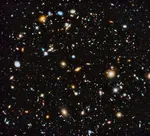 Beyond Our Senses: What the Universe Still Hides from Us
  Little Red Dots: The Compact Enigmas of the Early Universe
  The Weak and Strong Anthropic Principles: Two Ways of Reading the Same Universe
  The Universe: Matter... or Information?
  Dark Energy: The Most Mysterious Force in the Universe
  The Fountains of Creation: The Myth of White Holes
  The Great Silence: 10 Insurmountable Walls to Meeting E.T.
 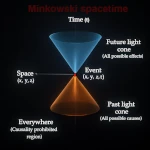 Why the Cause Always Precedes the Effect: The Order of the World is Written in This Principle
  Absolute Zero and Nothingness: Two Limits the Universe Refuses to Reach
  Economical Nature: The Secrets of Conserved Quantities
  The Incredible Precision of the Universe's Laws: Chance or Necessity?
  The Mystery of the Arrow of Time: Why Can't We Go Back?
  The Big Bang: At the Frontiers of the Model
  When Space Bends: The Tiny Slope That Guides the Universe
  Nabataean Astronomy: Masters of the Desert Between Starry Skies and Stone Constructions
  Polynesian Astronomy: The Art of Navigating the Pacific Ocean
  Mesopotamian Astronomy: The Cradle of Celestial Observation
  Andean Astronomy: A Sacred Link Between Sky and Earth
  Ancient Persian Astronomy: Between Babylon and the Islamic Golden Age
  Mayan Astronomy: Celestial Cycles Dictated Religious, Agricultural, and Political Time
  Islamic Astronomy: When Baghdad Illuminated the Sky of Science
  Indian Astronomy: From Sacred Poetry to Scientific Thought
  Ancient Greek Astronomy: The Universe of Philosophers in Search of Cosmic Order
 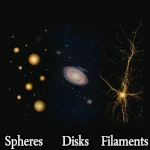 The Three Cosmic Shapes: A Hidden Geometry of the Universe
  Egyptian Astronomy: Between Sky and Nile, the Secrets of Time
  Babylonian Astronomy: When the Sky Predicted Destiny
  Chinese Imperial Astronomy: A Millennial Scientific Legacy
 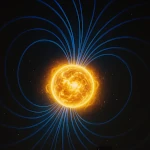 Extreme Cosmic Objects: Where Physics Explodes
  Mirror Universe: Coexistence of Two Worlds in a Cosmic Reflection
  The first second of our history
 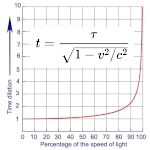 Time Dilation: Relativistic Mirage or Reality?
  Space Through Time: A Constantly Evolving Concept
  The Expanding Universe: What Does "Creating Space" Really Mean?
  From Nothingness to the Cosmos: Why Is There Something Rather Than Nothing?
  How can the Universe measure 93 billion light-years?
  How can we say that the Universe has an age?
  First Proof of the Expansion of the Universe
  Space-time slices of the observable Universe
  When the Universe Was Blind: The Long Night Before the First Stars
  Alternative theories to the accelerated expansion of the universe
  The primitive atom: the first cosmological theory
  Great walls and filaments: the great structures of the Universe
  The Origins of the Universe: A History of Cosmic Representations
  Lyman-alpha Blobs: Gaseous Traces of the First Galaxies
  Perspective on the Inflation of the Universe
  The Planck Universe: the Image of the Universe Becomes Clearer
 The sky is immense with Laniakea
  The Symmetries of the Universe: A Journey Between Mathematics and Physical Reality
  The Geometry of Time: Exploring the Fourth Dimension of the Universe
  How to measure distances in the Universe?
  Why ‘nothing’ is impossible: Do nothingness and emptiness exist?
  The Horizon Problem: Understanding the Uniformity of the Cosmos
  What is Dark Matter? The Invisible Force Shaping the Universe
  Metaverse, the next stage of evolution
  Multiverse: An Ocean where each Spacetime Bubble has its own Physical Laws
  Cosmological Recombination: When the Universe Became Transparent
  Cosmological constants: the fine-tuning of the universe
  The Thermodynamics of the Sandpile and the Avalanche Effect
  The engine of the accelerated expansion of the Universe
  The X-Ray Universe: When Space Becomes Transparent
  The oldest galaxies in the universe
  Hubble constant and expansion of the Universe
  Dark Energy: When the Universe Defies Its Own Gravity
  What is the Size of the Universe? Between Cosmological Horizon and Infinity
  Quantum Vacuum and Virtual Particles: The Physical Reality of Nothingness
  Paradox of the dark night
  Journey into the Heart of Paradoxes: The Enigmas That Revolutionized Science
  Cosmic Microwave Background: The Thermal Echo of the Big Bang