


Infrared images: how to make them visible?
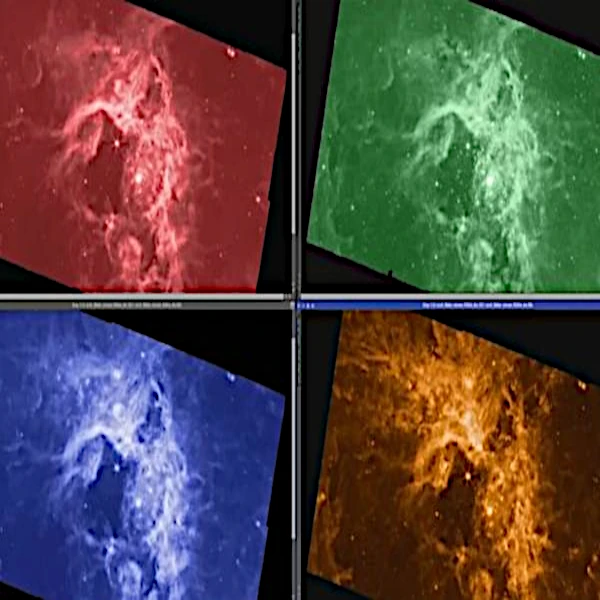
Webb's Near-Infrared Spectrograph (NIRSpec) reveals what is really happening in an intriguing region of the Tarantula Nebula.
The images are reworked by data imaging developers.
NASA, ESA, CSA, STScI, Webb ERO Production Team (new window)
Scientific summary
The Astronoo article presents the techniques used to make images captured in the infrared by the James Webb Space Telescope visible. It explains that the human eye does not perceive this part of the electromagnetic spectrum, and describes how data imaging developers transform this data into colored images. The process relies on chromatic ordering, which assigns a visible-spectrum color to each infrared wavelength, thereby preserving scientific consistency. The article illustrates this method with the Tarantula Nebula, revealing tens of thousands of young stars previously hidden by dust.
How can images taken in the infrared be made visible?
A radiation our eyes ignore
The human eye perceives only a tiny part of the electromagnetic spectrum, from violet to red. Yet the Universe abounds in infrared light, emitted by cold objects, newborn stars hidden behind dust, or distant galaxies whose light has been stretched by cosmic expansion.
From raw signal to colored image
The James Webb Space Telescope (JWST) was designed to capture this invisible light. But how do astronomers make it perceptible to our eyes? The answer lies in a clever blend of science and art. The raw data captured by the instruments are first translated into digital signals, then data imaging developers assign visible colors to the different infrared wavelengths, following a rigorous chromatic order.
This process is similar to transposing a piano piece into another key: the relationships between the notes are preserved, only the pitch changes. Thus, each infrared image becomes a colored window onto the invisible, revealing the structure and composition of celestial objects otherwise inaccessible.
Also worth exploring
Continue your exploration of the Universe with these topics:
Why look in the infrared?
A window onto the invisible
The human eye sees only a very narrow part of the light spectrum, from violet to red. Infrared lies just beyond red, with wavelengths longer than those of visible light. The James Webb Space Telescope (JWST) is designed to observe this light, mainly in its near and mid ranges.
Piercing the veils of dust
Forming stars are often wrapped in clouds of dust and gas. Dust grains absorb and scatter visible light more than long infrared wavelengths: infrared therefore makes it possible to pass through these clouds and observe the stars hidden behind.
Thanks to its infrared instruments (NIRCam, NIRSpec, MIRI, FGS/NIRISS), JWST can also detect the very faint thermal emissions of extrasolar planets, and study objects that do not shine brightly enough in the visible to be detected otherwise.
Observing the edges of the Universe
The expansion of the Universe stretches the wavelengths of light emitted by distant objects: their light is redshifted, then moves into the infrared. This shift, called redshift, is greater the farther away the object is.
In 2025, JWST confirmed the galaxy MoM-z14, with a redshift of 14.44, observed about 280 million years after the Big Bang: it is, to date, the most distant galaxy whose distance has been confirmed by spectroscopy. This record has already been broken several times by the telescope itself, and it could be broken again.
A telescope cooled to the limit
Why cold is indispensable
An infrared instrument must be kept at very low temperature, otherwise its own heat would drown out the faint signal coming from space. JWST's instruments operate around 40 K (about −233 °C), and a large sunshield protects the whole assembly from the heat of the Sun and the Earth.
The special case of MIRI
The MIRI instrument, which observes the mid-infrared up to 28 µm, requires even more intense cold: it is maintained below 6.7 K, or about −266 °C, thanks to an onboard cryocooler. Without this precaution, it would be blinded by its own thermal emission.
From infrared to visible colors
Processing raw data
The infrared data captured by the instruments are processed and converted into colors using computer algorithms. These colors do not correspond to the real colors of the observed object, but to intensities measured in precise wavelength bands. JWST actually records grayscale images, one per filter.
STScI, which manages Webb's images, prefers to speak of representative colors rather than false colors: the hues convey a measured reality, without claiming to reproduce what an observer placed near the object would see.
Chromatic ordering
The infrared domain is divided into three subdomains: near-infrared (0.75 to 1.5 µm), mid-infrared (1.5 to 30 µm) and far-infrared (30 µm to 1 mm). JWST mainly covers the first two.
The infrared wavelengths are then converted into the colors of the rainbow, according to a principle called "chromatic ordering": the longest receive red hues, the shortest blue hues. This approach improves the communication of information: the same colors represent the same information from one visualization to another, and the images remain pleasant to look at and understand.
Transposing wavelengths
To do this, imaging developers shift the infrared wavelengths toward the visible part of the spectrum, so that our eyes can distinguish them. It is exactly like the transposition of a tune played on the piano into a different key: the pianist changes the pitch of all the notes by a constant interval, while preserving the relationships between these notes. In both cases, the melody remains the same.
Applying filters
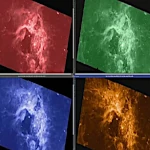
Image processing specialists then apply filters: a red filter on the farthest wavelength, a green filter on the middle wavelength, a blue filter on the nearest wavelength, and sometimes a narrow-band filter colored orange. The captions published by NASA also specify the filter associated with each color: for the Tarantula Nebula seen by NIRCam, F090W is blue, F200W green, F335M orange and F444W red.
After superimposing the filters, the developers obtain a first colorized image, more interesting but not yet aesthetically satisfying. This is where human creativity comes in: imaging developers call on their artistic sense, in dialogue with scientists.
During these manipulations, details and quality improve progressively. The retouches enhance contrast and sharpness without modifying the information: they can remove noise and artifacts, but they do not invent any object absent from the data. The goal remains above all to produce a beautiful image to look at, faithful to the measurements.
The Tarantula dresses in infrared light
The Tarantula Nebula revealed
Located in the Large Magellanic Cloud, about 161,000 light-years away, the Tarantula Nebula (30 Doradus) is the largest and brightest star-forming region in the Local Group, the set of galaxies near the Milky Way. Webb's near-infrared camera (NIRCam) reveals tens of thousands of young stars never observed before, hidden by dust.
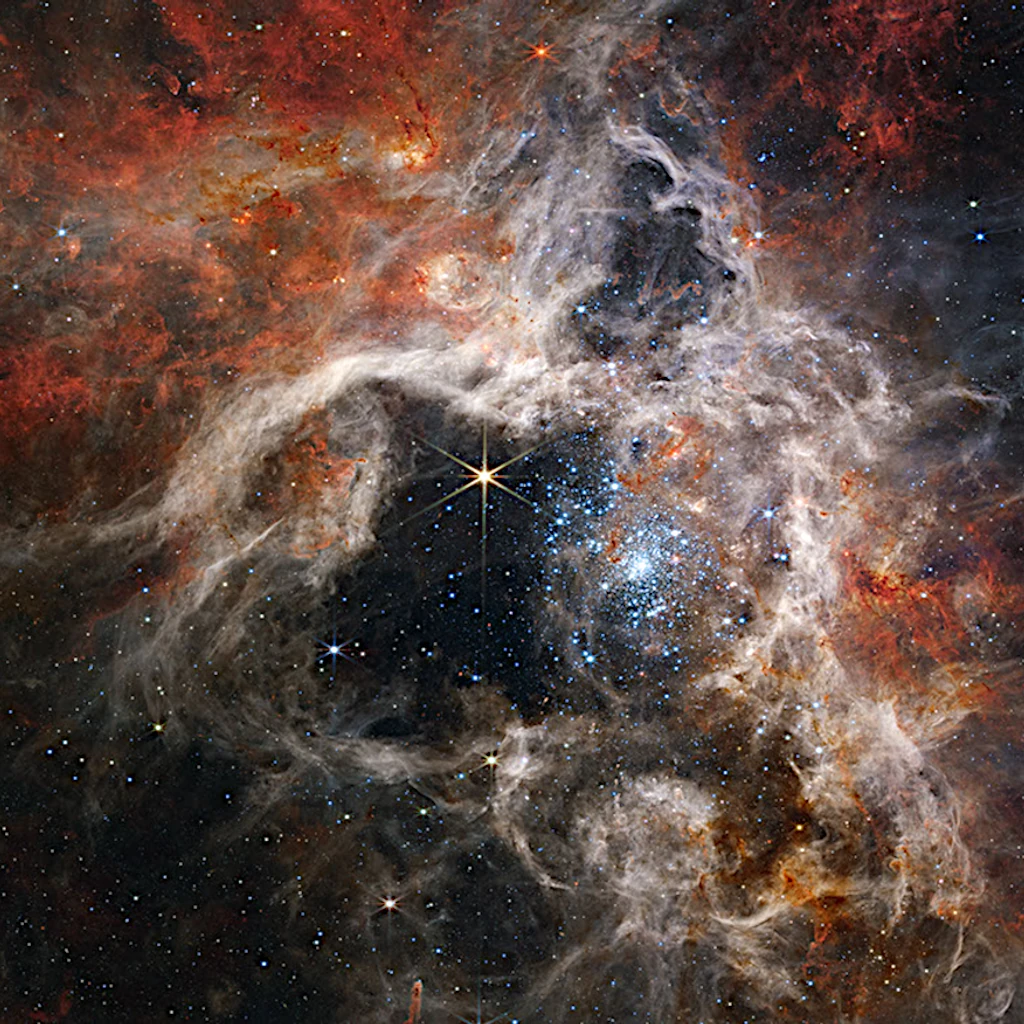 In this mosaic of images spanning 340 light-years, Webb's near-infrared camera (NIRCam) shows the star-forming region of the Tarantula Nebula in a new light, including tens of thousands of young stars never seen before that were wrapped in cosmic dust.
NASA, ESA, CSA, STScI, Webb ERO Production Team (new window)
When mid-infrared pierces the dust
In the mid-infrared observed by MIRI, the region changes appearance: the hot stars at the center fade, while the colder gas and dust become visible. Points of light signal protostars still buried, which continue to accumulate matter.
A star leaving its cocoon
Observations by the NIRSpec spectrograph, in integral field spectroscopy, made it possible to clarify a bubble-like structure spotted in the NIRCam image. The spectra show that it is not a bubble blown by a young star, but the top of a dense pillar of gas and dust, sculpted by the radiation of neighboring massive stars. The star, still protected by this cocoon, is just beginning to emerge from it.
And tomorrow?
The relay of the Nancy Grace Roman Telescope
NASA's Nancy Grace Roman telescope will also be an infrared telescope, but designed to observe vast portions of the sky rather than isolated targets. Its launch is envisaged as early as the end of 2026. It will complement JWST, which excels in the detailed study of precise objects, with large-scale surveys.
What to remember
A key to modern cosmology
In short, observation in the infrared stands out as an indispensable key to modern cosmology: it reveals regions that visible light cannot reach, piercing the veils of dust that conceal stellar nurseries, and unveiling cold and distant objects that any other method would leave in the shadows.
A window onto the invisible
Thanks to this window onto the invisible, astronomers can now trace the birth of stars, scrutinize the atmospheres of exoplanets, reconstruct the assembly of galaxies over billions of years and approach the very first chapters of the evolution of the Universe.
References
- NASA - A Cosmic Tarantula, Caught by NASA's Webb (September 6, 2022, updated May 29, 2026) (new window)
- NASA - Tarantula Nebula (NIRSpec IFU) (new window)
- STScI - Science Instruments (NIRCam, NIRISS, NIRSpec, MIRI) (new window)
- ESA - Webb's instruments (new window)
- NASA - Mid-Infrared Instrument (MIRI) (new window)
- NASA - Webb finds most distant known galaxy (JADES-GS-z14-0) (new window)
- Live Science - MoM-z14, the earliest galaxy confirmed (updated January 29, 2026) (new window)
- Astronomy - JWST sees light invisible to the eye. These scientists decide how to color it (new window)
- BBC Science Focus - How is colour added to the JWST images? (new window)
- Space Telescope Science Institute - Webb Telescope (new window)
- STScI - Space Telescope Science Institute (new window)
FAQ: Everything you need to know about infrared images
Why can't the human eye see infrared?
The human eye is sensitive to a very narrow range of wavelengths, between about 380 and 750 nanometers. This range corresponds to the colors from violet to red. Infrared, whose wavelengths extend from 750 nanometers to 1 millimeter, lies beyond red. Our photoreceptors (cones and rods) are simply not sensitive to these wavelengths. This is a biological limitation of our retina, not a property of light itself.
What are near, mid and far infrared?
Infrared is subdivided into three main categories according to wavelength. Near-infrared (0.75 to 1.5 µm) is the closest to visible light. Mid-infrared (1.5 to 30 µm) corresponds to thermal emissions from objects at ambient temperature. Far-infrared (30 µm to 1 mm) is emitted by very cold objects, such as interstellar dust clouds, and is detected with dedicated instruments, such as ESA's Herschel telescope (2009-2013). JWST observes mainly in the near and mid-infrared.
How do astronomers assign colors to infrared images?
Astronomers use a process called chromatic ordering. They assign a visible-spectrum color to each infrared wavelength. For example, the longest wavelength receives a red filter, the middle one a green filter, and the shortest one a blue filter. The goal is to preserve the consistency of the data while producing a readable and aesthetic image. This method does not claim to represent the "true" color of the object, but to translate scientific information into an understandable visual language.
Are infrared images "false"?
No, they are not false in the scientific sense of the term. The data that make up the image are authentic and come directly from the instruments. What is conventional is the assignment of colors: we sometimes speak of false colors, but STScI prefers the term representative colors, because the hues convey real measurements, chosen by imaging developers and not imposed by nature. The important thing is that the relationship between the different wavelengths is respected, so that the image remains scientifically valid.
Which JWST instruments are used for infrared imaging?
JWST carries four main instruments. NIRCam (Near-Infrared Camera) is the main camera, sensitive from 0.6 to 5 µm. NIRSpec (Near-Infrared Spectrograph) produces infrared spectra, from 0.6 to 5.3 µm, to analyze chemical composition. MIRI (Mid-Infrared Instrument) covers the mid-infrared, from 5 to 28 µm, and also has coronagraphs. Finally, FGS/NIRISS (Fine Guidance Sensor / Near-Infrared Imager and Slitless Spectrograph) serves both for guidance and imaging. These complementary instruments make it possible to cover a wide range of infrared wavelengths.
Can infrared images be seen with an amateur telescope?
It is difficult to obtain quality infrared images with an amateur telescope, because infrared cameras are expensive and the Earth's atmosphere absorbs a large part of infrared radiation. However, some amateur astronomers use modified cameras or special filters to capture near-infrared. Most of the spectacular images seen in the media come from space telescopes like JWST or large ground-based observatories located at altitude, such as the VLT or Keck.
 How to Spot Starlink Satellite Trains in the Sky?
  AI, the Astronomer's New Eye: From Analysis to Cosmic Prediction
  What the First Images from Perseverance Show Us: The Surface of Mars, As If We Were There
  GRAIL Twin Probes: Mapping the Moon's Hidden Interior
  Earth Under Surveillance: Observation Satellites
  March 2010: The Ring of Fire Captured by the SDO Observatory
  Positions of Space Probes in 2025
  Giants of Observation: The Largest Ground-Based Telescopes
  Low Earth Orbits and their uses
  Pioneer, first message to extraterrestrials!
  Infrared images: how to make them visible?
  Sputnik 1 and 2: The Dawn of the Space Age
  ENVISAT: Ten Years of Uninterrupted Observation of Earth's Ecosystems
  Lagrange Points: Gravitational Gateways of the Solar System
  Mars Reconnaissance Orbiter: The Lynx Eye Revealing Martian Secrets
  Kepler: 4,000 Worlds and More, A New Map of the Sky
  Cheops Space Telescope: A New Vision on Exoplanets
  The world of Planck
  Rosetta Space Probe: Comet Churyumov-Gerasimenko
  The Hubble Space Telescope: Three Decades of Revelations
  Première photo du télescope Hubble
  Satellites that measure underwater relief
  MESSENGER: The First Probe to Visit the Mysterious Planet
  How GPS Locates Your Position at Any Time?
  The ISS and Beyond? Towards the End of a Space Chapter
  Space Telescopes: Humanity's Eye Beyond the Atmosphere
  Space Probes: Interplanetary Travelers and Beyond
  The GAIA satellite maps the Milky Way
  How to calculate the synchronous orbit?
  E-ELT: The World's Largest Optical Telescope
  Mercury probes
  Space debris: the nightmare of operational satellites
 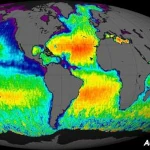 Aquarius: A Mission to Map Ocean Salinity
 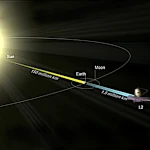 JWST: An Unprecedented Look at the First Lights of the Universe
  METEOSAT: A Key Satellite for Climate Monitoring
 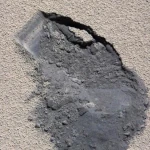 Curiosity, the first shovel, sample of Martian soil
  From Mariner to Perseverance: Successes and Failures of Mars Probes
  Where is the geostationary orbit?
  MOM, the technological demonstration
 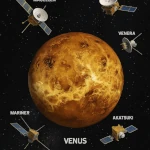 Venus under surveillance: an overview of space probes
  What Is an Astronomical Interferometer?
  The Philae Robot and the Rosetta Comet
  Mauna Kea Under the Stars: The CFHT Telescope in Pursuit of the Universe's Mysteries