


The Catastrophe of a Supervolcanic Super Eruption: Chaos and Global Consequences

The Greek island of Santorini is a volcanic island reshaped between 1650 and 1598 BC by a terrifying explosion that swallowed the center of the island and broke Santorini into several islets around the caldera.
The Santorini archipelago, with the island of Santorini on the right and an incomplete ring 8 km in diameter and 85 km2, in the center the islands of Thera and Therasia, which are the remnants of the ancient island of Kalliste before the volcanic collapse of the caldera.
Image source: astronoo.com (new window) — AI-generated image, public domain.
Scientific Summary
The Astronoo article presents the catastrophe of a super eruption, using the example of the island of Santorini in the Aegean Sea. It describes the different phases of such an event: precursory earthquakes, a Plinian eruption projecting millions of tons of pumice, then a phreatomagmatic phase generating pyroclastic flows at 700 °C. The collapse of the caldera releases colossal energy and triggers a devastating tsunami. The ash injected into the stratosphere modifies the global climate for decades, causing temperatures to drop and disrupting harvests. The article also lists threatening supervolcanoes and the VEI scale.
What Happens When a Supervolcano Erupts?
This article is devoted to the catastrophe of a super eruption, a phenomenon a thousand times more powerful than the largest historical volcanic eruptions. Using the example of the island of Santorini in the Aegean Sea, it shows how such an eruption unfolds in several phases: repeated seismic shocks, pumice falls, Plinian columns reaching 50 km in altitude, then phreatomagmatic explosions producing pyroclastic flows at 700 °C. The collapse of the caldera then releases energy equivalent to tens of thousands of Hiroshima bombs and triggers a tsunami several tens of meters high. The billions of tons of ash injected into the upper atmosphere cause the average global temperature to drop by several degrees for decades, causing famines and general cooling. The article finally recalls which supervolcanoes threaten the planet today, from Yellowstone to Lake Toba, and how the VEI scale classifies these exceptional events.
Also worth exploring
Continue your exploration of the Universe with these topics:
Super Eruption of the Island of Santorini
What Is a Super Eruption?
Super eruptions are a thousand times more powerful than the largest volcanic eruptions humanity has witnessed in recent decades. The consequences of a super eruption are unimaginable because they are so catastrophic. They can cause considerable damage on a continental scale and have cataclysmic effects on life on Earth.
The Island of Santorini and the Minoan Civilization
One of the most enigmatic is that of the Island of Santorini, which some volcanologists believe is the origin of the disappearance of the Minoan civilization in the Aegean Sea, 3,600 years ago. It is likely that the legend of Atlantis told by Plato in the 4th century BC stems from this Aegean catastrophe.
The Geological Context of the Aegean Sea
The Cyclades islands in the Aegean Sea lie along a microplate at the boundary between the African plate and the European plate. The pressure of these large plates on the Aegean arc created these islands through the accumulation of initially underwater and then aerial flows and ejecta.
The Super Catastrophe
The Warning Signs
The first phase of the catastrophe is characterized by numerous small earthquakes that last for days and days, with occasional strong shocks. Then ash and gases escape from the volcanic vent, the ground cracks and becomes covered with several decimeters of ash. This is the warning eruption of the super catastrophe.
The Plinian Phase and Pumice Falls
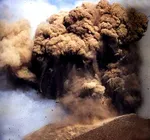
The next phase is explosive, the Plinian eruption characterized by a mushroom-shaped column sending millions of tons of pumice stones into the skies. The pumice, propelled like revolver bullets, falls back, piles up and accumulates at breakneck speed, the layer increasing by about 20 cm every hour on the surface of the island and around the island up to hundreds of kilometers around. Then pumice is replaced by ash, tiny ash particles that rise into the stratosphere up to 50 km altitude.
The Phreatomagmatic Phase
A new phase of the eruption begins, the phreatomagmatic phase, characterized by violent explosions of steam and ash caused by the interaction of magma and water. Seawater pouring into the vent comes into contact with molten magma; water and magma do not mix, they explode. The explosion produces a series of silent pyroclastic flows that sweep one after another at insane speeds over the ashen landscape. Composed of rocks and gas, the pyroclastic flows reach temperatures of 700 °C and speeds of 290 km/h.
The Collapse of the Caldera
The Collapse of the Volcano
The upper part of the volcano collapses and falls into the magma chamber; this is the collapse of the caldera. Enormous rocks the size of a car shoot out like missiles. The power is enormous, equivalent to tens of thousands of times the Hiroshima bomb.
A Plume of Lightning and Magma
In the immense plume covering the volcano, lightning flashes illuminate the entire sky. The magma chamber partially empties, the volcano ejects tens of billions of tons of magma that will bury the land for a long time under a hundred meters of ash, blocks and pumice.
A Sea Covered in Pumice
The pumice stone floating on the water covers part of the sea with a layer so thick (1 meter) that one can walk on it. Large islands of pumice drift carried by the waves; even by boat, one cannot escape this hell, and the worst is yet to come.
The Tsunami and Devastation
The pyroclastic flows at several hundred degrees running over the waves combined with the collapse of the magma chamber will generate a gigantic tsunami several tens of meters high. The devastation of the surrounding islands is underway.
A Global Climatic Impact
Then the billions of tons of ash projected into the sky rise into the upper atmosphere and, carried by the wind, circle the Earth. The tiny ash particles agglomerated in the clouds will cause torrential rains. This dark cover in the sky will modify the climate and lower the average temperature of the planet by several degrees for decades.
Consequences of the Collapse
A Little Ice Age
After a few weeks, the general cooling is about 10 °C, snow will cover the land down to mid-latitudes for several years. Humanity then enters a little ice age with all the consequences one can imagine. Fine ash will infiltrate everywhere, pollute waters, cover crops, disrupt monsoons and cause famine for the 30 to 50 million people on Earth.
N.B.:
Pumice or pumice stones are very porous volcanic rocks of low density, frequently less than 1, which allows them to float on the surface of water.
The Supervolcanoes That Threaten Us
What Is a Supervolcano?
Supervolcanoes are volcanoes capable of producing extremely massive eruptions, with volumes of ejected material exceeding 1,000 km³. These eruptions can have catastrophic impacts on the global climate and ecosystems. What are the best-known and potentially threatening supervolcanoes?
The Main Supervolcanoes
The table below lists ten major supervolcanoes, their location, the date of their last major eruption, the estimated volume of ejected material and their current threat level.
| Supervolcano | Location | Last major eruption | Estimated volume | Current threat level |
|---|---|---|---|---|
| Yellowstone Caldera | Wyoming, United States | ≈ 640,000 years | ≈ 1,000 to 2,450 km³ | Background seismic and hydrothermal activity, no imminent eruption |
| Lake Toba | Sumatra, Indonesia | ≈ 74,000 years | ≈ 2,800 km³ | Dormant, but still considered active |
| Taupo Caldera | North Island, New Zealand | ≈ 26,500 years (Oruanui eruption) | ≈ 1,170 km³ | Occasional seismic and hydrothermal activity |
| Campi Flegrei Caldera | Naples, Italy | ≈ 39,000 years (Campanian Ignimbrite) | ≈ 300 km³ | Intense seismic activity, ground deformation, enhanced monitoring |
| Long Valley Caldera | California, United States | ≈ 760,000 years | ≈ 1,380 km³ | Ground deformation and seismic swarms, no imminent eruption |
| Valles Caldera | New Mexico, United States | ≈ 1.25 million years | ≈ 1,000 km³ | Active hydrothermal system, no sign of major eruption |
| Aira Caldera | Kyushu, Japan | ≈ 29,000 years | ≈ 400 km³ | Continuous volcanic activity (Sakurajima), permanent monitoring |
| Ata Caldera | Kyushu, Japan | ≈ 100,000 years | ≈ 50 to 100 km³ | Submerged caldera, moderate seismic activity |
| Cerro Galán | Argentina | ≈ 2.08 million years | ≈ 1,000 to 2,000 km³ | Dormant, no significant activity |
| La Pacana | Chile | ≈ 4 million years (Miocene) | ≈ 2,500 to 3,500 km³ | Extinct, no activity |
N.B.:
The ejected volumes correspond to the most recent major eruptions of each supervolcano. Some supervolcanoes, such as Yellowstone, have experienced several major eruptions during their history.
References
- Malfait et al. (2014), Nature Geoscience — Supervolcano eruptions driven by melt buoyancy (new window) — Study of the triggering mechanisms of super eruptions by magma buoyancy in silicic magma chambers.
- Cambridge University Press (2015) — On the nature and consequences of super-eruptions (new window) — Analysis of the characteristics and environmental consequences of supervolcanic eruptions.
- Nature Reviews Earth & Environment (2025) — How often do supereruptions occur? (new window) — Estimation of the global frequency of super eruptions and recurrence intervals.
- Till et al. (2018), Nature Geoscience — Super-volcanic investigations (new window) — Synthesis of recent research on supervolcanoes and the dynamics of their magma chambers.
- Friedrich et al. (2006), Science — Santorini Eruption Radiocarbon Dated to 1627-1600 B.C. (new window) — Radiocarbon dating of the Santorini super eruption from an olive branch buried by tephra.
- PNAS (2020) — On the enigma of dating the Minoan eruption of Santorini (new window) — Synthesis of the debate between archaeological and scientific dating of the Minoan eruption of Santorini.
- Lespez et al. (2021), Scientific Reports — Tsunami deposit from the Santorini eruption at Malia (Crete) (new window) — Discovery of a tsunami deposit linked to the Santorini eruption on the north coast of Crete.
- Manning et al. (2022) — Second Intermediate Period date for the Thera eruption (new window) — High-resolution dating of the Thera eruption to the 16th century BC and chronological implications.
- Nature Communications Earth & Environment (2021) — Toba supervolcano eruption and tropical ozone depletion (new window) — Study of climatic cooling (3.5 to 9 °C) and ozone layer destruction caused by the Toba eruption.
- Communications Earth & Environment (2021) — Resurgence at Toba Caldera (new window) — Analysis of residual magmatic activity in the Toba caldera 5,000 to 13,000 years after the super eruption.
- USGS (2023) — Yellowstone Volcano Observatory 2022 Annual Report (new window) — Annual report of the Yellowstone Observatory: seismicity, ground deformation and caldera monitoring.
- Kilburn et al. (2017), Nature Communications — Progressive approach to eruption at Campi Flegrei (new window) — Evolution of Campi Flegrei caldera activity and accumulation of crustal stresses toward an eruption.
- Biogeosciences (2012) — Impact of supervolcanic eruptions on the Earth System (new window) — Simulation of global climatic cooling (~3.8 °C) and atmospheric CO2 drop after a super eruption.
FAQ: Everything You Need to Know About Super Eruptions
What is a super eruption?
A super eruption is a volcanic eruption of exceptional power, whose volume of ejected material exceeds 1,000 km³, corresponding to level 8 of the VEI scale. It is a thousand times more powerful than the largest historical eruptions and can durably alter the planetary climate.
What is the difference between a classic eruption and a super eruption?
A classic eruption emits a few million to a few cubic kilometers of material, while a super eruption releases more than 1,000 km³ of magma, ash and pumice. The eruptive column can reach 50 km altitude and the ash can circle the globe several times, unlike the more modest plumes of ordinary eruptions.
What are the most dangerous supervolcanoes today?
The main ones are the Yellowstone Caldera (United States), Lake Toba (Indonesia), the Campi Flegrei caldera (Italy), the Long Valley caldera (United States), Lake Taupo (New Zealand) and the Valles caldera (United States). However, none shows any imminent sign of a major eruption.
Could a super eruption cause a mass extinction?
A major super eruption would have global climatic effects (cooling, famines, monsoon disruptions), but it would probably not by itself cause a mass extinction. The Toba eruption 74,000 years ago, however, coincided with a sharp decline in human populations.
Can a super eruption be predicted?
It is currently impossible to predict a super eruption in the long term. Volcanologists monitor precursor signs, such as seismicity, ground deformation and gas emissions, which could announce an eruption in the months or years to come.
What would happen if Yellowstone erupted?
A major eruption of Yellowstone would project immense quantities of ash over North America, paralyze transport and agriculture, and inject aerosols into the stratosphere that would cause global temperatures to drop by several degrees for years.
 Overview of European Volcanoes: From Etna to Vesuvius
  Overview of African Volcanoes: From Kilimanjaro to Nyiragongo
  Overview of North American Volcanoes: From Mount Saint Helens to Popocatépetl
  Overview of South American Volcanoes: From Aconcagua to Cotopaxi
  Overview of Asian Volcanoes: From Fuji to Krakatoa
  Overview of Oceania's Volcanoes: From Indonesia to New Zealand
  Global Overview of Volcanoes: A World Tour of Fire Giants
  The Toba Super Eruption: Decades of Climatic Chaos
  Mauna Loa is the largest volcano in the world!
  Earth's Great Volcanoes: Red Fury, Gray Silence
  Volcanoes of Kamchatka: The Realm of Icy Volcanoes
  The Titans of Fire: Origin, Power, and Risks of Supervolcanoes
  Active Volcanoes of Colombia: Between Natural Beauty and Eruptive Risks
  New Zealand's Volcanoes: A Natural Laboratory for Plate Tectonics
  Volcanoes and the Origin of Life: When Fire and Water Spark Chemistry
  Underwater Eruptions and the Emergence of New Lands
  Volcanoes of Ecuador: Giants of Fire
  The Catastrophe of a Supervolcanic Super Eruption: Chaos and Global Consequences
  The Largest Calderas in the World: Earth's Scars
  Supervolcanoes are invisible!
  The Nevado del Ruiz volcano
 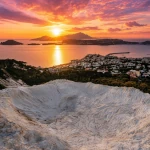 Phlegraean Fields: A volcano that really threatens Naples?
 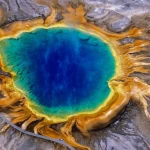 The Yellowstone Supervolcano
 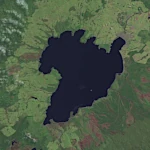 The spectacular caldera of Lake Taupo
  Chimborazo: The Highest Peak on the Planet!