


Volcanoes of Kamchatka: The Realm of Icy Volcanoes
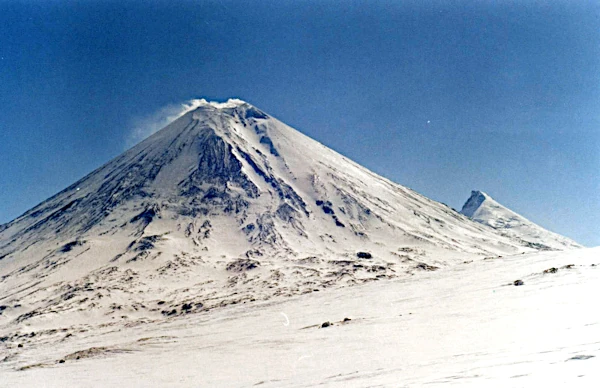
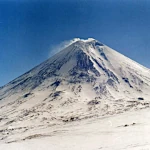
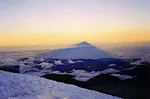
The ice-covered summit of Klyuchevskoy. Image source: public domain (new window).
A unique volcanic peninsula in the world
Located at the far east of Russia, the Kamchatka Peninsula is home to more than 160 volcanoes, 29 of which are currently active. This geodynamic hotspot is explained by the subduction of the Pacific Plate beneath the Okhotsk Plate, at an average speed of 8 to 9 cm/year. This process generates intense volcanic activity, notably visible within the Pacific Ring of Fire. Klyuchevskoy, standing at 4,750 m, is the highest active volcano in the northern hemisphere. The mix of calderas, stratovolcanoes, lava fields, and glaciers creates an environment that is both hostile and fascinating, where magmatic fire and eternal ice coexist.
Physical interactions: internal heat and cryosphere
Kamchatka is a natural laboratory for the study of interactions between geothermal heat and the cryosphere. During eruptions, the encounter between magma (800–1200°C) and glaciers can generate violent phreatic explosions. These interactions also produce lahars, volcanic mudflows, whose density can reach \( \rho \approx 2000\ \text{kg/m}^3 \). These events transport colossal volumes of sediment at speeds of up to 60 km/h, profoundly modifying the landscape. Magmatic degassing also releases CO₂, SO₂, and water vapor, locally modulating the climate. Some Kamchatka volcanoes like Mutnovsky or Gorely are thus massive emitters of geothermal fluxes that can exceed 5 W/m².
An extreme and resilient ecosystem
Despite harsh conditions, Kamchatka hosts exceptional biodiversity. The fertility of volcanic soils, rich in minerals (Fe, Mg, K), favors flora resistant to extreme cold. Some species, such as Kamchatka brown bears or migratory Pacific salmon, take advantage of geothermal rivers that remain ice-free year-round. These environments also allow the study of thermophilic and acidophilic life forms, analogous to those that might be imagined on moons like Europa or Enceladus, where ice and internal activity coexist.
The 29 active volcanoes of Kamchatka (Russia)
| Volcano Name | Altitude (m) | Type | Last Activity |
|---|---|---|---|
| Avachinsky | 2 741 | Stratovolcano | 2023 |
| Bezymianny | 2 882 | Stratovolcano | 2024 |
| Ebeko | 1 156 | Complex | 2024 |
| Gorely | 1 829 | Caldera / Stratovolcano | 2021 |
| Ichinsky | 3 607 | Stratovolcano | 2003 |
| Ikh Povorotny | 1 330 | Stratovolcano | Unknown |
| Karimsky | 1 486 | Stratovolcano | 2024 |
| Karymsky | 1 536 | Stratovolcano | 2024 |
| Kliuchevskoy | 4 750 | Stratovolcano | 2024 |
| Koryaksky | 3 456 | Stratovolcano | 2009 |
| Ksudach | 1 079 | Caldera | 1907 |
| Medvezhia | 1 121 | Volcanic Complex | 1999 |
| Mutnovsky | 2 323 | Stratovolcano | 2023 |
| Opala | 2 475 | Stratovolcano | 1776 |
| Ostry Tolbachik | 3 682 | Stratovolcano | 1975 |
| Sheveluch | 3 283 | Stratovolcano | 2024 |
| Sarychev Peak | 1 496 | Stratovolcano | 2023 |
| Shiveluch | 3 283 | Stratovolcano | 2024 |
| Tolbachik | 3 682 | Complex (fissural/central) | 2013 |
| Uksichan | 1 810 | Stratovolcano | Unknown |
| Ushkovsky | 3 943 | Complex | 1890 |
| Vilyuchik | 2 173 | Stratovolcano | 8 000 BP |
| Zhupanovsky | 2 958 | Complex | 2024 |
| Chikurachki | 1 816 | Stratovolcano | 2022 |
| Alaid | 2 339 | Stratovolcano | 2022 |
| Kharchinsky | 1 816 | Stratovolcano | 1981 |
| Diky Greben | 1 079 | Complex | 1924 |
| Gamchen | 2 539 | Complex | Unknown |
| Chasha Crater | ~600 | Maar | Historical |
- Sources: Global Volcanism Program (Smithsonian Institution, 2024), KVERT (Kamchatka Volcanic Eruption Response Team, 2024), USGS Volcano Hazards Program.
 Overview of European Volcanoes: From Etna to Vesuvius
  Overview of African Volcanoes: From Kilimanjaro to Nyiragongo
  Overview of North American Volcanoes: From Mount Saint Helens to Popocatépetl
  Overview of South American Volcanoes: From Aconcagua to Cotopaxi
  Overview of Asian Volcanoes: From Fuji to Krakatoa
  Overview of Oceania's Volcanoes: From Indonesia to New Zealand
  Global Overview of Volcanoes: A World Tour of Fire Giants
 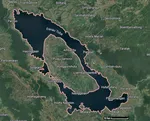 The Toba Super Eruption: Decades of Climatic Chaos
  Mauna Loa is the largest volcano in the world!
  Earth's Great Volcanoes: Red Fury, Gray Silence
  Volcanoes of Kamchatka: The Realm of Icy Volcanoes
  The Titans of Fire: Origin, Power, and Risks of Supervolcanoes
 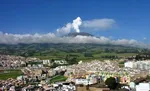 Active Volcanoes of Colombia: Between Natural Beauty and Eruptive Risks
 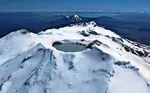 New Zealand's Volcanoes: A Natural Laboratory for Plate Tectonics
 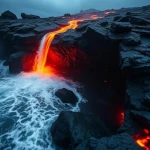 Volcanoes and the Origin of Life: When Fire and Water Spark Chemistry
 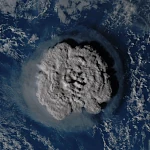 Underwater Eruptions and the Emergence of New Lands
 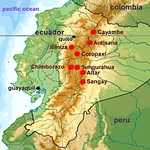 Volcanoes of Ecuador: Giants of Fire
 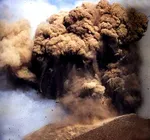 The Catastrophe of a Supervolcanic Super Eruption: Chaos and Global Consequences
 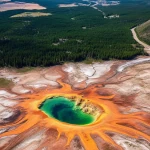 The Largest Calderas in the World: Earth's Scars
 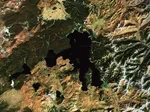 Supervolcanoes are invisible!
 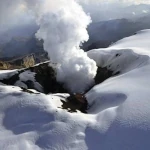 The Nevado del Ruiz volcano
 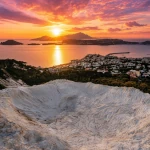 Phlegraean Fields: A volcano that really threatens Naples?
 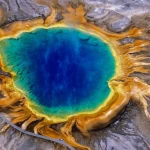 The Yellowstone Supervolcano
 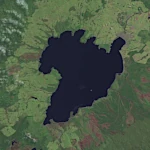 The spectacular caldera of Lake Taupo
  Chimborazo: The Highest Peak on the Planet!