


World Panorama of Volcanoes: A Tour of the Giants of Fire
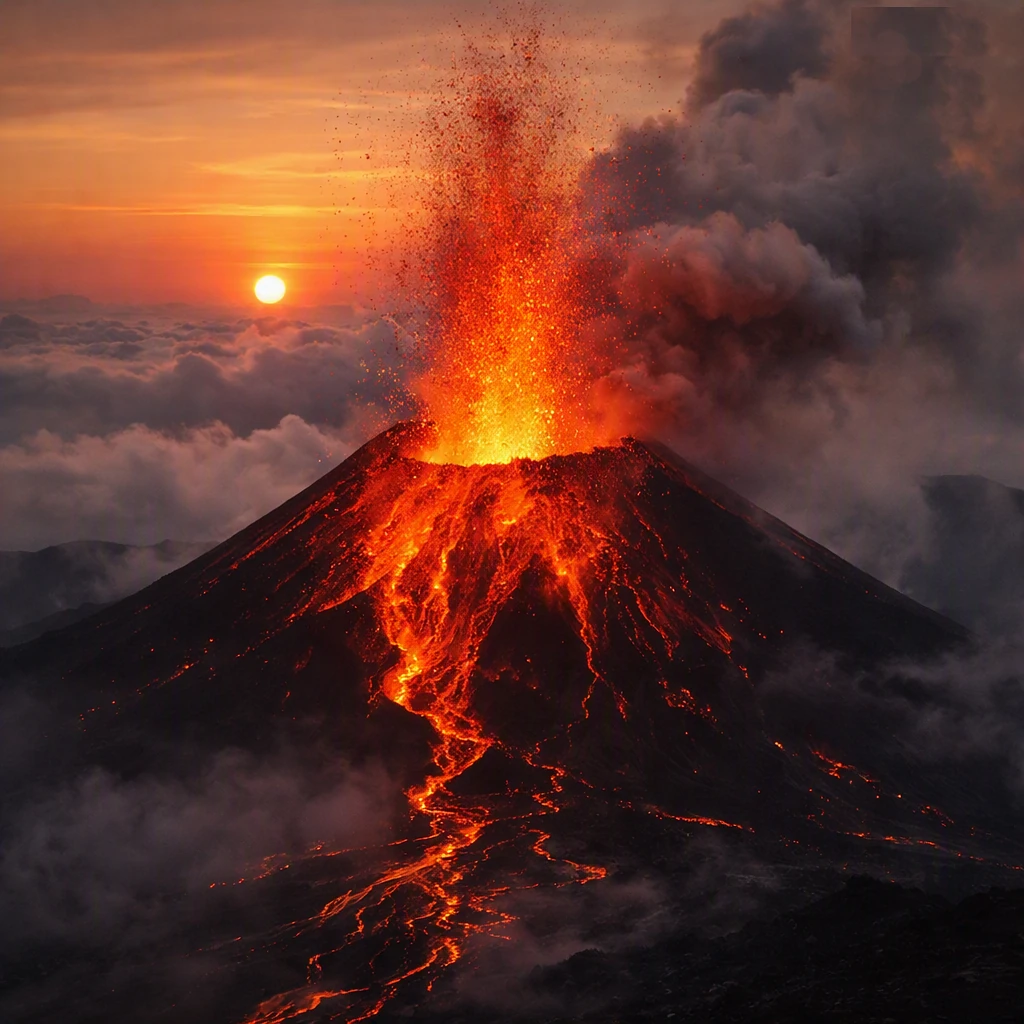
Volcanic eruption illustrating the power of the Earth's internal forces. More than 1,500 volcanoes are currently active around the world.
Image source: astronoo.com (new window) — AI-generated image, public domain.
Scientific Summary
The Astronoo article offers a global overview of active volcanoes, focusing on the three most dangerous edifices: Merapi in Indonesia, Vesuvius in Italy and Popocatépetl in Mexico. Danger level is assessed according to several criteria: explosivity, proximity to populations, eruption frequency and regional or global consequences. A comparison table lists the main volcanoes of Africa, North and South America, Asia, Europe and Oceania, with their altitude, type, last eruption and associated risks.
What are the world's most dangerous volcanoes and why?
This article is devoted to the planet's active volcanoes, with a particular focus on the three most threatening edifices: Merapi, Vesuvius and Popocatépetl. But what really makes a volcano dangerous? The answer lies not only in the power of its eruptions, but also in its proximity to human populations, the frequency of its activity and the nature of the phenomena it generates: pyroclastic flows, lahars, ashfall or lava flows. Merapi, in Indonesia, threatens more than two million people; Vesuvius, in Italy, towers over a bay where three million inhabitants live; Popocatépetl, in Mexico, overlooks the megacity of Mexico City and its twenty-five million inhabitants. A comparison table completes this panorama by listing the most active volcanoes of each continent, with their altitude, type, last eruption and associated risks.
Also worth exploring
Continue your exploration of the Universe with these topics:
The 3 Most Dangerous Volcanoes in the World
Giants with Cataclysmic Potential
Among the thousands of active volcanoes recorded on our planet, some stand out for their exceptional destructive potential. Their danger level is assessed according to several criteria: explosivity, proximity to populations, eruption frequency, and potential consequences on a regional or global scale.
1. Mount Merapi - The Indonesian "Mister Fire"
| Characteristic | Mount Merapi |
|---|---|
| Location | Central Java, Indonesia |
| Altitude | 2,911 metres |
| Type | Explosive stratovolcano |
| Last major eruption | 2023 |
| Population at risk | >2 million people |
Merapi, whose name means "Mountain of Fire", is considered the most dangerous volcano in Indonesia and probably in the world. Its exceptional danger is explained by several factors:
- Near-permanent activity with eruptions every 2-3 years on average
- Devastating pyroclastic flows that can sweep down the slopes at 100 km/h
- Immediate proximity to the city of Yogyakarta (400,000 inhabitants)
- Deadly lahars during the rainy season
The 2010 eruption killed 353 people and required the evacuation of 350,000 inhabitants, brutally reminding us of the permanent threat posed by this giant.
2. Vesuvius - The sleeping killer of Naples
| Characteristic | Vesuvius |
|---|---|
| Location | Bay of Naples, Italy |
| Altitude | 1,281 metres |
| Type | Explosive stratovolcano |
| Last eruption | 1944 |
| Population at risk | >3 million people |
Vesuvius is unique in the world for the combination of its destructive power and the enormous population living at its feet. Its tragic fame dates back to 79 AD, when it buried Pompeii and Herculaneum.
- Red zone of 200 km² that can be evacuated in only 72 hours
- Plinian eruptions capable of projecting ash to an altitude of 30 km
- Highest population density in the world near an active volcano
- Worrying resting period since 1944, suggesting an accumulation of energy
Scientists consider Vesuvius a "time bomb" whose next eruption could be catastrophic.
3. Popocatépetl - The smoking giant at the gates of Mexico City
| Characteristic | Popocatépetl |
|---|---|
| Location | State of Puebla, Mexico |
| Altitude | 5,426 metres |
| Type | Explosive stratovolcano |
| Last activity | 2025 (ongoing) |
| Population at risk | >25 million people |
"Popo", as Mexicans call it, represents the greatest volcanic threat to a megacity. Its proximity to Mexico City makes it an unparalleled danger.
- Constant activity since its reactivation in 1994 after 70 years of sleep
- Daily emissions of ash affecting Mexico City International Airport
- Lava channels directed towards densely populated areas
- Lahar risk threatening several towns in the Puebla valley
A major eruption of Popocatépetl could paralyse the Mexican economy and affect continental air traffic.
Comparison table of active volcanoes around the world
| Volcano | Continent | Colour | Location | Altitude (m) | Type | Last eruption | Comment |
|---|---|---|---|---|---|---|---|
| Nyiragongo | Africa | Grey | DRC | 3470 | Stratovolcano | 2021 | Permanent lava lake, rapid eruptions. |
| Nyamuragira | Africa | Red | DRC | 3058 | Shield volcano | 2018 | Extremely active, extensive flows. |
| Ol Doinyo Lengai | Africa | Red | Tanzania | 2960 | Stratovolcano | 2024 | Unique carbonatite lava, recurring activity. |
| Piton de la Fournaise | Africa | Red | Réunion | 2632 | Shield volcano | 2023 | Closely monitored and highly active. |
| Karthala | Africa | Red | Comoros | 2361 | Shield volcano | 2007 | Frequent eruptions, threat to Moroni. |
| Erta Ale | Africa | Red | Ethiopia | 613 | Shield volcano | 2023 | Nearly continuous lava lake since 1906. |
| Mount Cameroon | Africa | Grey | Cameroon | 4040 | Stratovolcano | 2012 | Highest volcanic summit in West Africa. |
| Mount Bisoke | Africa | Grey | Rwanda/DRC | 3711 | Stratovolcano | 1957 | Potentially active volcano, crater lakes. |
| Mount St. Helens | North America | Grey | USA, Washington | 2549 | Stratovolcano | 2008 | Historic explosive eruption in 1980. |
| Mauna Loa | North America | Red | USA, Hawaii | 4169 | Shield volcano | 2023 | Largest shield volcano in the world. |
| Kīlauea | North America | Red | USA, Hawaii | 1247 | Shield volcano | 2023 | One of the most active volcanoes on the planet. |
| Mount Rainier | North America | Grey | USA, Washington | 4392 | Stratovolcano | 1894 | Dangerous volcano due to its glaciers. |
| Popocatépetl | North America | Grey | Mexico | 5393 | Stratovolcano | 2025 | Constant activity, threat to Mexico City. |
| Mount Redoubt | North America | Grey | USA, Alaska | 3108 | Stratovolcano | 2009 | Explosive eruptions with ash plumes. |
| Cotopaxi | South America | Grey | Ecuador | 5897 | Stratovolcano | 2015 | Frequent pyroclastic flows and lahars. |
| Villarrica | South America | Grey | Chile | 2847 | Stratovolcano | 2015 | Summit lava lake, frequent activity. |
| Nevado del Ruiz | South America | Grey | Colombia | 5321 | Stratovolcano | 2016 | Deadly eruption in 1985 (25,000 deaths). |
| Ubinas | South America | Grey | Peru | 5672 | Stratovolcano | 2019 | Most active volcano in Peru. |
| Láscar | South America | Grey | Chile | 5592 | Stratovolcano | 2015 | Most active volcano in northern Chile. |
| Guallatiri | South America | Grey | Chile | 6071 | Stratovolcano | 1960 | Permanent fumaroles, constant activity. |
| Merapi | Asia | Grey | Indonesia, Java | 2911 | Stratovolcano | 2023 | Regular pyroclastic flows, explosive volcano. |
| Sakurajima | Asia | Grey | Japan, Kyushu | 1117 | Stratovolcano | 2025 | Frequent eruptions, densely populated area. |
| Mayon | Asia | Grey | Philippines, Luzon | 2462 | Stratovolcano | 2023 | Perfect symmetry, explosive eruptions. |
| Aso | Asia | Grey | Japan, Kyushu | 1592 | Caldera | 2021 | Contains 17 volcanoes, intense geothermal activity. |
| Pinatubo | Asia | Grey | Philippines, Luzon | 1486 | Stratovolcano | 1991 | Major eruption, global climatic impact. |
| Sinabung | Asia | Grey | Indonesia, Sumatra | 2460 | Stratovolcano | 2023 | Awoke in 2010 after 400 years of sleep. |
| Agung | Asia | Grey | Indonesia, Bali | 3031 | Stratovolcano | 2019 | Sacred volcano of Bali, major eruption in 1963. |
| Krakatoa | Asia | Grey | Indonesia | 813 | Caldera | 2023 | Cataclysmic eruption in 1883. |
| Bezymianny | Asia | Grey | Russia, Kamchatka | 2882 | Stratovolcano | 2023 | Major eruption in 1956, constant activity. |
| Klyuchevskoy | Asia | Grey | Russia, Kamchatka | 4754 | Stratovolcano | 2023 | Highest active volcano in Eurasia. |
| Etna | Europe | Grey | Italy, Sicily | 3329 | Stratovolcano | 2025 | Frequent eruptions, continuous activity. |
| Stromboli | Europe | Red | Italy, Aeolian Islands | 924 | Stratovolcano | 2025 | Regular eruptions, continuous activity. |
| Vesuvius | Europe | Grey | Italy, Naples | 1281 | Stratovolcano | 1944 | Last eruption in 1944, densely populated area. |
| Flegrei | Europe | Grey | Italy, Naples | ~400 | Caldera | 1984 | Recent seismic activity, area under watch. |
| Teide | Europe | Grey | Spain, Tenerife | 3718 | Stratovolcano | 1909 | Last eruption in 1909, astronomical observatory. |
| Katla | Europe | Grey | Iceland | 1512 | Stratovolcano | 1918 | Possible glacial eruptions, continuous monitoring. |
| Reykjanes | Europe | Red | Iceland | ~1000 | Shield volcano | 2025 | Eruption begun in July 2025, activity ongoing. |
| Hekla | Europe | Grey | Iceland | 1491 | Stratovolcano | 2000 | Last eruption in 2000, activity possible. |
| Geldingadalir | Europe | Red | Iceland | ~1000 | Shield volcano | 2025 | Eruption begun in 2025, activity ongoing. |
| Eyjafjallajökull | Europe | Grey | Iceland | 1666 | Stratovolcano | 2010 | Major eruption in 2010, air traffic disruption. |
| Yasur | Oceania | Grey | Vanuatu | 361 | Stratovolcano | 2025 | Continuous Strombolian activity for centuries. |
| Manam | Oceania | Grey | Papua New Guinea | 1807 | Stratovolcano | 2023 | Frequent eruptions, regular evacuations. |
| Ulawun | Oceania | Grey | Papua New Guinea | 2334 | Stratovolcano | 2023 | Most active volcano on New Britain island. |
| Rabaul | Oceania | Grey | Papua New Guinea | 688 | Caldera | 2014 | Major eruption in 1994 that destroyed the town. |
| White Island | Oceania | Grey | New Zealand | 321 | Stratovolcano | 2019 | Deadly phreatic eruption in 2019. |
| Ruapehu | Oceania | Grey | New Zealand | 2797 | Stratovolcano | 2007 | Acidic crater lake, phreatic eruptions. |
| Tongariro | Oceania | Grey | New Zealand | 1978 | Volcanic complex | 2012 | Surprise eruption in 2012 after 115 years of calm. |
| Kilauea | Oceania | Red | USA, Hawaii | 1247 | Shield volcano | 2023 | Near-continuous eruptive activity. |
References
- Smithsonian Institution - Global Volcanism Program (new window)
- USGS - Volcano Hazards Program (new window)
- INGV - Istituto Nazionale di Geofisica e Vulcanologia (new window)
- BRGM - Bureau de Recherches Géologiques et Minières (new window)
- WOVOdat - World Organization of Volcano Observatories (WOVO) Database of Volcanic Unrest (new window)
- The Global Volcano Monitoring Infrastructure Database (GVMID) (new window)
FAQ: Everything you need to know about active volcanoes
What is an active volcano?
A volcano is said to be active when it has experienced at least one eruption during the Holocene, that is, over the last approximately 11,700 years. This definition includes volcanoes in permanent eruption, those with regular episodes and those that are temporarily dormant but likely to wake up. About 1,500 volcanoes are considered active on Earth, but only a few dozen are continuously monitored because of their proximity to populations.
Why is Merapi considered the most dangerous volcano in the world?
Merapi, located on the island of Java in Indonesia, combines several risk factors. Its activity is near-permanent, with eruptions every two to three years on average. It frequently produces pyroclastic flows — avalanches of burning gas and ash sweeping down the slopes at more than 100 km/h — and deadly lahars during the rainy season. Above all, more than two million people live in its immediate zone of influence, particularly in the city of Yogyakarta. The 2010 eruption caused 353 deaths and required the evacuation of 350,000 inhabitants.
What is the difference between a stratovolcano and a shield volcano?
A stratovolcano is a conical edifice with steep slopes, built up by the accumulation of viscous lava flows and explosive projections. It produces violent eruptions, often accompanied by pyroclastic flows and ash plumes reaching the stratosphere. Vesuvius, Merapi and Popocatépetl are examples. A shield volcano, by contrast, is formed by fluid lava flows that spread over great distances, giving a broad, low shape. Mauna Loa in Hawaii and Piton de la Fournaise on Réunion are typical representatives, characterised by effusive eruptions that are less dangerous for populations.
What is a pyroclastic flow and why is it so deadly?
A pyroclastic flow is a mixture of very high-temperature gases (which can exceed 800 °C), ash and rock blocks that sweeps down the slopes of a volcano at speeds of 100 to 700 km/h. This phenomenon is particularly deadly because it combines several lethal effects: the intense heat burns everything in its path, the speed prevents any escape, and the inhalation of burning ash causes instant asphyxiation. The pyroclastic flow of Mount Pelée in 1902 destroyed the town of Saint-Pierre in Martinique within minutes, killing nearly 30,000 people.
Why is Vesuvius so closely monitored despite its apparent calm?
Vesuvius has not experienced an eruption since 1944, which may seem reassuring, but it is precisely this calm that worries volcanologists. The more time passes without an eruption, the more pressure builds up in the magma chamber, increasing the risk of a violent future eruption. Moreover, the population density around Vesuvius is exceptional: more than three million people live in the red zone, and a complete evacuation would take at least 72 hours. Scientists continuously monitor the precursor signs — earthquakes, ground deformation, gas emissions — to anticipate a sudden awakening.
How do scientists monitor at-risk volcanoes?
Volcanic monitoring relies on a network of sensors deployed around active edifices. Seismographs detect micro-earthquakes linked to magma migration. GPS stations and radars measure ground deformation, which swells when magma accumulates. Spectrometers analyse volcanic gases — an increase in sulphur dioxide is often a precursor sign of eruption. Finally, observation satellites monitor thermal anomalies and ash plumes. All this data is transmitted in real time to volcanological observatories, which issue alerts and coordinate evacuations with the authorities.
 Overview of European Volcanoes: From Etna to Vesuvius
  Overview of African Volcanoes: From Kilimanjaro to Nyiragongo
  Overview of North American Volcanoes: From Mount Saint Helens to Popocatépetl
  Overview of South American Volcanoes: From Aconcagua to Cotopaxi
  Overview of Asian Volcanoes: From Fuji to Krakatoa
  Overview of Oceania's Volcanoes: From Indonesia to New Zealand
  Global Overview of Volcanoes: A World Tour of Fire Giants
  The Toba Super Eruption: Decades of Climatic Chaos
 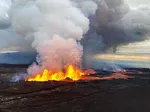 Mauna Loa is the largest volcano in the world!
 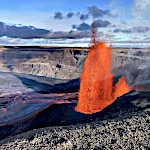 Earth's Great Volcanoes: Red Fury, Gray Silence
 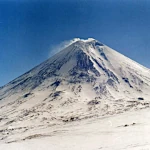 Volcanoes of Kamchatka: The Realm of Icy Volcanoes
 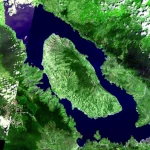 The Titans of Fire: Origin, Power, and Risks of Supervolcanoes
  Active Volcanoes of Colombia: Between Natural Beauty and Eruptive Risks
  New Zealand's Volcanoes: A Natural Laboratory for Plate Tectonics
  Volcanoes and the Origin of Life: When Fire and Water Spark Chemistry
  Underwater Eruptions and the Emergence of New Lands
  Volcanoes of Ecuador: Giants of Fire
  The Catastrophe of a Supervolcanic Super Eruption: Chaos and Global Consequences
  The Largest Calderas in the World: Earth's Scars
  Supervolcanoes are invisible!
  The Nevado del Ruiz volcano
  Phlegraean Fields: A volcano that really threatens Naples?
  The Yellowstone Supervolcano
  The spectacular caldera of Lake Taupo
  Chimborazo: The Highest Peak on the Planet!