


Why does waiting take so long?
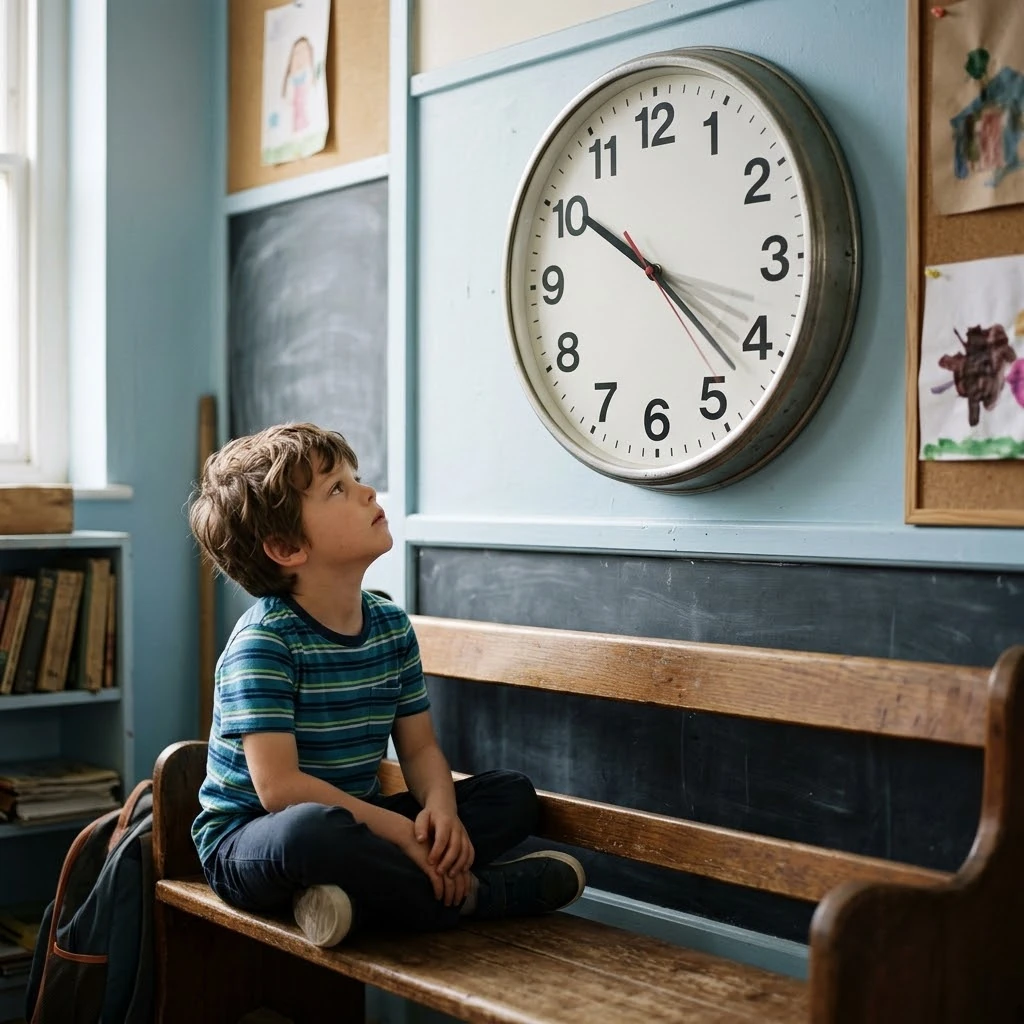
When you wait while watching the clock, every minute seems to last forever. Yet the clock itself does not slow down.
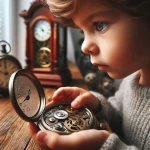
Image source: astronoo.com (new window) — AI-generated image, public domain.
Scientific summary
This Astronoo article explains why time seems to pass slowly when we wait. The time measured by a clock always moves at the same pace, but our brain does not measure time like a clock. When we wait, we think about the passing time: this attention paid to the seconds lengthens the felt duration. Boredom and impatience strengthen the impression that time drags. Conversely, when we are having fun, attention is taken up by the activity, we forget to watch the time, and it seems to fly by. Finally, memory also plays a role: moments full of novelty leave more memories, and seem longer when we recall them.
Why does time pass more slowly when we wait?
Because your brain does not measure time like a clock. When you wait, you have nothing else to do but think about time: you watch the clock, you count the minutes, you get bored. The more attention you pay to time, the longer it seems to you. The clock's time has not changed: a minute always lasts sixty seconds. It is your feeling of time that stretches.
The clock's time doesn't change
A second is always a second
When you wait for the bus or the end of a lesson, a minute always lasts exactly 60 seconds for the clock. Atomic clocks, the most precise in the world, are wrong by only one second over several tens of millions of years! They are not wearied by boredom, nor excited by a party.
But your brain is not a clock
Your brain does not count the seconds with a perfect machine. It estimates the passing time, a bit like you estimate the distance of a tree in the distance: by eye, and with possible errors. What you feel depends on what you are doing, on what you are feeling, and on what you are paying attention to.
N.B.:
Time really can flow slightly differently depending on speed and gravity: that is Einstein's relativity. For example, the clocks on GPS satellites run a little faster than those on the ground (by about 38 millionths of a second per day, in total). But these differences are tiny: they do not explain at all the impression that a wait is long. Here, it is the brain playing tricks.
A clock inside the head
The brain and its internal "tick-tock"
Researchers often imagine that your brain has a kind of internal clock: a small metronome that sends out "ticks" that the brain counts. The more "ticks" it counts, the more it feels that time has passed.
Attention, the tap that lets the "ticks" through
Imagine that attention is a tap: when you pay attention to time, the tap is wide open and all the "ticks" are counted. When you are absorbed in a game or a story, your attention is busy elsewhere: the tap closes a little, fewer "ticks" are counted, and time seems shorter to you.
That is exactly what happens when you wait: you keep an eye on the time, so you count almost all the "ticks", and it seems very long to you.
Waiting, having fun: where does your attention go?
| Situation | Where does your attention go? | What you feel |
|---|---|---|
| Waiting for the bus | On the passing time | Time drags |
| A very boring lesson | On the classroom clock | Time drags |
| Playing with friends | On the game | Time flies |
| Reading a gripping book | On the story | Time flies |
| Watching a captivating movie | On the screen | Time flies |
Boredom stretches the minutes
Researchers asked people to look at an image for a few seconds, then to say how fast or slowly time seemed to pass for them. Result: it was boredom that best predicted the impression that time was passing slowly. The more bored people were, the more time seemed to drag.
Impatience too
When you wait for something specific (a present, the start of the holidays, the end of recess), you keep checking whether it has arrived. You compare what you were waiting for with what has happened: "Not yet?". This constant comparison makes time even slower.
The memory trick
Memories that are more or less rich
Our feeling of time happens not only during, but also afterwards, when we remember. A day full of new things (a trip, a party, a new game) leaves many memories: thinking back on it, it seems long. A day in which almost nothing happened leaves few memories and seems to have passed quickly once it is over. It is a bit strange: during the wait, time seems long to you, but when you think back on it later, that empty moment seems short.
And when we are afraid?
You may have already heard that time "slows down" when we are afraid. Researchers tested this with volunteers who let themselves fall 31 metres in free fall into a safety net. They estimated their own fall to be about 36% longer than that of the others. Yet their vision had not sped up: they did not see more details than in normal conditions. Scientists think that fear leaves richer memories, and that this is what makes the event seem longer when we remember it.
N.B.:
Felt time is therefore not a single "thing" that speeds up or slows down. Scientists think it is made up of several elements: attention, emotions, memory… and that each can play a different role depending on the situation.
Your turn: three little experiments
1. A game, two minutes
Ask a friend to give you a hidden stopwatch. While you stare at the wall doing nothing, try to guess when one minute has passed with your eyes closed. Start again while drawing or doing a puzzle. In which case did you underestimate time the most? Often, during an activity you enjoy, we feel the minute is not over when it has already passed.
2. The watched pot
Watch an hourglass or your phone's stopwatch for 30 seconds, while doing nothing else. Then start again while playing a word game with a friend, glancing at the stopwatch from time to time. In which case did the 30 seconds seem the longest?
3. The list of things to do
Write down five things you can do while waiting (listening, observing, singing in your head, making up a story…). The next time you wait, try one of them, and compare with the times when you only watched the clock.
N.B.:
These little experiments give variable results from one person to another. That's not a problem: it is exactly what researchers study!
How can you make waiting go faster?
Since attention plays a big role, the best trick is to turn your attention away from the clock. When you are busy with an activity you enjoy, you watch the time less. Observing what surrounds you, playing a word game, singing in your head, making up a story: all of that keeps your brain busy and leaves less room for counting the "ticks".
The same feeling in everyday life
- The waiting room: with nothing to do, the minutes seem very long.
- The car ride: when someone asks "Are we there yet?", the ride seems endless. When we play or chat, we arrive without noticing.
- The holidays: while they last, they pass very quickly because we are having fun. Thinking back on them, they seem long because they are full of memories.
- The day before a big event: impatience makes the day endless.
References
- Stetson, Fiesta & Eagleman (2007), PLoS ONE - Does Time Really Slow Down during a Frightening Event? (new window)
- Martinelli & Droit-Volet (2022), Scientific Reports - Judgment of duration and passage of time in prospective and retrospective conditions (new window)
- Droit-Volet & Wearden (2016), Frontiers in Psychology - Passage of time judgments are not duration judgments (new window)
FAQ: everything about the feeling of time
Why does time pass more slowly when we wait?
Because, when we wait, we pay a lot of attention to the passing time. The more attention is focused on time, the longer it seems. Boredom and impatience strengthen this impression, whereas the clock always moves at the same pace.
Why does time pass quickly when we are having fun?
Because your attention is taken up by the activity. You think about time less, so your brain "counts" less of it, and the duration seems shorter to you.
Does time really slow down when we are afraid?
No, not for vision or reflexes: experiments have shown that frightened people do not perceive more details in an instant. But when remembering it, they find that the event lasted longer, because fear leaves richer memories.
Does time really pass differently from one person to another?
The time measured by a clock is the same for everyone in everyday life. But the felt duration varies from one person to another and from one situation to another, depending on attention, emotions and memory.
How can you get less bored while waiting?
Keep your brain busy: observe what surrounds you, make up a story, play a word game or sing in your head. When you pay less attention to the clock, time seems to pass faster.
 Why does waiting take so long?
  Why is water wet?
  Twinkling stars, steady planets: what's the difference?
  Why do we see lightning before hearing thunder?
  Why Can Telescopes See So Far?
  The Rainbow of Planets: Why Do They Have Colors?
  When You Look at the Stars, You Travel Through Time!
  When Earth Tilts, the Seasons Change!
  Floating
Life: The Daily Routine of Astronauts on the Space Station
Floating
Life: The Daily Routine of Astronauts on the Space Station  Eclipse: The Great Game of Shadow and Light Between the Moon and the Sun
  Shooting
Stars: The Celestial Tears That Grant Wishes
Shooting
Stars: The Celestial Tears That Grant Wishes  The Metaverse:
A Virtual World
The Metaverse:
A Virtual World  Quantum Physics, Simply!
  Why Are There Rings Around the Giant Planets?
  Why Does the Sun Shine?
  What is a Supernova?
  Why does emptiness not exist?
  What is the equivalence principle in physics?
  Incredible Phenomena of the World
  What is Time?
  What is Matter?
  Why is the sky blue?
  The Benefits of Fuse Beads for Children's Creativity
  Our Milky Way
  How to measure distances in the Universe?
  How did the Moon form?
  What is a black hole?
  Why are stars different colors?
  Why don't we feel that the Earth is rotating?
  How to properly observe the stars in the sky?
  How stars work
  What are the inner and outer layers of the Earth?
  January Sky, Orion Constellation
  February sky, Auriga constellation
  March sky, constellation of Gemini
  April sky, Bouvier constellation
  May sky, constellation Leo
  June sky, constellation Virgo
  July sky, Cygnus constellation
  August sky, constellation of the Eagle
  September sky, Corona Borealis Constellation
  October sky, constellation Pegasus
  November sky, Andromeda constellation
  December sky, Perseus constellation