


What is Matter?

Different forms of visible matter around us: solid, liquid, and gas. Image credit AI
You may have wondered what makes up everything around you, like your favorite toy, the water you drink, or even the air you breathe. All of these things are made of matter. But what is matter?
What is Matter?
Matter is anything that has mass and takes up space. This means that everything you can touch, see, or even smell is made of matter. Your books, plants, clouds, and even yourself are all made of matter!
What is Matter Made Of?
Matter is made up of tiny particles called atoms. An atom is so small that we can't see it with the naked eye, but it's the basic "building block" that makes up everything in the universe. There are more than a hundred different types of atoms, and by combining them in different ways, we get all the objects around us.
States of Matter
Matter exists in different forms or "states". The three main states are:
- Solid: In a solid, atoms are very close together and barely move. That's why a solid has a fixed shape, like a rock or a pencil.
- Liquid: In a liquid, atoms are freer and can move around a bit, which is why a liquid can flow, like water or orange juice.
- Gas: In a gas, atoms move a lot and are far apart from each other. That's why gases, like air, have no fixed shape and fill up all the available space.
Why is Matter Important?
Matter is essential because it makes up everything that exists in our world. Without matter, there would be no objects, no living things, and not even Earth or the stars. By understanding what matter is, we can better understand how the world around us works.
Conclusion
In summary, matter is everything that has mass and takes up space. It is made of atoms and can exist in the form of solids, liquids, or gases. Everything in the universe is made of matter, and thanks to it, we can touch, see, and interact with the world around us.
 Why Can Telescopes See So Far?
 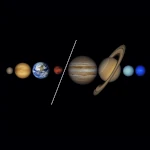 The Rainbow of Planets: Why Do They Have Colors?
  When You Look at the Stars, You Travel Through Time!
  When Earth Tilts, the Seasons Change!
 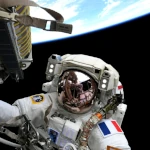 Floating Life: The Daily Routine of Astronauts on the Space Station
 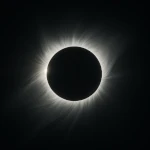 Eclipse: The Great Game of Shadow and Light Between the Moon and the Sun
  Shooting Stars: The Celestial Tears That Grant Wishes
  The Metaverse: A Virtual World
  Quantum Physics, Simply!
 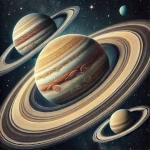 Why Are There Rings Around the Giant Planets?
  Why Does the Sun Shine?
 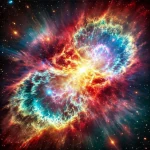 What is a Supernova?
  Why does emptiness not exist?
  What is the equivalence principle in physics?
  Incredible Phenomena of the World
  What is Time?
  What is Matter?
  Why is the sky blue?
  The Benefits of Fuse Beads for Children's Creativity
  Our Milky Way
  How to measure distances in the Universe?
 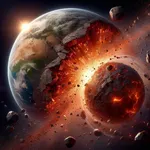 How did the Moon form?
 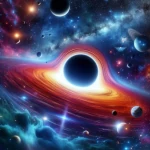 What is a black hole?
  Why are stars different colors?
  Why don't we feel that the Earth is rotating?
 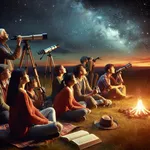 How to properly observe the stars in the sky?
 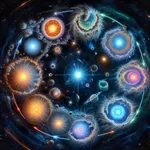 How stars work
 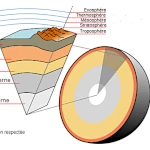 What are the inner and outer layers of the Earth?
  January Sky, Orion Constellation
  February sky, Auriga constellation
 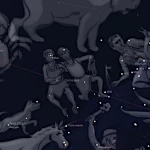 March sky, constellation of Gemini
  April sky, Bouvier constellation
 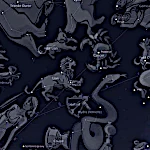 May sky, constellation Leo
 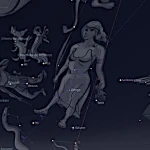 June sky, constellation Virgo
 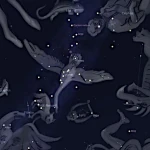 July sky, Cygnus constellation
  August sky, constellation of the Eagle
 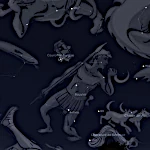 September sky, Corona Borealis Constellation
 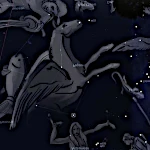 October sky, constellation Pegasus
  November sky, Andromeda constellation
  December sky, Perseus constellation