


Why do we see lightning before hearing thunder?
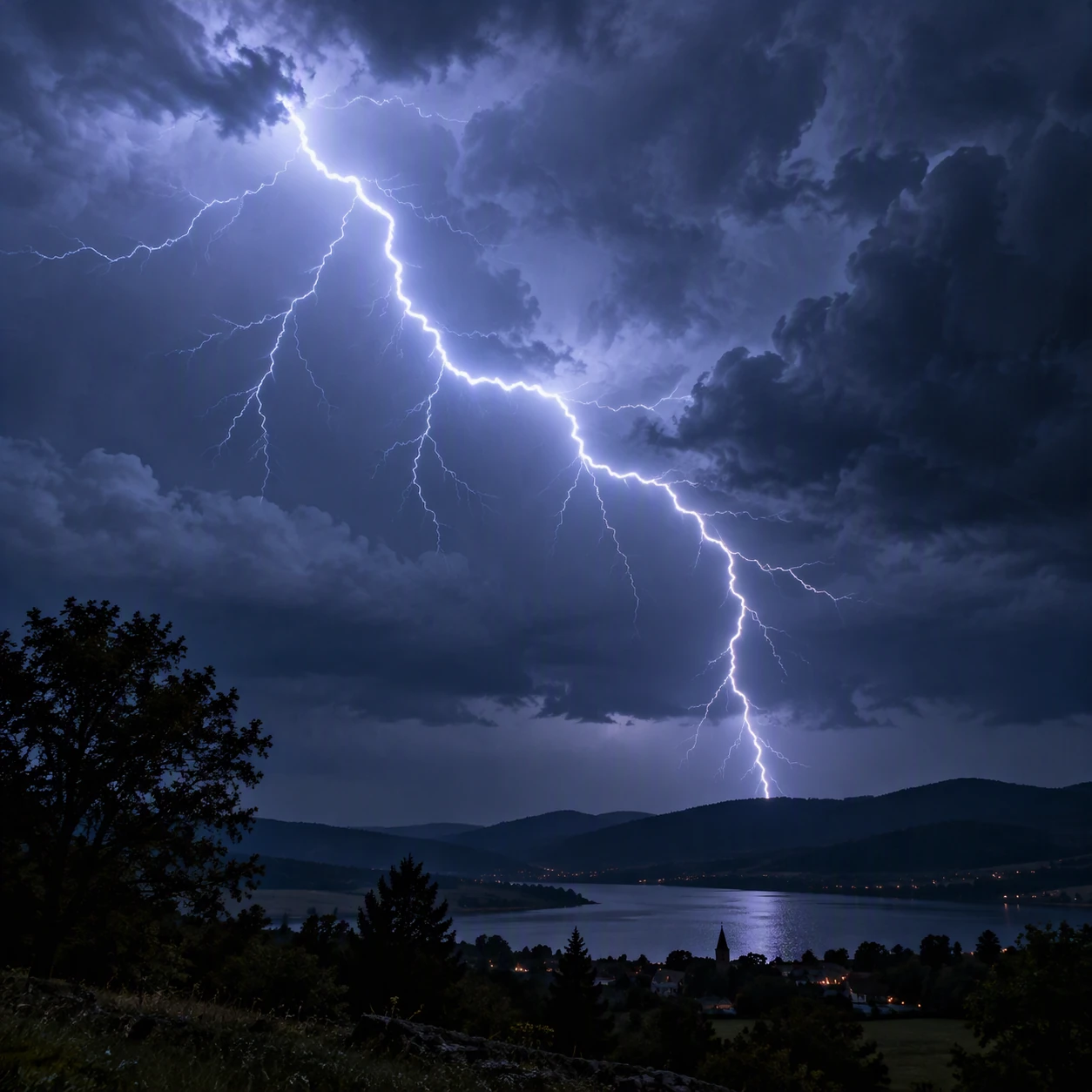
A lightning bolt streaks across the sky during a storm. The thunder will arrive later.
Source image: astronoo.com (new window) — AI-generated image, public domain.
Scientific summary
The Astronoo article explains why lightning is seen before thunder is heard. A lightning bolt produces both light and sound at the same time, but they do not travel at the same speed. Light travels at about 300,000 kilometers per second: it reaches our eyes almost instantly. Sound travels through air at about 340 meters per second, nearly a million times slower. The farther away the storm, the greater the delay of the thunder: about 3 seconds per kilometer. By counting the seconds between lightning and thunder, you can estimate the distance of the storm.
Why do we see lightning before hearing thunder?
Because light travels much, much faster than sound. Lightning and thunder are born at the same instant, at the same place, but light reaches your eyes almost immediately, while sound takes several seconds to cross the air. It is a race between two runners, and light always wins, by a huge margin.
One lightning bolt, two messengers
Light: the fastest runner in the Universe
When lightning flashes, it sends light in all directions. This light travels at about 300,000 kilometers per second. That is so fast that in a single second, it could circle the Earth almost 7.5 times!
For a storm a few kilometers away, light takes about one hundred-thousandth of a second to arrive. Your brain does not even have time to notice: for you, the lightning is seen at the exact moment it occurs.
Sound: a much slower traveler
Thunder is a sound. And sound does not travel like light. It needs air to move: the tiny particles of air push each other, a bit like people passing a message along a chain.
In air, sound travels at about 340 meters per second. That is already fast (over 1,200 km/h, much faster than a TGV!), but it is nearly a million times slower than light.
N.B.:
The speed of sound depends slightly on the temperature of the air: it is a little higher when it is warm and a little lower when it is cold. At 20 °C, it is about 343 meters per second.
How is thunder born?
A path of fire in the sky
Lightning is a huge electrical spark. In a storm cloud, small pieces of ice and droplets rub against each other and collide, and the cloud becomes electrically charged. When the charge becomes too strong, the electricity tries to escape: it carves a path through the air, toward another cloud or toward the ground.
Along its path, the air is heated to about 30,000 °C, nearly 5 times the temperature of the Sun's surface!
An explosion of air
When air is heated that fast and that hard, it expands all at once, like a balloon bursting. This sudden expansion pushes the air around it and creates a shock wave, which then becomes a sound wave: that is the thunder.
Why does thunder "rumble" instead of making a single "bang"?
A lightning bolt can be several kilometers long. Each part of the path makes its own noise, but those parts are not all at the same distance from you. The sound from the nearest part arrives first, then that from the more distant parts. The noise also echoes off hills, buildings, and clouds (that is the echo). Result: instead of a single "bang", you hear a long rumble.
The race: light versus sound
Let us imagine lightning striking the ground 3 kilometers away from you. Here is what happens.
| Runner | Speed | Time to cover 3 km | What you perceive |
|---|---|---|---|
| Light | about 300,000 km/s | about 0.00001 second | Lightning, right away |
| Sound | about 340 m/s | about 9 seconds | Thunder, 9 seconds later |
Between the lightning and the thunder, you have time to count to nine. And if the storm is farther away, you count longer!
Your turn: calculate the distance of the storm
The seconds method
Sound travels about 1 kilometer in 3 seconds. So you can guess the distance of a storm with this recipe:
- When you see the lightning, start counting the seconds: "one, two, three…" (or "one crocodile, two crocodiles…" to go at the right speed).
- Stop counting when you hear the thunder.
- Divide the number of seconds by 3: you get the distance in kilometers.
| Seconds counted | Approximate distance |
|---|---|
| 3 seconds | about 1 km |
| 6 seconds | about 2 km |
| 9 seconds | about 3 km |
| 15 seconds | about 5 km |
| 30 seconds | about 10 km |
What if the storm is approaching?
If the time between lightning and thunder gets shorter and shorter, the storm is getting closer. If it gets longer and longer, it is moving away.
N.B.:
When thunder arrives less than 30 seconds after the lightning, the storm is less than 10 kilometers away: it is time to take shelter in a house or a car, and never under an isolated tree. Then wait about 30 minutes after the last clap of thunder before going back outside. This is the "30-30 rule".
Why do we sometimes see lightning but hear nothing?
Sound weakens as it travels, and air, terrain, and layers of air at different temperatures deflect it. In general, thunder is no longer heard when the storm is more than 15 or 20 kilometers away. But the light of the lightning can be seen from much farther, especially at night. This is sometimes called "heat lightning": a distant storm whose light you see, without hearing the noise.
The same race in everyday life
This difference between light and sound is seen everywhere:
- A fireworks display: you first see the colorful explosion, then you hear the "boom".
- A lumberjack in the distance: you see the axe hit the tree, then the "tock" arrives afterward.
- A football stadium: from the distant stands, you see the player kick the ball before hearing the kick.
- The Sun: its light takes about 8 minutes and 20 seconds to reach us. You see the Sun as it was more than 8 minutes ago!
References
Frequently asked questions: everything you need to know about lightning and thunder
Why do we see lightning before hearing thunder?
Because light travels at about 300,000 kilometers per second, while sound travels at only about 340 meters per second in air. Lightning and thunder are born at the same time, but light arrives almost instantly, while sound takes about 3 seconds to travel each kilometer.
How can you tell how far away the storm is?
Count the seconds between the lightning and the thunder, then divide that number by 3. The result is the approximate distance of the storm in kilometers. For example, 12 seconds corresponds to about 4 kilometers.
What is thunder?
Thunder is the noise produced by lightning. The passage of electricity heats the air to about 30,000 °C in a fraction of a second. The air expands suddenly, creating a shock wave, then a sound wave that we hear as a rumble.
Why does thunder make a long rumble?
Lightning is very long, and its different parts are not all at the same distance from us. The sound from the near parts arrives first, then that from the far parts. Echoes off the terrain and clouds prolong the noise even more.
Can thunder be heard at any distance?
No. In general, thunder is no longer heard when the storm is more than 15 to 20 kilometers away, because sound weakens and is deflected as it travels through the atmosphere. The light of the lightning, however, can be seen from much farther.
 Why does waiting take so long?
  Why is water wet?
  Twinkling stars, steady planets: what's the difference?
  Why do we see lightning before hearing thunder?
  Why Can Telescopes See So Far?
  The Rainbow of Planets: Why Do They Have Colors?
  When You Look at the Stars, You Travel Through Time!
  When Earth Tilts, the Seasons Change!
  Floating
Life: The Daily Routine of Astronauts on the Space Station
Floating
Life: The Daily Routine of Astronauts on the Space Station  Eclipse: The Great Game of Shadow and Light Between the Moon and the Sun
  Shooting
Stars: The Celestial Tears That Grant Wishes
Shooting
Stars: The Celestial Tears That Grant Wishes  The Metaverse:
A Virtual World
The Metaverse:
A Virtual World  Quantum Physics, Simply!
  Why Are There Rings Around the Giant Planets?
  Why Does the Sun Shine?
  What is a Supernova?
  Why does emptiness not exist?
  What is the equivalence principle in physics?
  Incredible Phenomena of the World
  What is Time?
  What is Matter?
  Why is the sky blue?
  The Benefits of Fuse Beads for Children's Creativity
  Our Milky Way
  How to measure distances in the Universe?
  How did the Moon form?
  What is a black hole?
  Why are stars different colors?
  Why don't we feel that the Earth is rotating?
  How to properly observe the stars in the sky?
  How stars work
  What are the inner and outer layers of the Earth?
  January Sky, Orion Constellation
  February sky, Auriga constellation
  March sky, constellation of Gemini
 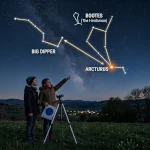 April sky, Bouvier constellation
  May sky, constellation Leo
 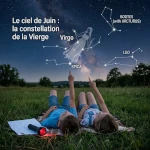 June sky, constellation Virgo
  July sky, Cygnus constellation
  August sky, constellation of the Eagle
  September sky, Corona Borealis Constellation
  October sky, constellation Pegasus
  November sky, Andromeda constellation
  December sky, Perseus constellation