


When you look at the stars, you travel through time!
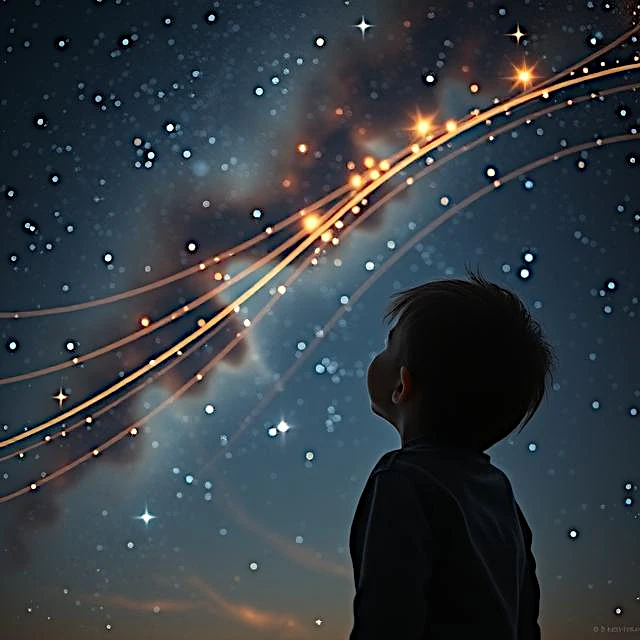
A child observes the starry sky with light trails that represent the journey of starlight curving through space and time.
Image source: astronoo.com (new window)
Light is a Super Fast Rocket!
Did you know that light is the fastest thing in the entire universe? It travels at an incredible speed of 300,000 kilometers per second. It's so fast that it could go around the Earth 7 times in just one second!
Why Does Seeing the Stars Mean Traveling Through Time?
The stars are so far away from us that their light takes a long time to reach us. When you look at a star in the sky, you don't see it as it is now, but as it was at the moment its light began its journey toward Earth.
Our Eyes Are Time Machines
Every night, you can take little trips through time just by looking at the sky:
- The Moon: you see it as it was 1.3 seconds ago.
- The Sun: you see it as it was 8 minutes ago.
- Sirius (the brightest star): you see it as it was 8.6 years ago.
- Betelgeuse (in Orion): you see it as it was 640 years ago.
- The Andromeda Galaxy: you see it as it was 2.5 million years ago, long before modern humans appeared.
Telescopes Are Also Time Machines
Astronomers use very powerful telescopes like Hubble (Hubble Space Telescope) or James Webb (James Webb Space Telescope) to look ever farther into the universe. And the farther we look, the further into the past we see! Some galaxies we observe today may not even exist anymore.
A Light from the Age of the Dinosaurs
When you observe certain very distant stars, their light began its journey toward Earth at the time when dinosaurs walked on our planet. This light traveled for millions of years through space to finally arrive in your eyes tonight!
How Does It Work? The Speed of Light
The speed of light is represented by the letter c. It's a symbol used by scientists to talk about this incredible speed. Nothing can go faster than light. We simply write this: \(v <c\).
N.B.:
A light-year is a unit of distance, not of time!
It's the distance light travels in one year, about 9,460 billion kilometers.
For example, if a star is 100 light-years away, that means its light takes 100 years to reach us.
| Celestial object | Distance | Light travel time | Time on Earth when the light left |
|---|---|---|---|
| Moon | 384,400 km | 1.3 seconds | One second ago |
| Sun | 150 million km | 8 minutes | 8 minutes ago |
| Sirius | 8.6 light-years | 8.6 years | 8.6 years ago |
| Andromeda Galaxy | 2.5 million light-years | 2.5 million years | About 2.5 million years ago, before modern humans |
 Why Can Telescopes See So Far?
  The Rainbow of Planets: Why Do They Have Colors?
  When You Look at the Stars, You Travel Through Time!
  When Earth Tilts, the Seasons Change!
  Floating Life: The Daily Routine of Astronauts on the Space Station
  Eclipse: The Great Game of Shadow and Light Between the Moon and the Sun
  Shooting Stars: The Celestial Tears That Grant Wishes
  The Metaverse: A Virtual World
  Quantum Physics, Simply!
  Why Are There Rings Around the Giant Planets?
  Why Does the Sun Shine?
  What is a Supernova?
  Why does emptiness not exist?
  What is the equivalence principle in physics?
  Incredible Phenomena of the World
  What is Time?
  What is Matter?
  Why is the sky blue?
  The Benefits of Fuse Beads for Children's Creativity
  Our Milky Way
  How to measure distances in the Universe?
  How did the Moon form?
  What is a black hole?
  Why are stars different colors?
  Why don't we feel that the Earth is rotating?
  How to properly observe the stars in the sky?
  How stars work
  What are the inner and outer layers of the Earth?
 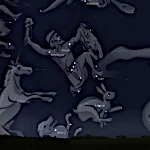 January Sky, Orion Constellation
 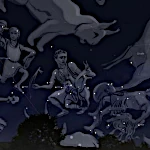 February sky, Auriga constellation
 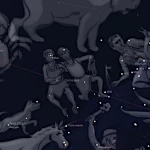 March sky, constellation of Gemini
  April sky, Bouvier constellation
 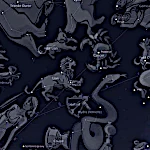 May sky, constellation Leo
 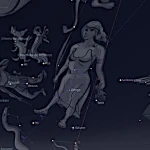 June sky, constellation Virgo
 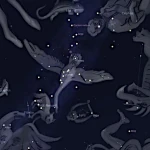 July sky, Cygnus constellation
 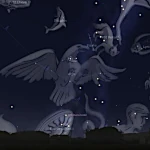 August sky, constellation of the Eagle
 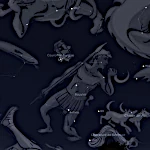 September sky, Corona Borealis Constellation
 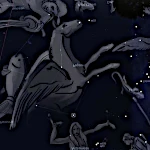 October sky, constellation Pegasus
 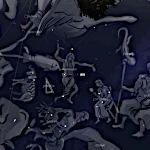 November sky, Andromeda constellation
 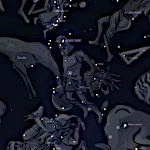 December sky, Perseus constellation