


Twinkling stars, steady planets: what's the difference?
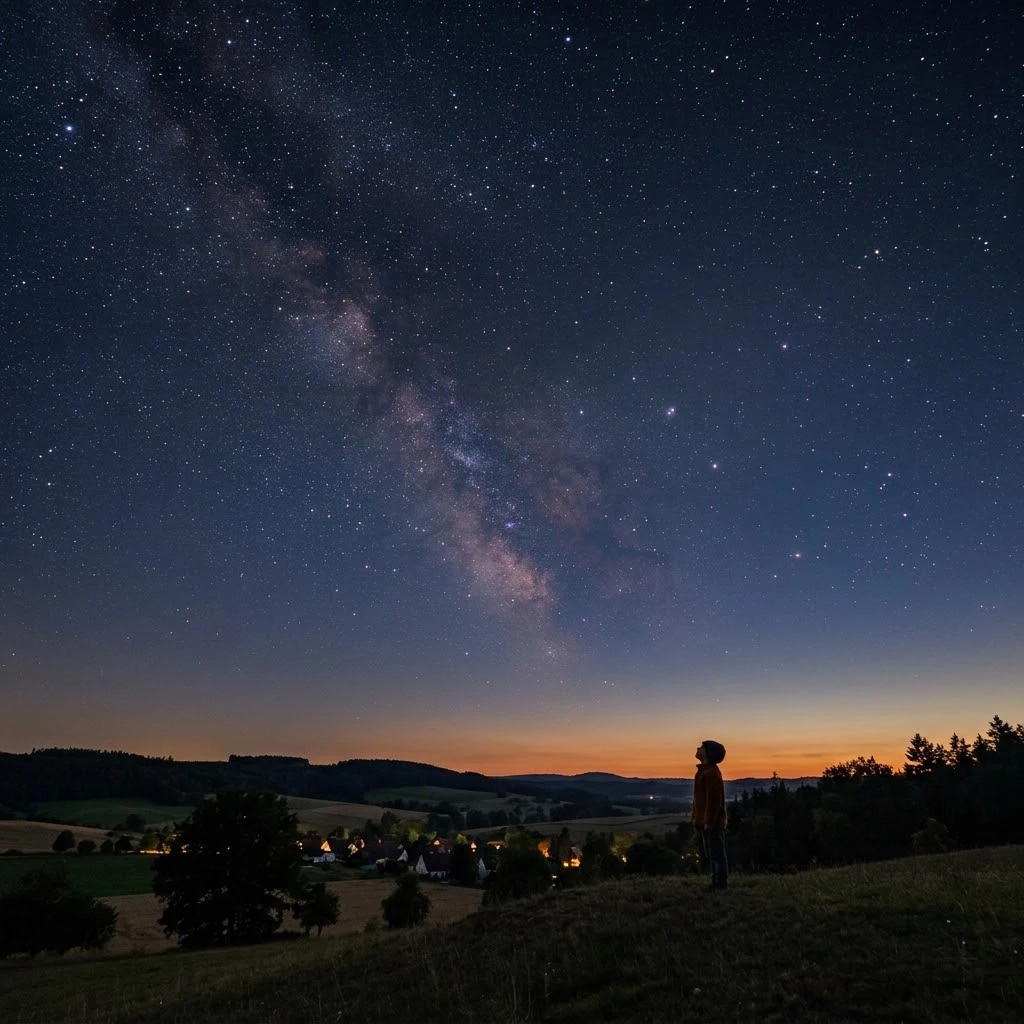
In the evening sky, stars seem to blink, but the bright planet keeps a calm light.
Image source: astronoo.com (new window) — AI-generated image, public domain.
Scientific summary
The Astronoo article explains why stars twinkle and planets (mostly) don't. The twinkling doesn't come from the stars themselves, but from Earth's atmosphere: the air is constantly churned and contains zones of different temperatures and densities, which bend light irregularly. A star is so far away that it looks like a point of light: its thin beam is shaken all at once and its brightness varies. A planet, being closer, appears as a tiny disk: each point of the disk is bent differently, and these variations cancel each other out, giving a more stable light. In space, without an atmosphere, stars don't twinkle.
Why do stars twinkle and not planets?
Stars don't really blink: it's Earth's air that makes them tremble. Their light must pass through swirls of warmer or colder air, which bend it in all directions. Since a star is so far away that it's just a tiny point, this light is shaken all at once. A planet, being closer, is a small disk: the tremors of each point mix and cancel out, so it shines with a calmer light.
The journey of light to your eyes
A light that comes from very far away
Stars are suns, but so distant that they appear to us only as tiny points. The closest star to the Solar System, Proxima Centauri, is about 40,000 billion kilometers away. Its light, which travels at 300,000 kilometers per second, takes more than 4 years to reach us!
Even with the largest telescopes, a star remains a simple point of light: it is too far away for us to see its shape.
The last step: crossing the air
After a journey of several years, a star's light finally arrives near Earth. But it still has one last ordeal: crossing the atmosphere, that great layer of air that surrounds us and is several dozen kilometers thick.
And the air is never completely calm.
Moving air bends light
Bubbles of hot and cold air
In the atmosphere, there are air currents, wind, places that are warmer and others that are colder. Hot air is less dense than cold air. These differences form sorts of big invisible air bubbles that constantly move and mix.
Why light bends
When light passes from one zone of air to another of different density, it slows down just a tiny bit and changes direction slightly. We say it is refracted. It's the same phenomenon that makes a straw look "broken" in a glass of water.
Since the air bubbles move constantly, the direction of light changes dozens of times per second. To your eyes, the star's point of light then seems to tremble: sometimes brighter, sometimes fainter, sometimes even a bit shifted. This is twinkling.
N.B.:
Twinkling is also called "atmospheric turbulence". Astronomers measure it with a unit called "seeing" (or "image quality"): the calmer the air, the sharper and clearer the star images.
Star versus planet: a point versus a disk
A star: a single thread of light
Imagine that a star's light is a very thin thread. When a bubble of air passes in its path, the whole thread is shaken at the same time. Your eye then sees the star blink.
A planet: a thick rope of light
A planet is much closer than the stars. Seen from Earth, it is no longer a simple point, but a tiny disk. Its light is like a thick rope made of thousands of little threads. Each thread passes through a slightly different part of the atmosphere: one is bent to the left, another to the right, another barely moves. In the end, all these little movements mix and cancel out. Result: the planet's light appears much more stable.
| Body | Where does its light come from? | Distance from Earth | Appearance in the sky | Does it twinkle? |
|---|---|---|---|---|
| Star (example: Proxima Centauri) | It makes its own light | about 40,000 billion km | A point of light | Yes, a lot |
| Planet (example: Jupiter) | It reflects sunlight | between 600 and 970 million km | A tiny disk | Little or not at all |
| Planet (example: Venus) | It reflects sunlight | between 40 and 260 million km | A small disk, larger than Jupiter at its closest | Very little |
N.B.:
The Sun is also a star, but it doesn't twinkle. It is so close to us (150 million kilometers) that it appears as a big disk in the sky, not as a point. The "point versus disk" rule works for it too!
Colors that change near the horizon
Twinkling is stronger for stars near the horizon. Their light then has to cross a greater thickness of air, and therefore many more bubbles. Very bright stars, like Sirius, can even seem to change color: red, blue, green… like a little blinking light. The air acts a bit like a prism and spreads out the colors of light, which are bent slightly differently.
And in space?
Stars no longer twinkle
Astronauts on the International Space Station, who are above the atmosphere, see stars shining with a perfectly steady light. This is proof that twinkling comes from Earth's air and not from the stars.
Telescopes that correct the air
To avoid this problem, the Hubble Space Telescope observes from space. Large ground-based telescopes use adaptive optics: a deformable mirror adjusts its shape hundreds of times per second to cancel out the shaking of the air, a bit like glasses that adjust themselves.
Your turn: recognize a planet
The blinking test
Planets are "wandering" bodies: the word "planet" comes from a Greek word meaning "wanderer". Over the weeks, they move among the stars. You can spot one very simply:
- Choose a clear evening and go outside at nightfall, with an adult.
- Look for a very bright point of light, low in the sky, after sunset or before sunrise.
- Look at it carefully for a few seconds: if it shines with a calm light, like a little lighthouse, it's probably a planet (Venus or Jupiter, for example). If it blinks and changes color a bit, it's probably a star.
N.B.:
This test isn't perfect. A planet very low on the horizon can also twinkle a bit, because its light then crosses a lot of air. To be sure, you can use a sky map app, which shows the position of the planets.
An experiment to see the air tremble
To observe the effect of hot air on light, look at an object through the hot air above a radiator, a summer road, or a candle (without touching it!). The object seems to waver and tremble. This is exactly what happens to starlight, but with the entire atmosphere.
Why do stars look pointed, with branches?
In drawings, stars are often shown with points. This is a drawer's habit. In reality, a star is an immense ball of burning gas, like the Sun. The "branches" that are sometimes seen in photos come from the equipment, for example the internal supports of a telescope, which diffract light, and not from the star itself.
References
Frequently asked questions: everything about star twinkling
Why do stars twinkle?
Stars twinkle because of Earth's atmosphere. Their light passes through zones of air with different temperatures and densities, which bend it irregularly and changeably. Since a star is so distant that it looks like a point, all its light is bent at the same time and we see its brightness vary.
Why don't planets twinkle?
Planets are much closer than stars and appear as very small disks. Each point of the disk passes through a different part of the atmosphere and is bent differently. These small variations cancel out, and the planet's light appears more stable. They can still twinkle a little when they are very close to the horizon.
Do stars twinkle in space?
No. In space, there is no atmosphere to bend light. Astronauts therefore see stars shining with a steady, calm light, without blinking.
Why do stars change color near the horizon?
Near the horizon, light passes through a thicker layer of air. This air bends each color slightly differently, a bit like a prism. Very bright stars, like Sirius, then seem to shift from red to blue and green.
How do you recognize a planet in the sky?
A planet generally shines with a calmer and more stable light than a star, and it is often very bright (Venus and Jupiter, for example). It also moves slowly among the stars from one week to the next. A sky map app lets you spot it for sure.
 Why does waiting take so long?
  Why is water wet?
  Twinkling stars, steady planets: what's the difference?
  Why do we see lightning before hearing thunder?
  Why Can Telescopes See So Far?
  The Rainbow of Planets: Why Do They Have Colors?
  When You Look at the Stars, You Travel Through Time!
  When Earth Tilts, the Seasons Change!
  Floating
Life: The Daily Routine of Astronauts on the Space Station
Floating
Life: The Daily Routine of Astronauts on the Space Station  Eclipse: The Great Game of Shadow and Light Between the Moon and the Sun
  Shooting
Stars: The Celestial Tears That Grant Wishes
Shooting
Stars: The Celestial Tears That Grant Wishes  The Metaverse:
A Virtual World
The Metaverse:
A Virtual World  Quantum Physics, Simply!
  Why Are There Rings Around the Giant Planets?
  Why Does the Sun Shine?
  What is a Supernova?
  Why does emptiness not exist?
  What is the equivalence principle in physics?
  Incredible Phenomena of the World
  What is Time?
  What is Matter?
  Why is the sky blue?
  The Benefits of Fuse Beads for Children's Creativity
  Our Milky Way
  How to measure distances in the Universe?
  How did the Moon form?
  What is a black hole?
  Why are stars different colors?
  Why don't we feel that the Earth is rotating?
  How to properly observe the stars in the sky?
  How stars work
  What are the inner and outer layers of the Earth?
  January Sky, Orion Constellation
  February sky, Auriga constellation
 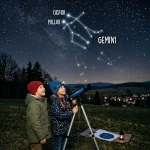 March sky, constellation of Gemini
 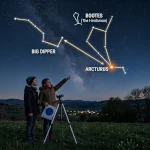 April sky, Bouvier constellation
 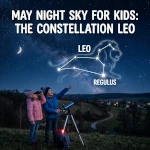 May sky, constellation Leo
 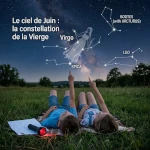 June sky, constellation Virgo
 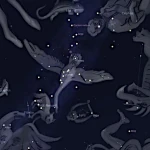 July sky, Cygnus constellation
 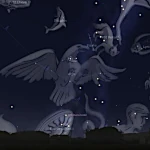 August sky, constellation of the Eagle
 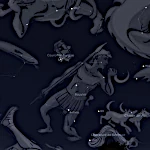 September sky, Corona Borealis Constellation
 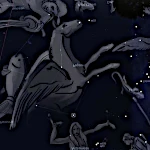 October sky, constellation Pegasus
  November sky, Andromeda constellation
  December sky, Perseus constellation