


AI Tools: How to Choose?

From language models to image generators and programming assistants, AI now offers a plethora of tools.
Each tool has its own specialty, strengths... and blind spots.
Image source: astronoo.com (new window)
How to Choose AI Tools?
Since 2022, artificial intelligence has left the labs to invade our daily lives and transform our habits. In 2026, the range of AI tools is so vast that it’s hard to choose just one. Each tool offers productivity gains, but none is perfect, and sometimes they can even waste your time. With models evolving every month, new platforms emerging, and overlapping features, it’s impossible to test everything or stick to a single solution. Many users juggle multiple free tools (ChatGPT, Gemini, Claude, Mistral, Copilot, DeepSeek…) or combine subscriptions based on use cases (writing, coding, imaging, data analysis…).
This guide compares the most widely used free tools in 2026, highlighting their practical advantages and real limitations—cost, bias, reliability, and learning curve.
Before Comparing Tools, Work on Your Prompts
AI tools are often judged on their raw performance, but one essential element is overlooked: the quality of the response depends as much on the prompt as on the model itself.
The Common Mistake
When faced with a disappointing response, many people get frustrated: “This AI is useless, it doesn’t understand anything.” Yet, a more detailed prompt is often all it takes to change everything. It makes sense: every generated word depends on the context. The more precise the context, the higher the probability of finding the right next word. Experienced users spend more time refining their request than reading the response—this is my case ����.
The Basics of a Good Prompt
- Clarify your intent: what you want to achieve and for what purpose.
- Assign a role to the AI: expert, teacher, journalist, popularizer…
- Specify the expected format: paragraph, list, table, structured outline.
Example
- Explain photosynthesis in 150 words, at a middle school level, with two concrete examples.
- Adopt the perspective of a life sciences teacher.
- Present the answer as a numbered list.
N.B.: The rise of AI reveals an irony: the better machines speak, the more crucial it becomes to speak better than them—or at least more accurately. Language is not a detail; it is the interface between our thoughts and their intelligence.
Evolution of AI Users (Estimates and Projections)
Relative to the 8 billion inhabitants of the planet, the number of AI users remains tiny, a sign that the revolution is only just beginning. In 2025, the ITU estimates that nearly three-quarters of humanity is connected, leaving 2.2 billion people offline, hence the surprisingly low number of users in 2025.
Growth of Users by AI
Estimated monthly active users (in millions) — real data & projectionsLLMs Are the Swiss Army Knives of AI
Large Language Models (LLMs) are the most well-known to the general public.
The capabilities of current AIs are so vast and their uses so diverse that no summary can list all the advantages and disadvantages; each tool opens up possibilities too broad to be confined to a simple table.
Here is a table based on my experience.
| Tool (Free Version) | Main Advantages | Disadvantages / Limitations | Pro Rate / Month |
|---|---|---|---|
| Gemini (Google) |
• Rich and complex image creation, including text integration. • Capable of analyzing very long documents, code, or multimedia files. • Includes access to live voice (Gemini Live). • Excellent translation of long documents. |
• Very strict safety moderation (creative or sensitive requests sometimes blocked). • Default writing style is very corporate or smoothed out if not precisely guided. | 22 € |
| DeepSeek |
• Solves complex logical, mathematical, and scientific problems. • Can summarize, add chapters, or generate a FAQ from a simple internet link. • Unlimited access, no throttling, open-source model. • High-performance text translation for Asian languages. ���� |
• No native image generation. • Servers sometimes saturated due to its immense global success. • No advanced video or voice stream processing. | ≈ 6 $ for 1M tokens or 2 complete 500-page novels / month |
| ChatGPT (OpenAI) |
• Access to thousands of specialized assistants (real-time internet access, calculation or email plugins, prompt generators, tutors, design tools). • Very fluid execution speed for direct computer code and textual logic. • Excellent translation of long documents. |
• No image generation. • Shorter conversation memory; the model often forgets the beginning of the chat. | 20 € |
| Claude (Anthropic) |
• Most fluid and human-like writing style on the market. • High-precision logic and reasoning for analysis or programming. • Text translation: king of literary text, delicate emails, or marketing content. |
• No image generation. • Extremely restrictive free message quotas (quick conversation blocking). • No real-time web search. | 20 € |
| Mistral (Le Chat) |
• For a French-speaking user concerned about data leaks, it’s the secure choice (hosted in Europe). The model perfectly understands the subtleties, humor, or local French context. • Text translation: flawless from or to French, Spanish, German, or Italian. | • Image generation in partnership with Black Forest Labs, producing very high-quality visuals. However, free access is more quickly rationed than on Gemini, which remains ultra-generous in this regard. | 15 € |
| Copilot (Microsoft) |
• Provides free access to the power of GPT-4 for text and DALL-E for images. • Excellent integration with the Bing search engine, providing clear sources and links. • Fully multimodal (handles text, images, and documents). • Text translation: struggles with long documents. |
• Number of messages per conversation and image generation subject to daily quotas. • Removed from Word and Excel apps (payment required). The organization of conversations, imported files, or settings is not always clear. It’s easy to lose track. | 22 € corresponds to Microsoft 365 Premium (Word, Excel, PowerPoint, Outlook…) |
Common Limitations of All These Tools
Despite their feats, current AIs share structural weaknesses:
- Lack of genuine understanding – they manipulate probabilities.
- Bias and hallucinations – they invent facts and reproduce stereotypes present in the training data.
- Fragility to edge cases – a minor change in context, vocabulary, or word order can lead to inconsistent, contradictory, or incorrect responses.
- No physical grounding in the real world – unlike living beings, AIs do not interact with their environment. Their representation of the world mainly comes from data already produced by humans.
- Difficulty with long reasoning – current systems fail when it comes to following complex causal chains, maintaining consistency over long sequences, or reasoning outside frequently observed cases.
- Dependence on historical data – models build their responses based on statistical distributions learned from historical data. They extend observed trends rather than making true predictions.
- The "goldfish effect" – all AIs adapt to the user's style but retain nothing permanently. They adjust their responses to the immediate context. You often have to remind them of your rules, which can be frustrating. ����
Comparison of Free Quotas by LLM
Not all free tools are equal in terms of usage limits.
Key Takeaways
- Refine your prompts.
- To stay truly productive, use multiple AIs: you'll never be blocked by a restrictive quota.
- Don’t hesitate to submit the same prompt to them, analyze their differences, or even contradict them to refine the answer.
- And above all, keep a critical mind—they are just stochastic parrots.
 The Different Types of AI Learning
  Agentic AI: When Machines Become Autonomous
  What AI Cannot Do
  Artificial Intelligence and Astronomy: Understanding the Role of AI Assistants
  AI Tools: How to Choose?
 Generative AI vs AGI: Where does imitation end and consciousness begin?
  Artificial networks vs biological networks: Two systems, one common architecture
  Human Brain and Artificial Intelligences: Similarities and Differences
  AlphaGo vs AlphaGo Zero: A Revolution in Artificial Intelligence
  The Next Step for Intelligent Machines
  The First Step Towards the Emergence of Life
  From Biological Neuron to Formal Neuron: Simplifying the Brain
  Artificial intelligence: the explosion of gigantism
  When AI models train on their own data, they go mad!
  How machines become intelligent
  Artificial intelligence: real threat or opportunity for humanity?
  How do machines understand, interpret and generate language in a similar way to humans?
 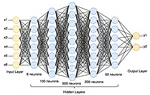 How does an artificial neural network work?