


The Night Sky Map in Subtropical Deserts: Constellations and Celestial Objects Season by Season
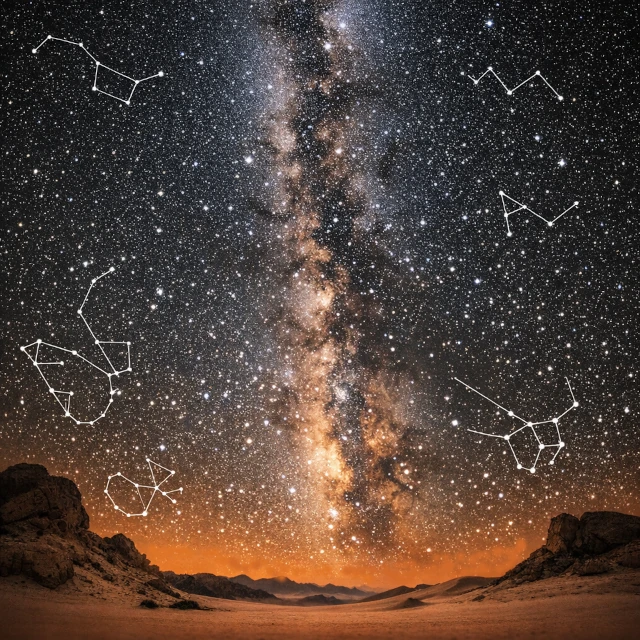
The night sky from the Arabian Desert, showing the Milky Way crossing the zenith.
The total absence of light pollution and dry air reveal thousands of stars.
Seasonal landmarks are exceptionally clear.
Image source: astronoo.com (new window)
Scientific Summary
Subtropical deserts (Sahara, Arabia, Sonora, Atacama, Gibson, Kalahari) offer exceptional astronomical observing conditions thanks to dry air, atmospheric stability, and lack of light pollution. This practical guide describes seasonal celestial markers for orientation: Polaris in the northern hemisphere, the Southern Cross in the southern hemisphere, and the dominant constellations (Leo in spring, Summer Triangle, Square of Pegasus in autumn, Orion in winter). The limiting magnitude reaches 7.5, allowing views of galaxies (Andromeda), nebulae (Orion), and the Milky Way with details inaccessible elsewhere.
How to find your way in the starry sky of subtropical deserts?
In subtropical deserts (Sahara, Arabia, Sonora, Thar, Atacama, Gibson, Kalahari), the lack of terrestrial landmarks is compensated by an exceptionally pure sky. To orient yourself, observers use seasonal celestial landmarks: in the northern hemisphere, the North Star (Polaris), found by extending the line of the two edge stars of the Big Dipper, indicates north. In the southern hemisphere, the Southern Cross points toward the south celestial pole. Depending on the season, key constellations dominate the zenith: Leo in spring, the Summer Triangle (Vega, Deneb, Altair) in summer, the Great Square of Pegasus in autumn, and Orion in winter. The Milky Way, bright planets, and even distant galaxies (Andromeda) are visible to the naked eye thanks to dry air and the absence of light pollution.
Also worth exploring
Continue your exploration of the Universe with these topics:
Why Are Subtropical Deserts Astronomical Sanctuaries?
Subtropical deserts—Sahara (Africa), Arabian Desert (Middle East), Sonoran Desert (North America), Gibson Desert (Australia), Thar Desert (India)—offer the best astronomical observation conditions on Earth. Located between latitudes 15° and 35° in both hemispheres, these vast arid expanses combine unique advantages: over 300 clear nights per year, atmospheric humidity below 20% (often 5-10% in the Atacama), almost no light pollution, and exceptional atmospheric stability (the seeing (air quality for astronomical observation, measured by turbulence and transparency) is among the best in the world).
Unlike temperate regions where observation is often hindered by clouds and humidity, subtropical deserts benefit from a permanent anticyclonic climate. From these latitudes, the observer is in a unique position: close enough to the equator to see almost the entire northern and southern sky, and far enough to experience nights of varying lengths depending on the season. The pole height (angular height of the celestial pole above the horizon, equal to the latitude of the place) varies with the exact latitude: from the central Sahara (25° N), the North Star culminates at 25°; from the Sonoran Desert (30° N), it culminates at 30°.
Finding Directions: The North Star, Always Present
In the northern hemisphere of subtropical deserts (Sahara, Arabia, Sonora, Thar), the North Star (alpha star of Ursa Minor, about 433 light-years away, currently very close to the North Celestial Pole) (Polaris) remains the fundamental landmark. Its height above the horizon, measured in degrees, is approximately equal to the observer's latitude: from the Arabian Desert (20-25° N), it culminates at about 20-25° above the northern horizon. This moderate height makes it easily identifiable, unlike equatorial regions where it skims the horizon.
To find it, use the Big Dipper (the seven brightest stars of Ursa Major, forming an asterism shaped like a ladle) (Ursa Major), always visible at these latitudes. The two stars at the edge of the "ladle" (Dubhe and Merak) form the "guards": by extending the line they trace about five times their separation, you reach Polaris directly. This mnemonic trick works all year, although the Big Dipper is lower on the horizon in autumn.
Once the North is identified, the orientation of the other cardinal points follows immediately. In subtropical deserts, the lack of terrestrial landmarks makes this celestial orientation all the more valuable for traditional navigation (caravans, Bedouins, Tuaregs, desert nomads).
Southern Deserts: South Pole Without a Bright Star
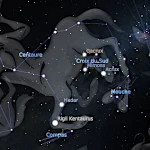
For subtropical deserts in the southern hemisphere (Gibson Desert in Australia, Atacama Desert in Chile, Kalahari Desert in southern Africa), the absence of a bright polar star requires the use of the Southern Cross (the most characteristic constellation of the southern hemisphere, formed by four bright stars in the shape of a cross) (Crux). Extend its long axis about 4.5 times the length of the cross to locate the South Celestial Pole. At these latitudes (20-35° S), the Southern Cross is particularly high in the sky, culminating between 40° and 70° depending on the season, making it easier to spot than at the equator.
Northern Spring / Southern Autumn (March, April, May): Leo at the Zenith
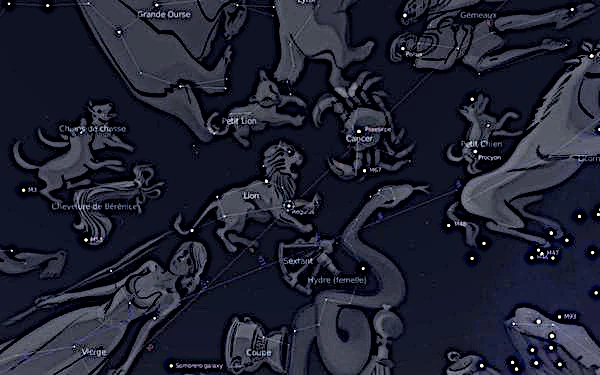
In spring in the northern desert hemisphere, Earth faces a sky region rich in galaxies. The constellation Leo (Leo) culminates high in the sky, with its main star Regulus (alpha star of Leo, a blue-white giant about 79 light-years away) marking the bottom of the inverted "question mark."
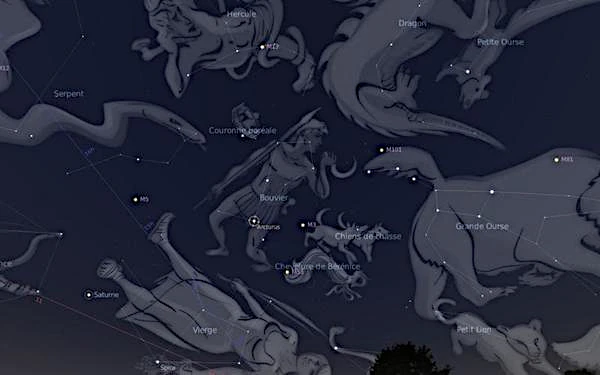
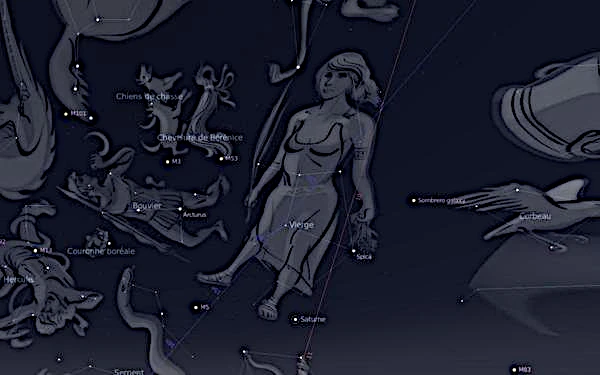
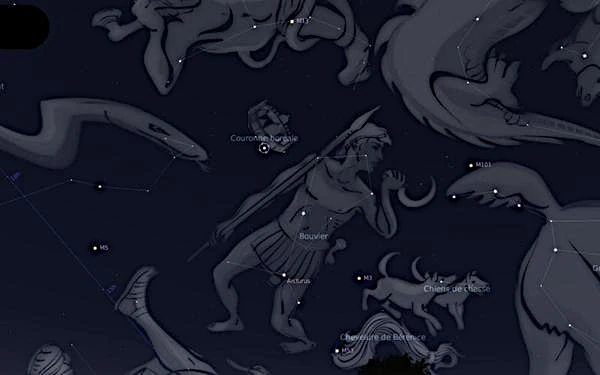
Further east, the constellation Virgo is marked by Spica (alpha star of Virgo, a blue giant about 250 light-years away), a bluish star. To find Spica, extend the arc of the Big Dipper's tail: "Follow the arc to Arcturus, then continue to Spica" remains valid from North African deserts. Arcturus (alpha star of Boötes, an orange giant, one of the brightest in the northern sky), in Boötes, shines with a characteristic orange hue.
The Coma Berenices, visible to the naked eye in a desert sky, forms a diffuse patch often mistaken for a cloud by inexperienced observers. It is actually an open cluster of real stars, one of the few visible without instruments. Turning south, the southern constellations (Centaurus, Crux) begin to appear low on the horizon for observers below the Tropic of Cancer.
Northern Summer / Southern Winter (June, July, August): The Zenithal Milky Way
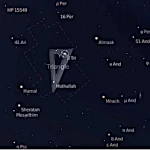
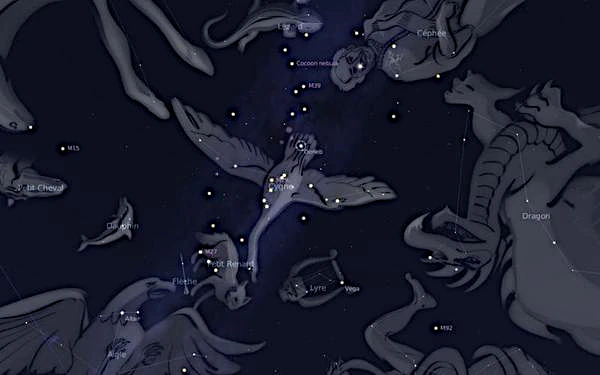
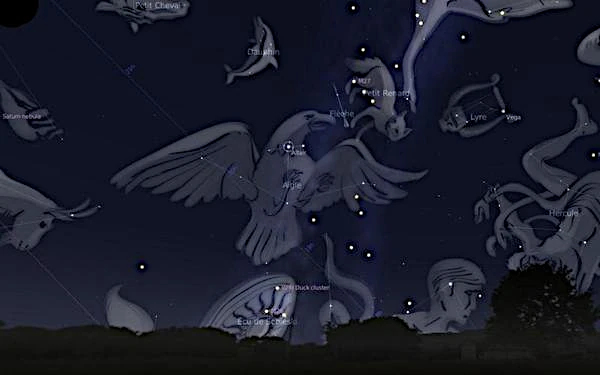
Summer in the northern subtropical deserts is the season of astronomical superlatives. The nights are short but of exceptional purity, as the air is the driest and most stable of the year. The Summer Triangle (asterism formed by the three brightest stars of the northern summer: Vega (Lyre), Deneb (Cygnus), and Altair (Eagle)) then dominates the zenith in North African and Arabian deserts.
This triangle is formed by three stars from three distinct constellations:
- Vega (alpha Lyrae): blue, almost at the zenith in July around 10 p.m. from the Sahara, it is the brightest star in the Summer Triangle and the fifth in the sky.
- Deneb (alpha Cygni): white supergiant, slightly northeast of Vega, it culminates high in the sky; despite its extreme distance, it rivals the brightest nearby stars.
- Altair (alpha Aquilae): white, the lowest of the three, toward the south in summer evenings.
In summer, the Milky Way (the galaxy in which the Solar System is located, visible as a diffuse milky band crossing the sky) crosses the sky from northeast to south, passing through the Summer Triangle. In the absolute darkness of the deserts, far from any light pollution, it appears as a silvery ribbon of unmatched luminosity and detail. The constellation Sagittarius, to the south, points toward the galactic center: the Teapot (asterism of eight stars in Sagittarius whose arrangement resembles a teapot, with a spout pointing right and a handle to the left) is perfectly visible, the spout seeming to pour a stream of light into the Milky Way.
For southern deserts (Gibson, Atacama, Kalahari), winter is the prime season, with the galactic center at the zenith and the Magellanic Clouds well placed.
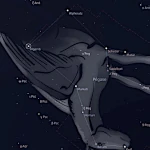
Northern Autumn / Southern Spring (September, October, November): The Great Square of Pegasus
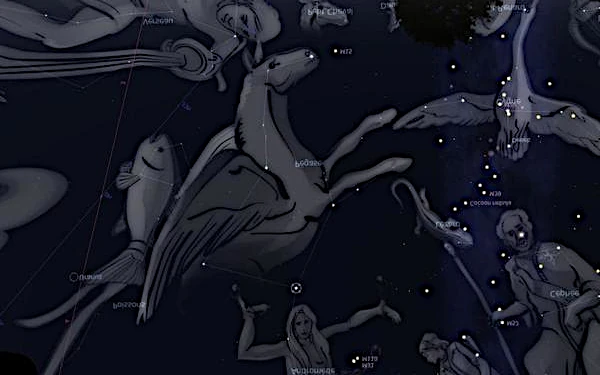
Autumn brings a characteristic geometric landmark: the Great Square of Pegasus (asterism formed by four bright stars in the constellations Pegasus and Andromeda, serving as a starting point to locate the Andromeda Galaxy). These four stars, almost equally spaced, form a large rectangle clearly visible at the meridian around 10 p.m. in October. The inside of the square is remarkably poor in stars to the naked eye, a striking contrast with the dense star fields of the summer Milky Way.
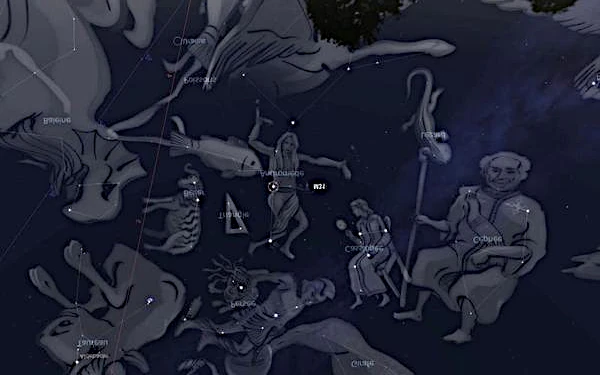
From a northeast corner of the Square, move up to two stars in the constellation Andromeda, then turn north. This path leads to M31, the Andromeda Galaxy (the closest spiral galaxy to ours visible to the naked eye, about 2.5 million light-years away, designated M31 or NGC 224). In the desert darkness, it appears as a distinct oval patch, much larger and brighter than under polluted urban skies. It is the farthest object the human eye can perceive without instruments.
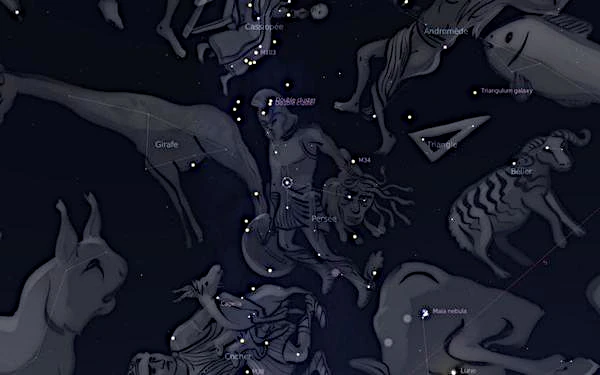
Autumn is also the season of Perseus: its main star Mirfak (alpha Persei) shines with a yellow-white glow, surrounded by a group of fainter stars forming a cluster perceptible as a milky patch. Algol (beta Persei), the eclipsing variable star, is a fascinating observation object whose brightness regularly drops over a few hours, a phenomenon easily observable by comparing its glow to that of neighboring stars.
Northern Winter / Southern Summer (December, January, February): Orion, King of the Winter Sky
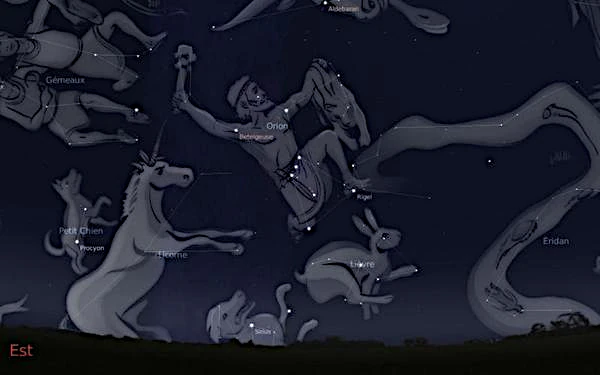
Winter offers the richest sky in bright stars of the year in the northern subtropical deserts. The constellation Orion (one of the most recognizable constellations in the sky, visible in the northern winter and the Orion Nebula (M42)) is the centerpiece, immediately recognizable by its belt: three perfectly aligned stars, Mintaka, Alnilam, and Alnitak, visible due south around 10 p.m. in January at about 50-60° altitude from the Sahara. Below the belt, Orion's sword contains a slightly milky fuzzy patch: this is the Orion Nebula (M42) (active star-forming region in the constellation Orion, about 1,344 light-years away), particularly bright in the dry desert air.
The belt points downward-east toward Sirius (the brightest star in the night sky, 8.6 light-years away), the brightest star in the sky, and upward-west toward the Pleiades (open cluster of young stars in Taurus, about 444 light-years away) (M45), a tight group of bluish stars among the most beautiful spectacles of the winter sky.
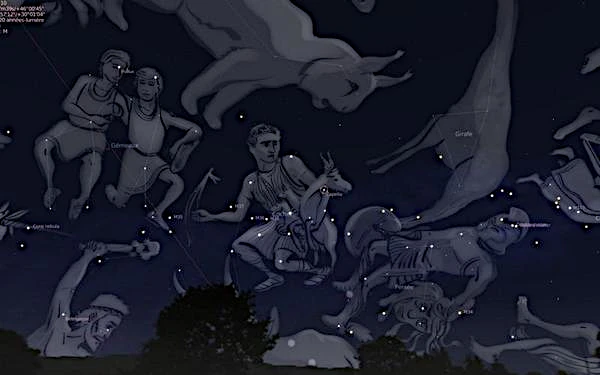
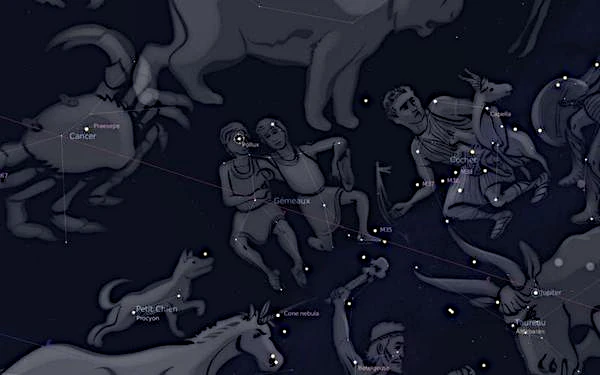
The Winter Hexagon (winter asterism formed by six bright stars: Sirius (Canis Major), Procyon (Canis Minor), Pollux (Gemini), Capella (Auriga), Aldebaran (Taurus), and Rigel (Orion)) connects six stars all visible to the naked eye, forming a large circle around Orion:
- Sirius (Canis Major): the brightest in the sky, low toward the southeast, brilliant white.
- Procyon (Canis Minor): slightly above and to the left of Sirius, white-yellow.
- Pollux (Gemini): toward the northeast, recognizable orange hue.
- Capella (Auriga): almost at the zenith in winter in subtropical deserts, bright yellow.
- Aldebaran (Taurus): reddish-orange, marks the eye of Taurus west of Orion.
- Rigel (Orion): blue-white, at Orion's right foot toward the southwest of the constellation.
Betelgeuse, Orion's red shoulder, is at the center of this hexagon: its orange hue contrasts sharply with the blue-white of Rigel, offering a striking color contrast.
Specifics of Southern Deserts (Southern Hemisphere)
For subtropical deserts in the southern hemisphere (Atacama, Gibson, Kalahari), the seasons are reversed and the landmarks are different:
- December-February (Southern Summer): Orion is visible but "upside down," the Southern Diamond (Sirius, Canopus, Hadar, Acrux) structures the sky, the Magellanic Clouds are well placed.
- June-August (Southern Winter): The Milky Way is at the zenith, the galactic center (Sagittarius) culminates high, the Southern Cross is very bright.
- September-November (Southern Spring): The Andromeda Galaxy is visible to the north, the constellations Leo and Virgo dominate.
What Can Be Seen with the Naked Eye in the Deserts
The almost total absence of light pollution and the exceptional atmospheric transparency of subtropical deserts allow the observation of celestial objects invisible elsewhere. The limiting visual magnitude can reach 7.5 in the best sites (Atacama, central Sahara), meaning over 5,000 stars are visible to the naked eye (compared to 2,000 in a European rural sky).
| Season (Northern Hemisphere) | Object | Common Name | Type | Constellation | Desert Specificity |
|---|---|---|---|---|---|
| Spring | M44 | Beehive (Praesepe) | Open Cluster | Cancer | Very distinct milky patch, individual stars resolvable to the naked eye |
| Spring | M3 | Hercules Globular Cluster | Globular Cluster | Hercules | Visible as a fuzzy patch, rare to the naked eye |
| Summer | Milky Way | Galactic Center | Galaxy (view from inside) | Sagittarius | Ribbon with complex details (dark nebulae, bulges) visible to the naked eye |
| Summer | M8 + M20 | Lagoon and Trifid Nebulae | Emission Nebulae | Sagittarius | Two distinct fuzzy patches near the Teapot |
| Autumn | M31 | Andromeda Galaxy | Spiral Galaxy | Andromeda | Elongated oval patch 3° long, visible core |
| Autumn | M33 | Triangulum Galaxy | Spiral Galaxy | Triangulum | Visible to the naked eye in the dry desert air (magnitude 5.7) |
| Winter | M42 | Orion Nebula | Emission Nebula | Orion | Detailed structure, perceptible greenish color |
| Winter | M45 | Pleiades | Open Cluster | Taurus | Up to 12 stars discernible to the naked eye |
| All Year (Northern Hemisphere) | Big Dipper | Circumpolar Constellation | Constellation | Ursa Major | Always visible, permanent landmark |
| All Year (Southern Hemisphere) | Southern Cross + Magellanic Clouds | Southern Landmarks | Constellation + Dwarf Galaxies | Crux, Dorado, Tucana | Always visible in southern deserts |
Planets: Brightness Enhanced by Dry Air
In subtropical deserts, dry and stable air amplifies the apparent brightness of planets and reduces their twinkling. Jupiter and Venus can cast visible shadows on the desert ground on moonless nights. Saturn appears with remarkable clarity, its rings sometimes guessed at by experienced observers with the naked eye. Mars, during its oppositions (about every 26 months), reveals an intense orange hue.
The crepuscular planets (inferior planets, always close to the Sun in the sky) (Mercury, Venus) are particularly well visible in deserts because the horizon is clear and twilight is short (near the equator, night falls quickly). Venus can be observed in broad daylight by looking toward the rising Sun before sunrise, or toward the setting Sun after sunset.
Unique Phenomena in the Deserts
Subtropical deserts offer privileged conditions for certain astronomical phenomena:
- Zodiacal Light: A conical glow visible in the west after sunset (or in the east before sunrise) in deserts without light pollution. Caused by the reflection of sunlight on interplanetary dust.
- Gegenschein: A very faint patch of light opposite the Sun, visible only in the darkest desert skies.
- Solar Eclipses: Subtropical deserts (Sahara, Arabia, Atacama) are among the best places to observe total eclipses, with almost no risk of clouds.
- Meteor Showers: The Perseids (August), Geminids (December), and Leonids (November) reach their maximum hourly rates there.
Summary Table: Seasonal Landmarks in Northern Deserts
| Season | North Direction | Zenith (Overhead) | South Direction |
|---|---|---|---|
| Spring (March-May) | Big Dipper (low), Cassiopeia | Leo, Virgo | Hydra, Centaurus (low) |
| Summer (June-August) | Cygnus, Lyra | Summer Triangle (Vega, Deneb, Altair) | Sagittarius, Scorpius |
| Autumn (September-November) | Cepheus, Cassiopeia | Great Square of Pegasus, Andromeda | Aquarius, Pisces |
| Winter (December-February) | Big Dipper (high) | Orion, Taurus, Auriga | Canis Major (Sirius), Lepus |
Subtropical Deserts: Sanctuaries of Global Astronomy
Due to their exceptional conditions, subtropical deserts host the largest astronomical observatories on the planet:
- Atacama (Chile): ALMA, VLT, La Silla, Paranal—the driest desert in the world.
- Sahara (Morocco/Algeria/Tunisia): Oukaimeden Observatory (Morocco), potential sites in Tassili (Algeria).
- Arabian Desert: Sharjah Observatory (UAE), Neom Desert project (Saudi Arabia).
- Sonoran Desert (Arizona/Mexico): Kitt Peak Observatory, Fred Lawrence Whipple Observatory.
- Gibson Desert (Australia): Murchison Observatory (future SKA).
References
- Astronomical Society of Southern Africa - Observing & Sky Guide (Africa) (new window)
- Sky & Telescope - Stargazing & Observing (North America) (new window)
- European Southern Observatory - Night Visits to Paranal (South America) (new window)
- timeanddate - Night Sky Tonight, Concordia Station (Antarctica) (new window)
- National Astronomical Observatory of Japan - Sky Viewer & Ephemeris (Asia) (new window)
- BBC Sky at Night Magazine - Stargazing (Europe) (new window)
- Telescope & Astronomy - Planet Observation (Europe) (new window)
- Royal Astronomical Society of New Zealand (Oceania) (new window)
FAQ: Everything you need to know about celestial navigation in subtropical deserts
Why are subtropical deserts so conducive to astronomical observation?
Located between latitudes 15° and 35° (Sahara, Arabia, Sonora, Atacama, Gibson, Kalahari), these deserts combine unique assets: over 300 clear nights per year, atmospheric humidity below 20% (often 5-10% in the Atacama), near-total absence of light pollution, and exceptional atmospheric stability. From these latitudes, observers can see nearly the entire northern and southern sky.
How to find north in subtropical deserts of the northern hemisphere?
The North Star (Polaris) is the fundamental landmark. Its height above the horizon approximately equals the observer's latitude (for example, 20-25° from the Arabian Desert). To find it, use the Big Dipper: the two edge stars of the "bowl" (Dubhe and Merak) form the "pointers." Extending the line they trace about five times the distance between them leads directly to Polaris.
How to orient yourself in subtropical deserts of the southern hemisphere?
The southern hemisphere lacks a bright pole star. Instead, use the Southern Cross (Crux). Extend its long axis about 4.5 times the length of the cross to locate the South Celestial Pole. At these latitudes (20-35° S), the Southern Cross is particularly high in the sky, culminating between 40° and 70° depending on the season.
What are the celestial landmarks in northern spring (March-May)?
The constellation Leo culminates high in the sky, with its main star Regulus. The constellation Virgo is marked by Spica, a bluish star. To find Spica, extend the arc of the Big Dipper's handle: "Follow the arc to Arcturus, then continue to Spica." Coma Berenices appears as a diffuse patch (an open cluster) visible to the naked eye.
What to see in the northern summer sky (June-August) in northern deserts?
The Summer Triangle dominates the zenith, formed by three bright stars: Vega (Lyra), Deneb (Cygnus), and Altair (Aquila). The Milky Way crosses the sky from northeast to south, appearing as a silvery ribbon of unmatched richness. The constellation Sagittarius (the Teapot) points toward the galactic center, with the Lagoon and Trifid nebulae visible to the naked eye.
What are the landmarks of northern autumn (September-November)?
The Great Square of Pegasus is the characteristic geometric landmark: four stars forming a large rectangle. From a northeast corner of the Square, go up toward two stars of Andromeda, then branch north to find M31, the Andromeda Galaxy. In desert darkness, it appears as a distinct oval patch, the most distant object visible to the naked eye.
Why is northern winter (December-February) the prime season in northern deserts?
Orion is the centerpiece, recognizable by its belt of three aligned stars. The belt points toward Sirius (the brightest star in the sky) and toward the Pleiades (M45). The Winter Hexagon connects six stars: Sirius, Procyon, Pollux, Capella, Aldebaran, and Rigel. The Orion Nebula (M42) is particularly bright in the dry desert air.
What objects can be seen with the naked eye in subtropical deserts that are invisible elsewhere?
The limiting visual magnitude can reach 7.5 at the best sites (Atacama, central Sahara), meaning over 5,000 stars are visible. You can see: the Andromeda Galaxy (M31), the Triangulum Galaxy (M33), the Beehive Cluster (M44), the Hercules Globular Cluster (M3), the Lagoon (M8) and Trifid (M20) nebulae, the Orion Nebula (M42), as well as the Magellanic Clouds in the southern hemisphere.
What unique phenomena can be observed in subtropical deserts?
The zodiacal light (a conical glow after sunset), the gegenschein (a very faint spot of light opposite the Sun), solar eclipses with nearly zero cloud risk, and meteor showers (Perseids, Geminids, Leonids) reaching their maximum hourly rates.
What are the major observatories located in these deserts?
Atacama (Chile): ALMA, VLT, La Silla, Paranal (the driest desert in the world). Sahara: Oukaimeden Observatory (Morocco). Arabian Desert: Sharjah Observatory. Sonora Desert (Arizona): Kitt Peak. Gibson Desert (Australia): Murchison Observatory (future SKA).
 The Night Sky Map in Subtropical Deserts: Constellations and Celestial Objects Season by Season
  The Night Sky Map in the Indian Ocean: Constellations and Celestial Objects Season by Season
  The Night Sky Map in High-Altitude Deserts: Observatories at the Top of the World
 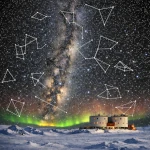 The Night Sky Map in Antarctica: Southern Circumpolar Constellations and Polar Phenomena
 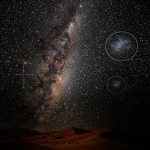 The Night Sky Map in Southern Africa: Constellations and Celestial Objects Season by Season
 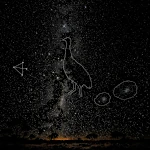 The Night Sky Map in Oceania: Constellations and Celestial Objects Season by Season
 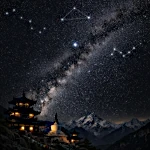 The Night Sky Map in Asia: Constellations and Celestial Objects by Season
  The Night Sky Map Under the Equator: Constellations and Celestial Objects Season by Season
  The Night Sky Map in South America: Constellations and Celestial Objects by Season
  The Night Sky Map in North America: Constellations and Celestial Objects Season by Season
  The Night Sky Map in Europe: Constellations and Celestial Objects by Season
  Zodiac signs
  The 88 Constellations of the Sky: Between Science and Mythology
  The Zodiac: Celestial Heritage of Ancient Civilizations
  From Antiquity to the Astronomical Union: The Path of the 88 Constellations
  Guide to Southern Constellations: Southern Cross and Other Cosmic Gems
  The Guide to Autumn Constellations
  Winter Constellations Guide: When the Stars Shine Brightest
  The Spring Sky Trinity: Leo, Virgo, and Boötes
  The Summer Constellations Guide
  January sky
  February sky
  Mars Sky
  April sky
  May Sky
  June sky
  July sky
  August sky
  September sky
  October Sky
  November sky
  December sky