


Lynn Margulis (1938-2011): Symbiosis as the Engine of Evolution
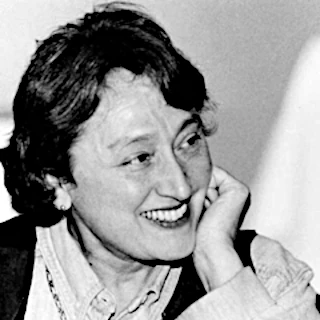
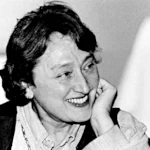
Portrait of American biologist Lynn Margulis, a major figure in evolutionary biology and promoter of the endosymbiotic theory.
A Biologist Breaking with Classical Neodarwinism
Lynn Margulis (1938-2011) was an American biologist whose work profoundly changed the understanding of evolutionary mechanisms. At a time when the neo-Darwinian synthesis favored random mutation and natural selection as almost exclusive drivers of biological innovation, she proposed an alternative vision based on symbiosis (durable and beneficial association between different organisms).
Her central idea is that major evolutionary transitions, particularly the emergence of eukaryotic cells, do not result solely from gradual accumulations of mutations, but from cooperative integration events between distinct organisms.
The Modern Endosymbiotic Theory
Lynn Margulis' major contribution is the formalization and experimental support of the endosymbiotic theory. According to this theory, mitochondria and chloroplasts derive from free-living bacteria that were internalized by a primitive host cell.
The arguments put forward are based on well-established facts today:
- Presence of circular DNA specific to mitochondria and chloroplasts
- Double membrane compatible with a phagocytosis mechanism
- Binary fission division analogous to that of bacteria
- Phylogenetic similarities with α-proteobacteria and cyanobacteria
These observations indicate that the eukaryotic cell is a composite system, resulting from a stable fusion rather than simple internal complexification.
A Systemic and Thermodynamic Approach to Life
Lynn Margulis considered living organisms as open systems, far from thermodynamic equilibrium, capable of maintaining their organization through flows of energy and matter. In this context, symbiosis appears as an energy optimization mechanism.
The integration of a metabolically efficient symbiote, such as a respiratory bacterium, allows a significant increase in energy yield, an essential condition for the emergence of complex structures. The metabolic power of mitochondria can be linked to an increase in energy dissipation capacity, in accordance with the principles of non-equilibrium thermodynamics.
Consequences for the Notion of Biological Individual
Lynn Margulis' work leads to redefining the biological individual not as an isolated entity, but as a holobiont (functional assembly of genetically distinct organisms). The organism then becomes an integrated community of cooperating genomes.
This vision challenges a strictly competitive interpretation of evolution and introduces cooperation as a structuring factor on a large scale, without denying the role of natural selection.
Comparative Table: Evolutionary Mechanisms
| Aspect | Classical Neodarwinism | Lynn Margulis' Approach | References |
|---|---|---|---|
| Main Driver | Random mutation and selection | Symbiosis and biological integration | Margulis, 1967 |
| Origin of Eukaryotes | Gradual complexification | Fusion of prokaryotic lineages | Margulis, Sagan, 1986 |
| Role of Cooperation | Secondary | Fundamental | Margulis, 1998 |
| Vision of the Individual | Autonomous entity | Integrated symbiotic system | Gilbert et al., 2012 |
A Lasting Scientific Legacy
Long marginalized, Lynn Margulis' ideas are now widely integrated into modern biology, particularly in microbiology, ecology, and the study of the microbiome. They have paved the way for a more collective, physical, and systemic understanding of life.
Her legacy reminds us that evolution is not only a process of selection among competitors, but also a story of lasting alliances between forms of life.
 The Secrets Exchanged by Galileo and Kepler Were Coded
  The Galilean Cutoff: the Law of Falling Bodies and Modern Science
  Influential Greek Thinkers
  What do we know about Pythagoras (≈570-495 av. J.-C)?
 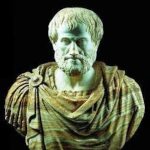 Aristotle (384 - 322 BC): The Founder of Western Scientific Thought
 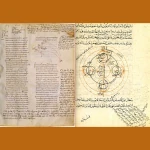 Ptolemy's Almagest: What Remains 1900 Years Later?
 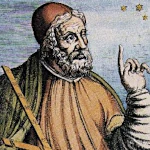 Ptolemy (90-168): The Genius Who Mapped the Heavens and Earth
  Nicolas Copernicus (1473-1543): The Revolutionary Who Placed the Sun at the Center of the Universe
  Tycho Brahe (1546-1601): The Astronomer with Giant Instruments
  Galileo (1564-1642): The Father of Modern Science and Defender of Heliocentrism
  Kepler (1571-1630): The Architect of Planetary Motion Laws
 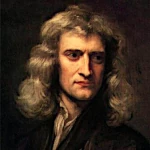 Newton (1643-1727): The Genius Who Changed Our Understanding of the Universe
 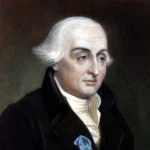 Joseph-Louis Lagrange (1736-1813): The Genius Who Revolutionized Mathematics
 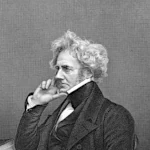 William Herschel (1738-1822): Discoverer of Uranus and Pioneer of Stellar Astronomy
 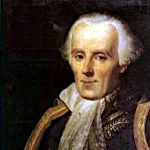 Pierre-Simon de Laplace (1749-1827): The French Newton and Father of Celestial Mechanics
 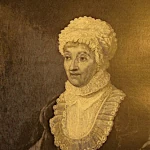 Caroline Herschel (1750-1848): The First Professional Female Astronomer
 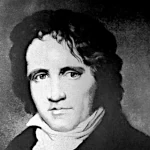 Friedrich Wilhelm Bessel (1784-1846): The Man Who Measured the Stars
 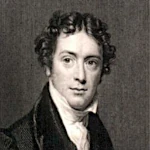 Michael Faraday (1791-1867), Self-Taught Genius: The Origins of Electrodynamics
 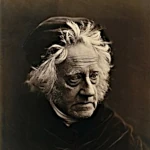 John Herschel (1792-1871): The Pioneer of Stellar Astronomy and Scientific Photography
  James Clerk Maxwell (1831-1879): The Physicist Who Unified Light and Electromagnetism
  Biography: Nikola Tesla (1856-1943): A Genius of Physics
  Henrietta Swan Leavitt (1868-1921): The Woman Who Measured the Universe
  Max Planck (1858-1947): The Father of Quantum Theory
 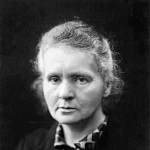 Marie Curie (1867-1934): A Life Devoted to Science
 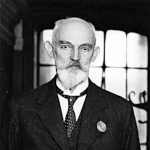 Willem de Sitter (1872-1934): The Architect of Relativistic Universes
  Einstein (1879-1955): The Genius Who Revolutionized Physics concept of time
 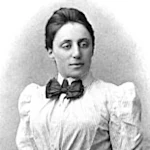 Amalie Emmy Noether (1882-1935): The Mathematician Who Revolutionized Science
 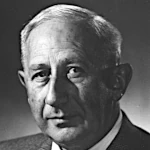 Walter Baade (1893-1960): Deciphering Stars and Galaxies
 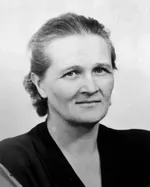 Cecilia Payne (1900-1979), the Scientist Who Revealed the Composition of Stars
 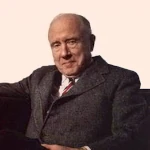 John Archibald Wheeler (1911-2008): The Visionary of Black Holes and Quantum Gravity
 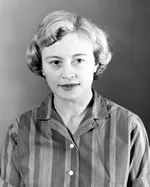 Margaret Burbidge (1919-2020): How She Proved We Are All Made of Stardust
 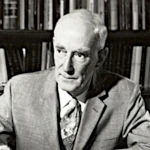 Jan Hendrik Oort (1900-1992): The Astronomer Who Revealed Our Galaxy's Structure
 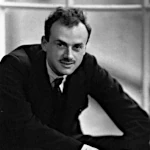 Paul Dirac (1902-1984): The Silent Architect of Modern Physics
 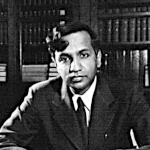 Subrahmanyan Chandrasekhar (1910-1995): The Theorist of Massive Stars
 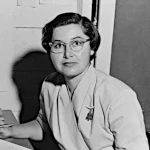 Vera Rubin (1928-2016): Pioneer of Dark Matter
 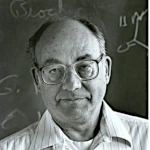 Stanley Miller (1930-2007): The Chemist Who Recreated Life's Origins
  Lynn Margulis (1938-2011): Symbiosis as the Engine of Evolution
  Jocelyn Bell Burnell (1943-): the Scientist Who Discovered Pulsars
  The Most Beautiful Scientific Quotes: Science Told by Those Who Shape It
  Georges Lemaître (1894-1966): The Father of the Big Bang Theory