


The Most Beautiful Scientific Quotes: Science Told by Those Who Shape It

Timeless words from great thinkers and scientists, from Antiquity to the present day. They evoke the universal quest for knowledge, doubt as the engine of progress, and reflection on humanity's place in the Universe. A visual tribute to curiosity, rigor, and critical thinking that underpin science.
Scientific Summary
This article brings together a selection of quotes from great scientific minds and thinkers, from Antiquity to the contemporary era. The quotes address fundamental themes: the nature of science (Aristotle, Bachelard), the scientific method (Popper, Feynman, Heisenberg), humanity's place in the Universe (Lucretius, Monod, Weinberg), and the value of curiosity and doubt (Einstein, Darwin). These thoughts illustrate the relentless pursuit of knowledge that characterizes scientific endeavor, while also highlighting its limits and paradoxes.
What Are the Most Notable Quotes from Great Scientists and Thinkers?
This article compiles a selection of quotes from scientists, philosophers, and writers who have marked the history of thought. It includes profound reflections on the nature of science: Aristotle states that "the beginning of all science is wonder," while Gaston Bachelard notes that "old ideas traverse the ages." The scientific method is illustrated by thinkers like Karl Popper ("What cannot be observed or refuted belongs to magic"), Richard Feynman, who emphasizes physics' tendency toward synthesis, and Werner Heisenberg with his reflection on the time interval separating the observer from the event. Humanity's place in the Universe is addressed by Lucretius, who questions the improbability of a unique world in infinite space, by Jacques Monod ("Man is lost in the indifferent immensity of the universe"), and by Steven Weinberg ("The more we understand the universe, the more it appears devoid of meaning"). Finally, minds like Einstein ("Two things are infinite: the universe and human stupidity"), Newton ("If I have seen farther, it is by standing on the shoulders of giants"), and Darwin ("What a good thing it would be if scientists died at 60, for after that age, their opposition to any new theory is certain") offer glimpses into their personalities and visions of the scientific world. These quotes form an intellectual portrait gallery spanning the centuries.
Also worth exploring
Continue your exploration of the Universe with these topics:
Science is an endless quest for understanding and discovery. The following quotes come from the brightest minds in scientific history. These thinkers not only pushed the boundaries of knowledge but also formulated profound reflections on the nature of the universe, the scientific method, and the impact of research on society. These thoughts, inspired by rigor, curiosity, and innovation, characterize the scientific world.
Authors
Lucretius (~98 – 55 BC)
"If, therefore, on all sides there extends a free and boundless space, if countless seeds multiplied infinitely fly about in countless ways from time immemorial, is it possible to believe that our globe and our firmament alone were created, and that beyond them there is only idleness for the multitude of atoms?"
Marie Curie (1867-1934)
"In life, nothing is to be feared, everything is to be understood."
Henri Poincaré (1854-1912)
"Science is built up with facts, as a house is with stones. But a collection of facts is no more a science than a heap of stones is a house."
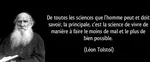
Lev Nikolayevich Tolstoy (1828-1910)
"Of all the sciences that man can and must know, the main one is the science of living in such a way as to do the least harm and the most good possible."
Abbud Marun (1886-1962)
"Science, after all, is nothing but experience."
Aristotle (384–322 BC)
"The beginning of all science is the wonder that things are as they are."
"Science consists in passing from one wonder to another."
"There is as much difference between the learned and the ignorant as there is between the living and the dead."
"Since the past is no more, the future is not yet, and the present itself has already ceased to be before it has even begun to exist, how can there be a reality of time?"
Gaston Bachelard (1884-1962)
"Old ideas traverse the ages; they always return in more or less learned daydreams with their load of primitive naivety."
"In the union of thought and dreams, it is always thought that is deformed and defeated."
René Barjavel (1911-1985)
"The night is night only for us. It is our eyes that are dark."
Cardinal Nicholas of Cusa (1401-1464)
"The universe is a sphere whose center is everywhere and whose circumference is nowhere."
François-René de Chateaubriand (1768-1848)
"Man does not need to travel to grow; he carries infinity within himself."
Charles Darwin (1809-1882)
"What a good thing it would be if scientists died at 60, for after that age, their opposition to any new theory is certain."
Douglas Adams (1952-2001)
"There is a theory which states that if ever anyone discovers exactly what the Universe is for and why it is here, it will instantly disappear and be replaced by something even more bizarre and inexplicable. There is another theory which states that this has already happened."
Albert Einstein (1879-1955)
"I want to know how God created this world. I am not interested in this or that phenomenon, in the spectrum of this or that element. I want to know His thoughts; the rest are details."
"Two things are infinite: the universe and human stupidity; and I'm not sure about the universe."
"Make things as simple as possible, but not simpler." "Insanity is doing the same thing over and over and expecting different results."
"It is absolutely possible that beyond what our senses perceive, unsuspected worlds are hidden."
Richard Feynman (1918-1988)
"The historical tendency of physics is to synthesize an ever-increasing number of phenomena into an ever-decreasing number of theories."
Jean Giono (1895-1970)
"Time is what passes when nothing happens."
Christopher Fry (1907-2005)
"The Moon is nothing but an aphrodisiac rotating in the heavens, mandated by God to encourage men to have more children."
Heraclitus of Ephesus (≈510 BC–≈450 BC)
"It is fire that creates all things, and it is in fire that all things resolve."
Werner Heisenberg (1901-1976)
"We know that between what I have called the future and what I have called the past, there is a finite time interval, whose duration depends on the spatial distance separating the event from the observer."
Victor Hugo (1802-1885)
"An unheard-of thing: it is within oneself that one must look outside."
"Far from expanding, every mind contracts in the immensity of exact science."
François Jacob (1920-2013)
"Science represents for me the most exalted form of rebellion against the incoherence of the universe. The most powerful means man has found to compete with God." "Our imagination unfolds before us the ever-renewed image of the possible." "Nothing causes as much destruction as the obsession with a truth considered absolute."
Etienne Klein (1958-)
"Time is the best way nature has found to prevent everything from happening at once."
Félicité de Lamennais (1782-1854)
"Science serves little purpose other than to give us an idea of the extent of our ignorance."
Pierre-Simon Laplace (1749-1827)
"Astronomy, by the dignity of its object and the perfection of its theories, is the most beautiful monument to the human spirit, the noblest title of its intelligence."
Gottfried Wilhelm Leibniz (1646-1716)
"Why is there something rather than nothing?"
Georges-Louis Leclerc (1707-1788)
"The word 'truth' gives rise only to a vague idea; it has never had a precise definition."
"The superfluous becomes, over time, something very necessary."
"Death is but the last nuance of life."
Pierre Lecomte du Noüy (1883-1947)
"The purpose of science is to predict, not, as is often said, to understand."
Henri Michaux (1899-1984)
"Every science creates a new ignorance."
"The spider's lesson is not for the fly."
Jacques Monod (1910-1976)
"Man is lost in the indifferent immensity of the universe from which he emerged by chance."
Montesquieu (1689-1755)
"Today we receive three different or contradictory educations: those of our fathers, those of our teachers, and those of the world. What we are told in the latter overturns all the ideas of the former."
Carl Sagan (1934-1996)
"We are made of starstuff."
Erwin Schrödinger (1887-1961)
"The subject who experiences and the object observed are one and the same."
Charles Nodier (1780-1844)
"Science consists in forgetting what one believes to know, and wisdom in not caring about it."
Jean O'Neil (1936-2025)
"No thing is real in itself. It arises from the neighborhood of others."
Isaac Newton (1643-1727)
"If I have seen farther, it is by standing on the shoulders of giants."
Plato (428/427 – 348/347 BC)
"The greatest advantage of the sciences, but an advantage whose value is not easily perceived, is that they purify and reanimate a faculty of the soul that is blinded and almost extinguished by the other occupations of life—a faculty whose preservation is a thousand times more precious than that of the eyes of the body, since it is by this alone that we perceive truth."
Karl Popper (1902-1994)
"What cannot be observed or refuted belongs to magic or mysticism, but not to the domain of science."
Michel Quoist (1921-1997)
"Science may one day explain the world, but it will never be able to give it meaning."
Hubert Reeves (1932-2023)
"The history of science abounds with instructive examples where passions have delayed the development of knowledge."
"Over time, cosmic gestation unfolds. Every second, the universe prepares something. It slowly climbs the steps of complexity."
Stephen Hawking (1942-2018)
"Intelligence is the ability to adapt to change."
Ernest Renan (1823-1892)
"Immortality is to work on an eternal work."
"Human stupidity is the only thing that gives an idea of infinity."
"Science will always remain the satisfaction of the highest desire of our nature, curiosity; it will provide man with the only means he has to improve his lot."
George Bernard Shaw (1856-1950)
"More than a millennium ago, Ptolemy established a system of the world that lasted until the 17th century, then overturned by Newton's, which lasted until it was recently replaced by that of Mr. Einstein, who is present here. I will not venture to try to predict how long it will last."
Herbert Spencer (1820-1903)
"What our school courses almost totally neglect is what interests us most: the question of life."
Trinh Xuan Thuan (1948-)
"From our island of the present, waves of the past surge from all sides."
Konstantin Eduardovich Tsiolkovsky (1857-1935)
"The Earth is the cradle of humanity. But does one spend their entire life in a cradle?"
Miguel de Unamuno (1864-1936)
"The more pleasant, sweet, and enchanting life is, the more horrible is the idea of losing it. And thus cultures corrupt and decays come."
"True science teaches, above all, to doubt and to ignore."
Steven Weinberg (1933-2021)
"The more we understand the universe, the more it appears devoid of meaning."
Oscar Wilde (1854-1900)
"Every age has always known how to explain, if not understand."
Émile Zola (1840-1902)
"The question is this: where does man come from? Where is man going? I resolve it triumphantly by saying: man comes and goes in the night."
"Every time science advances a step, it is because an idiot pushes it, without meaning to."
Niels Bohr (1885-1962)
"Prediction is very difficult, especially about the future."
References
- Galileo's Letter to Christine of Lorraine (1615), Commented Excerpts — HEMED, Le Mans Université
- hemed.univ-lemans.fr (new window)
- Cardinal Baronius and the Quote "How Goes the Sky" — Le CEP
- le-cep.org (new window)
- Origin and Spread of the Apocryphal Quote Attributed to Winston Churchill on Statistics — Dico-citations
- dicocitations.com (new window)
- Lucretius, De Rerum Natura, Book II, French Translation — Palimpsestes
- palimpsestes.fr (new window)
 The Secrets Exchanged by Galileo and Kepler Were Coded
 The Galilean Cutoff: the Law of Falling Bodies and Modern Science
 Influential Greek Thinkers
 What do we know about Pythagoras (≈570-495 av. J.-C)?
 Aristotle (384 - 322 BC): The Founder of Western Scientific Thought
 Ptolemy's Almagest: What Remains 1900 Years Later?
 Ptolemy (90-168): The Genius Who Mapped the Heavens and Earth
 Nicolas Copernicus (1473-1543): The Revolutionary Who Placed the Sun at the Center of the Universe
 Tycho Brahe (1546-1601): The Astronomer with Giant Instruments
 Galileo (1564-1642): The Father of Modern Science and Defender of Heliocentrism
 Kepler (1571-1630): The Architect of Planetary Motion Laws
 Newton (1643-1727): The Genius Who Changed Our Understanding of the Universe
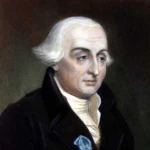 Joseph-Louis Lagrange (1736-1813): The Genius Who Revolutionized Mathematics
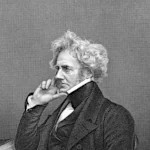 William Herschel (1738-1822): Discoverer of Uranus and Pioneer of Stellar Astronomy
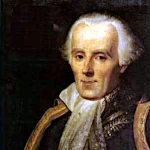 Pierre-Simon de Laplace (1749-1827): The French Newton and Father of Celestial Mechanics
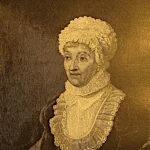 Caroline Herschel (1750-1848): The First Professional Female Astronomer
 Friedrich Wilhelm Bessel (1784-1846): The Man Who Measured the Stars
 Michael Faraday (1791-1867), Self-Taught Genius: The Origins of Electrodynamics
 John Herschel (1792-1871): The Pioneer of Stellar Astronomy and Scientific Photography
 James Clerk Maxwell (1831-1879): The Physicist Who Unified Light and Electromagnetism
 Biography: Nikola Tesla (1856-1943): A Genius of Physics
 Henrietta Swan Leavitt (1868-1921): The Woman Who Measured the Universe
 Max Planck (1858-1947): The Father of Quantum Theory
 Marie Curie (1867-1934): A Life Devoted to Science
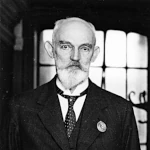 Willem de Sitter (1872-1934): The Architect of Relativistic Universes
 Einstein (1879-1955): The Genius Who Revolutionized Physics concept of time
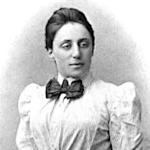 Amalie Emmy Noether (1882-1935): The Mathematician Who Revolutionized Science
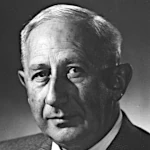 Walter Baade (1893-1960): Deciphering Stars and Galaxies
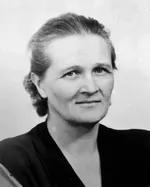 Cecilia Payne (1900-1979), the Scientist Who Revealed the Composition of Stars
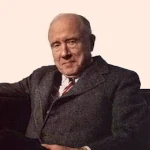 John Archibald Wheeler (1911-2008): The Visionary of Black Holes and Quantum Gravity
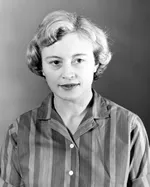 Margaret Burbidge (1919-2020): How She Proved We Are All Made of Stardust
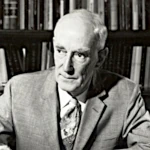 Jan Hendrik Oort (1900-1992): The Astronomer Who Revealed Our Galaxy's Structure
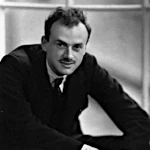 Paul Dirac (1902-1984): The Silent Architect of Modern Physics
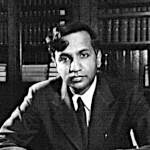 Subrahmanyan Chandrasekhar (1910-1995): The Theorist of Massive Stars
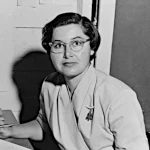 Vera Rubin (1928-2016): Pioneer of Dark Matter
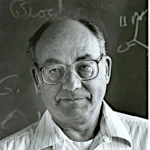 Stanley Miller (1930-2007): The Chemist Who Recreated Life's Origins
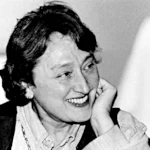 Lynn Margulis (1938-2011): Symbiosis as the Engine of Evolution
 Jocelyn Bell Burnell (1943-): the Scientist Who Discovered Pulsars
 The Most Beautiful Scientific Quotes: Science Told by Those Who Shape It
 Georges Lemaître (1894-1966): The Father of the Big Bang Theory