


中国皇家天文学:千年的科学遗产
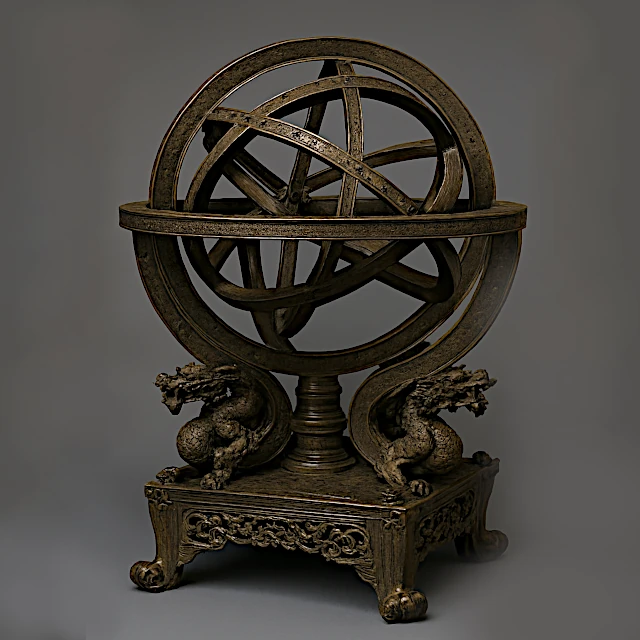
中国古代浑仪示意图,这是一种用于测量和表示天体位置的复杂天文仪器。图片来源:astronoo.com
科学摘要
中国帝国天文学以其持续观测和仪器创新的无与伦比的传统而著称。其天文学家在汉代发展了水力浑天仪,在宋代制造了最早的擒纵机构时钟,并以早于格里高利历的精度测量了回归年(365.2425天)。他们的星表(超过2500颗恒星)和现象记录(日食、如1054年的超新星)为现代天体物理学提供了独特的数据。这门科学与天命紧密相连,展示了一种严格的实证方法论,服务于一种政治宇宙观,其中天体的和谐保障了皇权的合法性。
历代中国帝国天文学的主要贡献是什么?
中国帝国天文学延续了两千多年,是与天命相关的关键国家机构。中国天文学家进行了持续的系统观测,建立了用于历法的二十八宿系统,并发展了早期的天体制图学。他们以非凡的精度测量了回归年。他们的技术创新包括水力浑天仪、天文钟塔和大型青铜仪器。他们观测了1054年的超新星,并在清朝融合了中国和欧洲的传统。
值得一看
继续探索宇宙的这些主题:
哲学与政治基础
中国古代的天文学不仅仅是一门科学,更是一项至关重要的国家制度。它基于“天命”的概念,建立了宇宙秩序与政治合法性之间的直接联系。作为“天子”,皇帝负责维持天地之间的和谐。
这一独特视野促成了人类历史上前所未有的观测与记录体系的建立。太史局(Imperial Astronomical Bureau)作为汉代设立的官方机构,历经改革运行逾千年。
中国历代王朝的天文学贡献
| 王朝 | 时期 | 主要的天文学贡献 | 仪器与技术成就 |
|---|---|---|---|
| 上海 | 约公元前1600年 – 公元前1046年 | 首次系统性地将日食和天象观测刻于甲骨之上。建立了初步的阴阳合历。 | 使用日晷测量太阳高度并确定至点。 |
| 周 | 公元前1046年 – 公元前256年 | Organization of the sky into 28 lunar lodges (xiù 宿); introduction of 国家天文学 linked to imperial rites and agriculture. | 日晷与漏壶计时技术的改进。 |
| Han | 公元前206年 – 公元220年 | 建立包含2500颗恒星的星表,并首次观测到恒星视运动;理解日食的周期性。 | 张衡改进了水力浑天仪,并制造了第一台地动仪(公元132年)。 |
| 唐 | 618 – 907 | 大衍阴阳历的标准化;回归年(365.25天)的精确测量;建立中央集权的皇家天文机构。 | 用于导航和仪式的天球仪设计与青铜浑天仪的改进。 |
| 歌 | 960 – 1279 | 详细观测了1006年、1054年和1181年的超新星;研究了黄赤交角的变化以及太阳在黄道上的运动。 | 苏颂(1090年)建造了水力天文钟塔(《新仪象法要》),这是已知最早的擒纵机构。 |
| 元 | 1271 – 1368 | 郭守敬主持的历法改革:计算回归年为365.2425天;改进行星运动模型。 | 建造精密仪器(简仪)并在大都(北京)建立大型天文台。 |
| 明 | 1368 – 1644 | 定期观测太阳黑子和北极光;基于元代观测绘制详细的星图。 | 北京观象台建立(1420年),配备用于角度测量的大型青铜仪器。 |
| 青 | 1644 – 1912 | 中西传统的融合:采纳了由耶稣会士(利玛窦、汤若望、南怀仁)传入的开普勒星表与球面三角学。 | 在北京天文台,结合欧洲与中国技术制作了混合型仪器(象限仪、六分仪、浑天仪)。 |
注:浑天仪的环数根据其复杂程度可从3到10个不等。中国皇家精密模型通常配备6至8个环(赤道环、黄道环、子午环、地平/方位环、回归线环、时角/赤纬环)。
注:中国天文学家观测到的1054年超新星产生了蟹状星云,这一天体至今仍是当代天体物理学家研究的对象。他们的档案为研究该星云的演化提供了关键数据。
注:郭守敬在《授时历》(1280年)中测定的回归年数值为365.2425天,这展现了中国数学与天文建模的精妙,远早于欧洲格里高利历的采用(1582年)。
仪器与技术革新
中国古代的机械智慧从精密天文仪器的创造中得以体现,这些仪器堪称真正的工程杰作。汉代时期,张衡(78-139年)完善了水力浑天仪,并设计了首个能够检测地震方向的地动仪。水力浑天仪的精度约为 \( \approx 1 \)°。
宋代时期,苏颂(1020–1101)建造了著名的水运仪象台(1090年),高十余米,并配备了已知最早的擒纵机构。它将天文观测、计时与自动化融为一体。
中国星座体系
Unlike the Greek model based on figurative constellations, Chinese astronomy divided the sky into 二十八星宿 (xiù 宿), corresponding to the monthly path of the Moon. This system, which appeared during the Zhou dynasty, was used to locate celestial positions, regulate the calendar, and predict astronomical phenomena.
Each lodge was associated with a celestial region, a symbolic animal, and astrological meanings. This division reflected a worldview where 天人感应,人事与天道紧密相连。, according to the principle of 天人合一 (天人合一) – "unity of Heaven and Man."
注:张衡于132年发明的候风地动仪是已知最早能够检测地震并指示其方向的仪器。它基于一个内部摆锤,其运动释放铜球,通过一个指向八个方位的龙形机关来传递地震信号。
皇家天文台与天体制图学
In ancient China, celestial observation had a political and ritual dimension. The sovereign, the 天子 (天子 天子), had to maintain cosmic harmony between Heaven and Earth. Each dynasty established an 皇家天文台, a scientific, astrological, and administrative center.
The most famous was the 北京天文台 (建天台), renovated during the Yuan dynasty around 1279 and modernized by the Ming and Qing dynasties. Equipped with massive bronze instruments—armillary spheres, azimuthal circles, giant quadrants, and sextants—it allowed precise measurement of the 恒星、行星和太阳的位置.
From the 1st millennium BCE, Chinese astronomers undertook the 系统性天空测绘. During the Tang dynasty (618–907), star catalogs already included over 1,300 stars, distributed according to the 三垣 (三元 三垣) and the 28 lunar lodges. The silk maps discovered at 敦煌 (around 700) are the oldest known complete star charts.
17世纪,耶稣会传教士如汤若望和南怀仁将西方天文学引入中国,丰富了本土传统。南怀仁按照欧洲方法重新设计并校准了北京天文台的仪器,创造了东西方天体科学融合的罕见范例。
中国天文学的象征意义与文化影响
In Chinese civilization, astronomy was never separate from philosophy, politics, and rites. Celestial movements were seen as visible manifestations of cosmic order, a reflection of the Dao (道) – the natural way governing the universe. The role of imperial astronomers was therefore twofold: to rigorously measure celestial phenomena and to interpret their moral and dynastic significance.
每一次天文事件——彗星、日食、行星合月——都被解读为天象征兆。一次预测不准的日食可能被视为天文局的严重失职,并招致严厉惩罚。这种责任催生了持续两千余年、细致入微的天文观测传统。
The symbolism of the constellations deeply permeated Chinese culture. The 三卷 (三元 三垣) represented the celestial court of the emperor, while the 二十八星宿 (二十八宿 二十八宿) were associated with the guardian creatures of the four directions: the 青龙 of the East, the 白虎 of the West, the 朱雀 of the South, and the 玄武 of the North. These figures regulated the rhythm of the calendar, music, and even imperial architecture.
This holistic vision, linking the heavens and society, durably influenced the thought systems of East Asia: Korean, Japanese, and Vietnamese cosmology adopted the same celestial divisions and the same principle of harmony between Heaven and Man (天人合一 天人合一). Thus, Chinese imperial astronomy was not only a science of observation but a 通用符号语言 translating the moral order of the cosmos.
中国天文学的遗产与科学范畴
中国天文学构成了极为丰富的科学遗产,这是两千多年来系统观测、严谨计算和先进机械工程的成果。从商代的圭表到宋代的水运仪象台,再到清代的中西合璧仪器,这些技术创新展现了对天文现象的深刻掌握。
中国星表、星图和历法系统使得对回归年、日食及行星位置的精确测量成为可能,其精度常可与同时期欧洲仪器相媲美。这种科学严谨性伴随着一种宇宙论与象征性视野——天地紧密相连,深刻影响着政治、文化与社会。
今天,中国皇家天文学仍然是科学史的重要来源,提供了持续观测和技术综合的典范,这些典范至今仍启发着天体制图学、仪器力学,以及对非西方科学传统在全球天文学知识发展中所起作用的理解。
参考资料
- 国际天文学联合会(UAI)– 星座 (新窗口)
- Needham, J. – 中国天文学:近期研究综述(Nature Astronomy, 2024) (新窗口)
- Hsu, E. L. 等 – 苏颂的天文仪器与水运钟楼(Science, 2022) (新窗口)
- Sivin, N. – 中国农历与沙罗周期(Journal for the History of Astronomy, 2021) (新窗口)
- Zhang, Y. 等 – 中国帝国天文仪器的发展(Journal of Physics: Conference Series, 2022) (新窗口)
- Wang, J. – 二十八宿与中国天球坐标系(2021) (新窗口)
- Gullberg, S. R. – 中国帝国天文台及其天文仪器(Advances in Space Research, 2015) (新窗口)
- Pankaj, R. – 中国帝国天文学的宇宙论基础(Journal of California and Great Basin Anthropology, 2019) (新窗口)
- Li, S. – 中国天文学与天命:民族天文学的视角(ResearchGate, 2021) (新窗口)
- UNESCO – 北京古观象台遗址(世界遗产) (新窗口)
- CDLI – 楔形文字数字图书馆计划(中国天文泥板) (新窗口)
FAQ:关于中国帝国天文学的一切
天文学在中国帝国中的政治角色是什么?
天文学是与天命概念相关的关键国家机构。作为天子,皇帝必须维护天地之间的和谐。每个天象都被解释为关于统治者合法性的预兆。预测错误的日食可能被视为天文局的严重失职,导致严厉的惩罚。这种责任催生了长达两千多年的细致且不间断的观测传统,因为王朝的政治生存依赖于它。
中国天文学家的主要技术创新是什么?
中国天文学家开发了几种革命性的仪器。汉代,张衡完善了水力浑天仪,并发明了第一个地震仪。宋代,苏颂建造了天文钟塔,其拥有已知最早的擒纵机构。元代,郭守敬设计了精密仪器,并将回归年测量为365.2425天。清代,耶稣会士创造了结合欧洲和中国技术的混合仪器。
二十八宿系统是什么,它是如何运作的?
二十八宿系统是中国天文学中天空的基本划分,基于月球的每月路径。每宿都关联着一个天区、一个象征动物和占星学意义。它用于定位天体位置,调节阴阳历并预测天文现象,反映了天象与人事密切相连的世界观(天人合一)。
 亚热带沙漠夜空地图:四季星座与天体
 印度洋夜空地图:四季星座与天体
 高海拔沙漠夜空地图:世界之巅的天文台
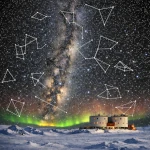 南极夜空地图:南极拱极星座与极地现象
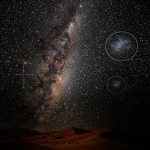 南部非洲夜空地图:四季星座与天体
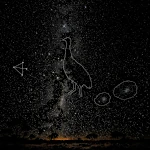 大洋洲夜空地图:四季星座与天体
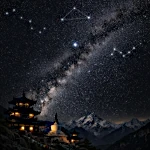 亚洲夜空地图:四季星座与天体
 赤道地区夜空地图:四季星座与天体
 南美洲夜空地图:四季星座与天体
 北美洲夜空地图:四季星座与天体
 欧洲夜空地图:四季星座与天体
 黄道十二星座
 88个星座:科学与神话之间
  黄道带:古代文明的天体遗产
 从古代到天文学联合会:88个星座的演变之路
 南半球星座指南:南十字座和其他宇宙珍宝
 秋季星座指南
 冬季星座指南:当恒星最明亮的时候
 春季星空三巨头:狮子座、室女座和牧夫座
 夏季星座指南
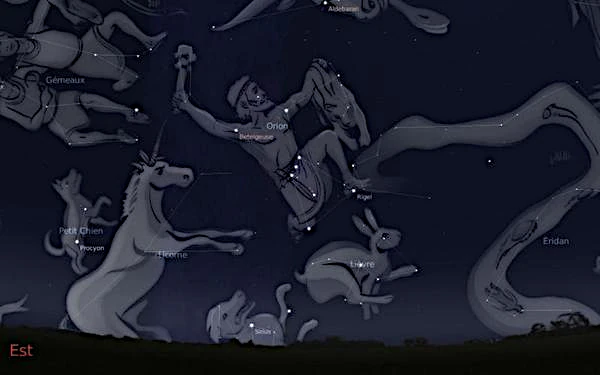 一月的天空
一月的天空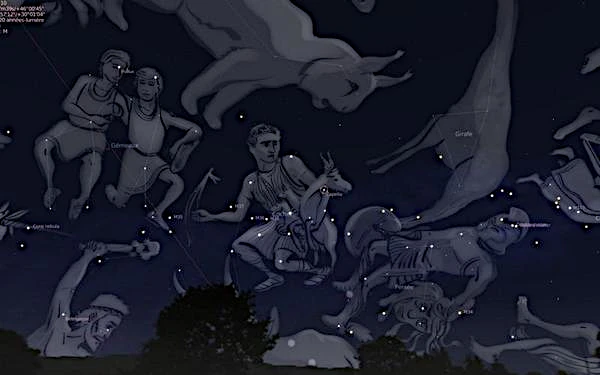 二月的天空
二月的天空 三月的天空
三月的天空 四月的天空
四月的天空 五月的天空
五月的天空 六月的天空
六月的天空 七月的天空
七月的天空 八月的天空
八月的天空 九月的天空
九月的天空 十月的天空
十月的天空 十一月的天空
 十二月的天空