


Why do astronauts float in the ISS?
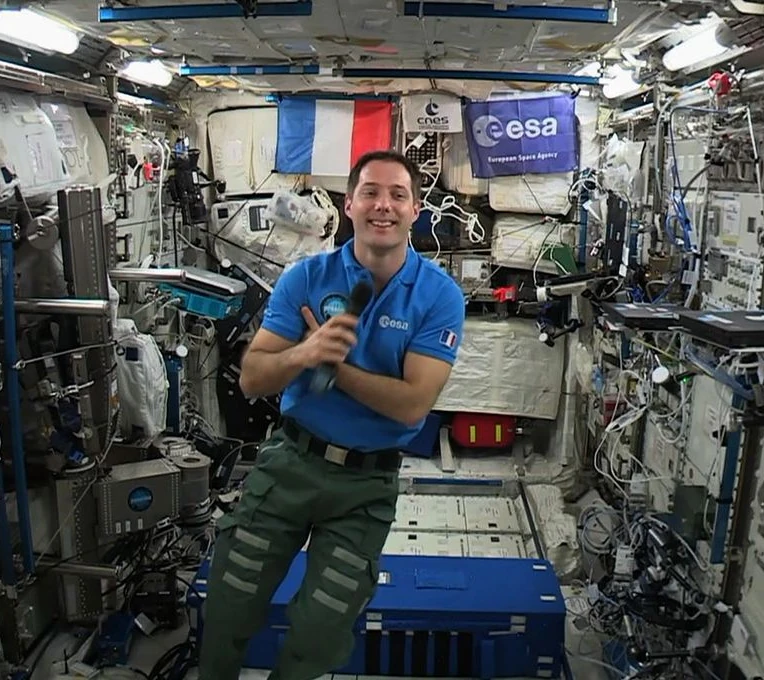
The International Space Station (ISS) is placed in low Earth orbit, at an altitude of approximately 415 km, it circles the Earth in 90 minutes at a speed of 7.7 km/s or 27,700 km/h.
The international crew, which is dedicated to scientific research in the space environment, sees about 16 sunrises and sunsets every day.
Astronauts aboard the International Space Station are in a state of weightlessness but not microgravity.
ISS and astronauts are in free fall around Earth.
This is why astronauts float on the International Space Station.
Why do astronauts float in the ISS?
When we look at the astronauts aboard the International Space Station (ISS), we can see them floating freely in the air, as if they were underwater. But why is this happening?
The reason astronauts float on the ISS is due to gravity. On Earth, we are constantly pulled towards the ground due to the force of gravity. This force is created by the mass of the Earth, which attracts everything on its surface.
However, in space there is no strong gravitational force like on Earth. Although the Earth still exerts a force of gravity on the ISS, it is much weaker due to the distance. This means that astronauts aboard the ISS are not pulled down to the ground as they would be on Earth.
But if they're not pulled down, why don't they float up? The answer lies in how the ISS orbits the Earth. The ISS is actually in free fall around the Earth, just like an object falling from a great height. This means that the ISS is constantly falling towards Earth, but it is also moving fast enough for Earth's curvature to avoid a collision.
When astronauts are on board the ISS, they also free fall around the Earth. They move with the ISS and are subject to the same weak force of gravity. As they all fall together, they float freely in space.
In summary, astronauts float in the ISS because the ISS and themselves are in free fall around the Earth, which cancels out the strong force of gravity that we feel on Earth. It's an incredible experience that allows astronauts to perform science experiments and space missions that we could never accomplish on Earth.
 Why Can Telescopes See So Far?
  The Rainbow of Planets: Why Do They Have Colors?
  When You Look at the Stars, You Travel Through Time!
  When Earth Tilts, the Seasons Change!
 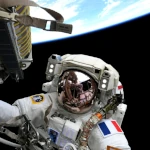 Floating Life: The Daily Routine of Astronauts on the Space Station
  Eclipse: The Great Game of Shadow and Light Between the Moon and the Sun
  Shooting Stars: The Celestial Tears That Grant Wishes
  The Metaverse: A Virtual World
  Quantum Physics, Simply!
 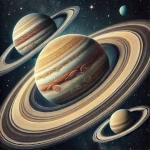 Why Are There Rings Around the Giant Planets?
  Why Does the Sun Shine?
 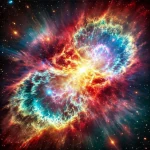 What is a Supernova?
  Why does emptiness not exist?
  What is the equivalence principle in physics?
  Incredible Phenomena of the World
  What is Time?
  What is Matter?
  Why is the sky blue?
  The Benefits of Fuse Beads for Children's Creativity
 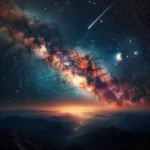 Our Milky Way
  How to measure distances in the Universe?
 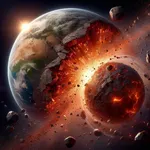 How did the Moon form?
  What is a black hole?
  Why are stars different colors?
  Why don't we feel that the Earth is rotating?
  How to properly observe the stars in the sky?
  How stars work
 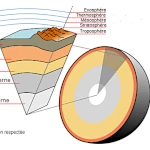 What are the inner and outer layers of the Earth?
  January Sky, Orion Constellation
  February sky, Auriga constellation
 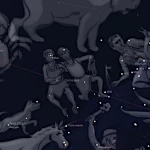 March sky, constellation of Gemini
  April sky, Bouvier constellation
 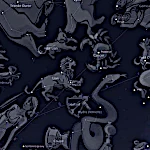 May sky, constellation Leo
 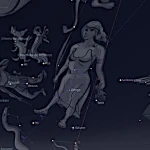 June sky, constellation Virgo
 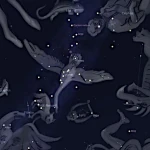 July sky, Cygnus constellation
 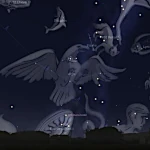 August sky, constellation of the Eagle
 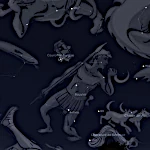 September sky, Corona Borealis Constellation
 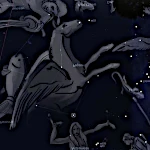 October sky, constellation Pegasus
 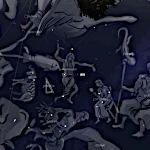 November sky, Andromeda constellation
  December sky, Perseus constellation